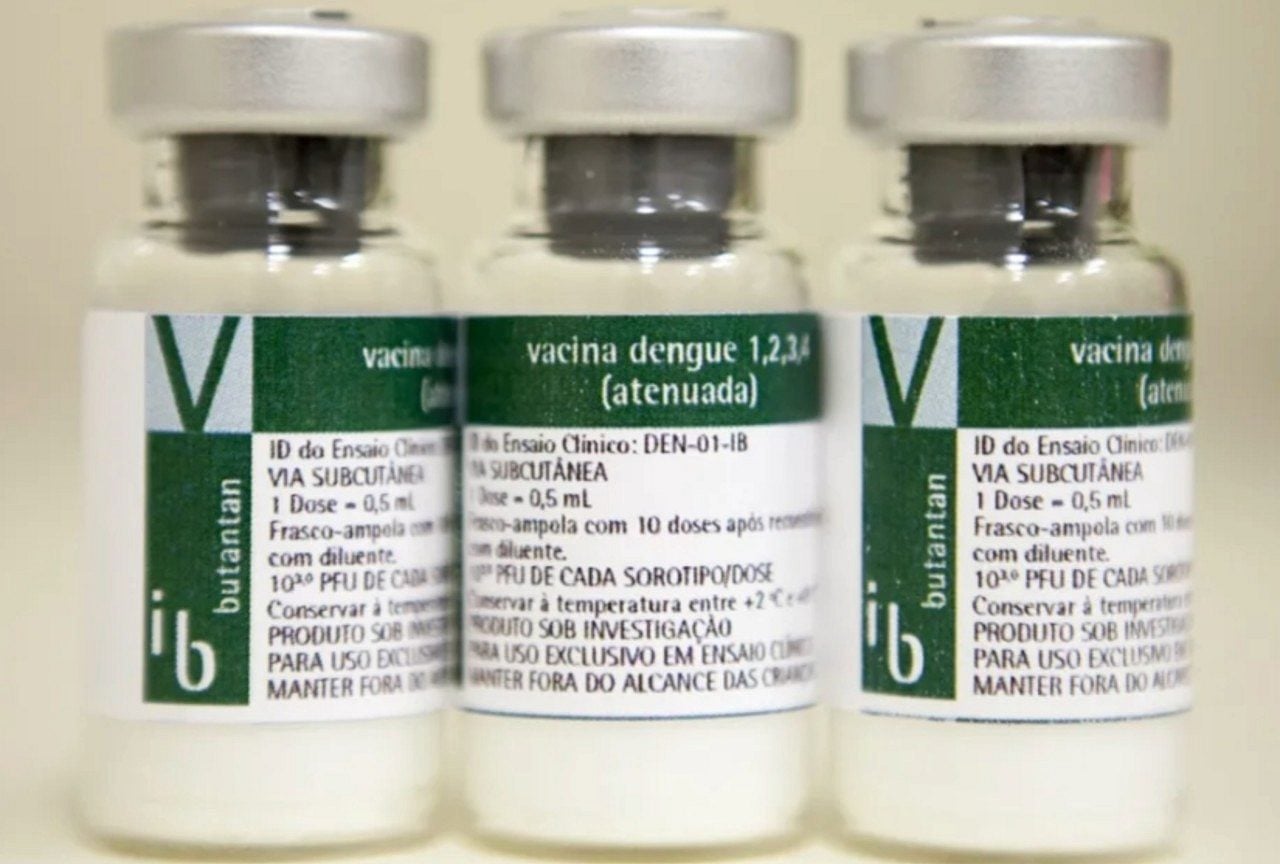
The Ministry of Health announced the temporary suspension of vaccination against dengue with the vaccine developed by the Butantan Institute. The measure was adopted on Monday (8) after serious adverse reactions were recorded, including two deaths that are still under investigation.
The use of the national vaccine was temporarily discontinued after 42 cases of severe reactions possibly related to the vaccine. Among them, two deaths are still being analyzed to verify any causal link with the application.
According to the agency, the next steps after the announcement involve the discontinuation of application by states and municipalities.
The Minister of Health, Alexandre Padilha, informed that the state and municipal secretariats will be informed about the decision to suspend the use of the Butantan vaccine. He reinforced that the measure is temporary and that the doses must remain stored in the municipalities’ refrigerated networks.
Another highlighted point is the tracking of new cases of adverse effects. The Ministry of Health plans meetings with the municipalities that applied the vaccine to actively search for complaints and guide monitoring in the hospital network, including dengue cases in recent vaccinees, alarm signs and deaths. The analysis must consider lot, unit or territory.
The investigation into deaths and serious adverse effects will also continue. Although the suspension has been announced, there is still no proof of a direct relationship between the vaccine and deaths. The National Health Surveillance Agency (Anvisa) notified the Butantan Institute and must convene a committee of experts for epidemiological analysis.
In an interview, infectious disease specialist Rosana Richtmann, director of the Immunization Committee of the Brazilian Society of Infectious Diseases, highlighted the importance of identifying common characteristics among people who presented adverse events, including non-serious ones.
And whoever has had the vaccine, what should they do?
Anyone who received the Butantan dose should pay extra attention to possible symptoms in the coming days. The Ministry of Health advises that people vaccinated in the last 21 days seek a health unit for monitoring. Warning signs include fever, severe abdominal pain, persistent vomiting, dizziness, bleeding, intense drowsiness, irritability, dehydration and worsening of the general condition.
What was recorded by pharmacovigilance
Between January and May 30, 2026, 3,703 unexpected reactions with symptoms similar to dengue were reported, representing 0.7% of the total number of people vaccinated. Of these, 42 cases involved alarm signs, such as abdominal pain, vomiting and bleeding — equivalent to 0.008% of those immunized. These events were classified as very rare and not anticipated in clinical studies or in the leaflet.
Among the serious conditions, three people required hospitalization. A 39-year-old woman developed fever, muscle pain and nausea six days after vaccination, progressed to severe dengue fever with shock, was in the ICU, but recovered. The deaths involve a 48-year-old woman, who developed symptoms 19 days later with neurological impairment, and a 58-year-old man, who had a fever five days after the dose and quickly progressed to refractory shock.
Anvisa notified Butantan and will work with the Ministry of Health, through the National Immunization Program (PNI), and the institute itself in the joint investigation. Butantan must provide additional data for the analysis.
Measure does not affect Qdenga
The suspension only affects the Butantan vaccine. Takeda’s Qdenga vaccine, incorporated into the National Immunization Program (PNI) since the end of 2023, continues to be available in the SUS for children and adolescents aged 10 to 14 years.
