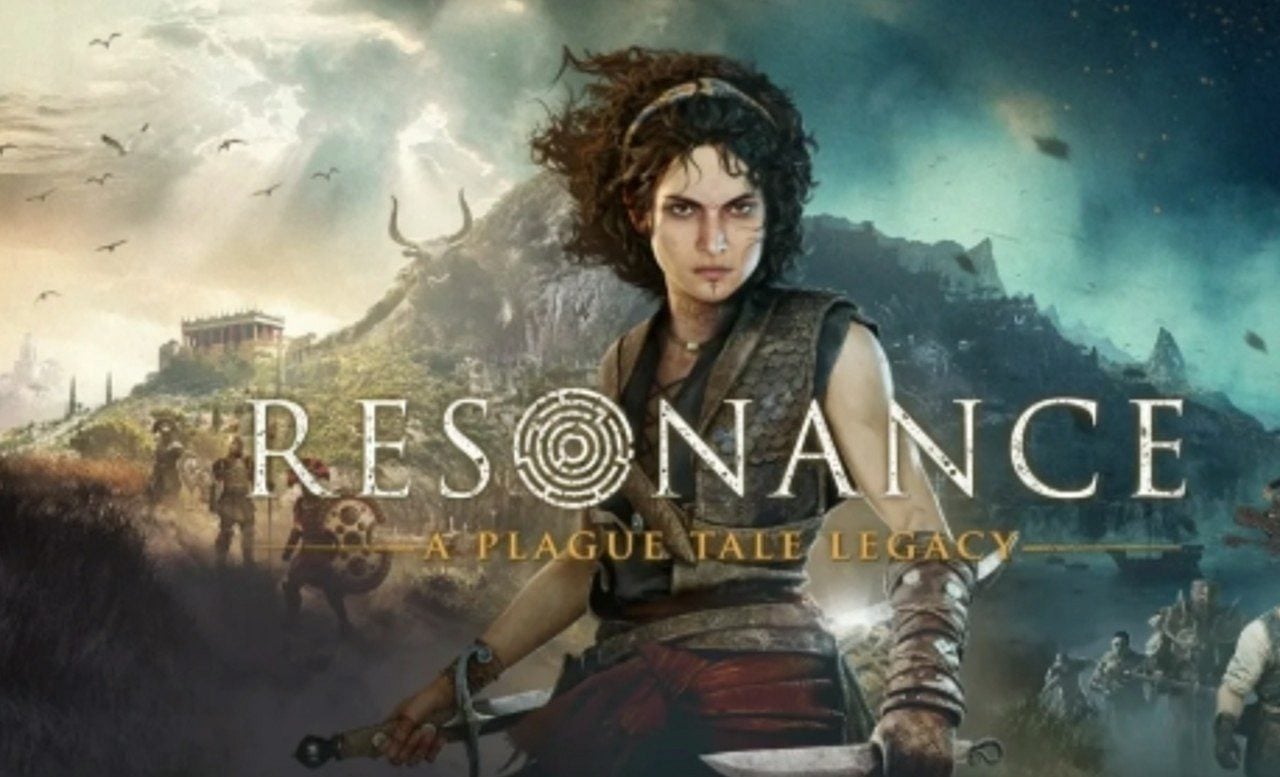
The A Plague Tale series, developed by Asobo Studio, leaves aside the stealth-based approach to adopt a more conventional action adventure structure, with cinematic touches similar to PlayStation Studios titles. Resonance: A Plague Tale Legacy abandons the rats and the setting of medieval France to immerse players in a narrative set on the island of Crete, full of puzzles, intense action and direct combat.
The previous chapters of the A Plague Tale franchise stood out for their unique environment, for their technical quality that competed with AAA productions even with a more limited budget and for exploring the genre of stealth and enigmas on a scale and visual and narrative ambition that hadn’t been seen for some time.
Changing a large part of this formula, by giving up the central concept of the series, may seem like a risky or even hasty decision. Still, the result is very pleasing, delivering a well-constructed and very fun action title. The impressive visuals, at least in the high-performance PC version tested, reinforce this impression. Furthermore, the plot conquers from the beginning and shows great potential, even with a less innovative premise than that of A Plague Tale: Innocence.
Pirates on Minotaur Island
The story takes place almost entirely on the island of Crete, in the year 1333, fifteen years before the events of the second game in the saga, A Plague Tale: Requiem, in which the protagonist Sophia is introduced. In the played demo, the narrative is found ongoing, in the fourth chapter. In it, Sophia and her companion Lenni arrive on Minotaur Island in search of something other than the abundant treasures that await whoever can locate them and make it out alive.
Lenni will be just one of Sophia’s companions along the journey.
The way the title incorporates Greek mythology is impressive. Sophia and Lenni travel through scenarios marked by time, crossing cliffs, sneaking through hidden passages and facing or fighting the army that pursues the protagonist and the island’s riches.
Along the route, ways of navigating Ancient Greek sites in precarious conditions, but still preserved, are explored: fountains, thermal baths, temples. The contrast between the Middle Ages and Antiquity is attractive and invigorating.
The protagonist Sophia arouses curiosity about her destiny, her past and the answers she herself seeks. Added to this are intriguing visions that she experiences, with similarities to those in Hellblade. She has some connection with Antiquity, including connections with the Minoan civilization and historical figures: in a remarkable moment, Theseus takes direct control. Equally interesting is her relationship with Lenni, who accompanies her for part of the adventure: the constant dialogues and the underlying conflict between them are reminiscent of Uncharted: The Lost Legacy.
The protagonist has visions that torment her and that gain strength through the impactful staging.
Naughty Dog and Tomb Raider productions immediately come to mind. After all, long-abandoned environments are explored, full of traps and skeletons. What is found on the island of Crete is surprising: monumental statues, gigantic mechanisms and impossible constructions.
Puzzles with complexities
The feeling of discovery and living a great adventure is efficiently conveyed, and the actions in these places reinforce this. In some sections, you advance through areas that require careful examination to find your way, sometimes more complex than expected. In others, puzzles are solved that are conceptually close to those of Nathan Drake or Lara Croft, but a little more elaborate.
Yes, mirror puzzles are nothing new, but they get special treatment here.
These riddles are rewarding both in the solution, which activates surprising mechanisms, and in the path to it. It is necessary to observe carefully and reason a little, as they are more challenging than standard action and adventure games, although they do not require notes and maintain a known premise.
Two points deserve to be highlighted about the enigmas. First, the companion does not deliver the solution immediately when the player gets stuck: you have to press a button to activate it, with the intensity of the tips adjustable. Sophia records her notes in a notebook similar to the one in Indiana Jones and the Great Circle. Second, just like the player, the protagonist and Lenni are surprised by the mechanisms, question their origin and are enchanted when solving them, giving the enigmas a narrative and epic weight.
A formidable protagonist
Perhaps the epic scale is precisely what the combat lacks; although dynamic and competent, he does not appear to be particularly deep, at least in the tested part. Sophia has several tools to face large groups of soldiers or stronger enemies, with the confrontation against the former being the most impactful.
In most battles, the opponents are outnumbered, but the options available are more than enough to deal with the situation.
The combat system prioritizes dodges and parries, essential to expose the enemy and finish them in a bloody and spectacular way, often using pillars, boxes and other elements of the scene. The climbing hook serves as a versatile tool for pulling soldiers, taking down archers, or throwing them off cliffs.
There haven’t been many chances to test it in depth, but while the skill unlocking and weapon upgrade system seems simple, equipping accessories should allow for greater customization of Sophia’s combat style. Furthermore, her connection with Antiquity grants her special powers: after the flashback with Theseus, the protagonist was able to use one of her powerful blows in fight.
At certain times, you control other characters.
The central role of the soundtrack also stands out: the music, with songs, string instruments and striking percussion, enhances the feeling of adventure. The game offers dubbing in Spanish, but Anna Demetriou’s original interpretation is excellent. As for the graphics, even in the development version, they are impressive in both artistic and technical aspects, despite some unstable animations, visual artifacts typical of Unreal Engine 5 and camera problems in combat, which must be corrected before launch.
The title will be released in 2026 for PC, consoles and Game Pass.
Resonance: A Plague Tale Legacy has a less striking identity than previous games in the series. Even so, it has the potential to attract a larger audience, not only because the action and adventure genre is more popular than stealth.
The grandeur of the scenes captivates.
If the game maintains a variety of situations like those in the demonstration, if the puzzles remain at the same level, if Sophia’s story develops fully, if the combat gains new elements and if it continues to surprise with imposing environments, Resonance could repeat the impact of Innocence seven years ago. This will be discovered later this year on PC, PS5, Xbox Series X/S and, mainly, on Game Pass.
The impressions were collected after playing a development version for PC at an event organized by Focus Entertainment.
