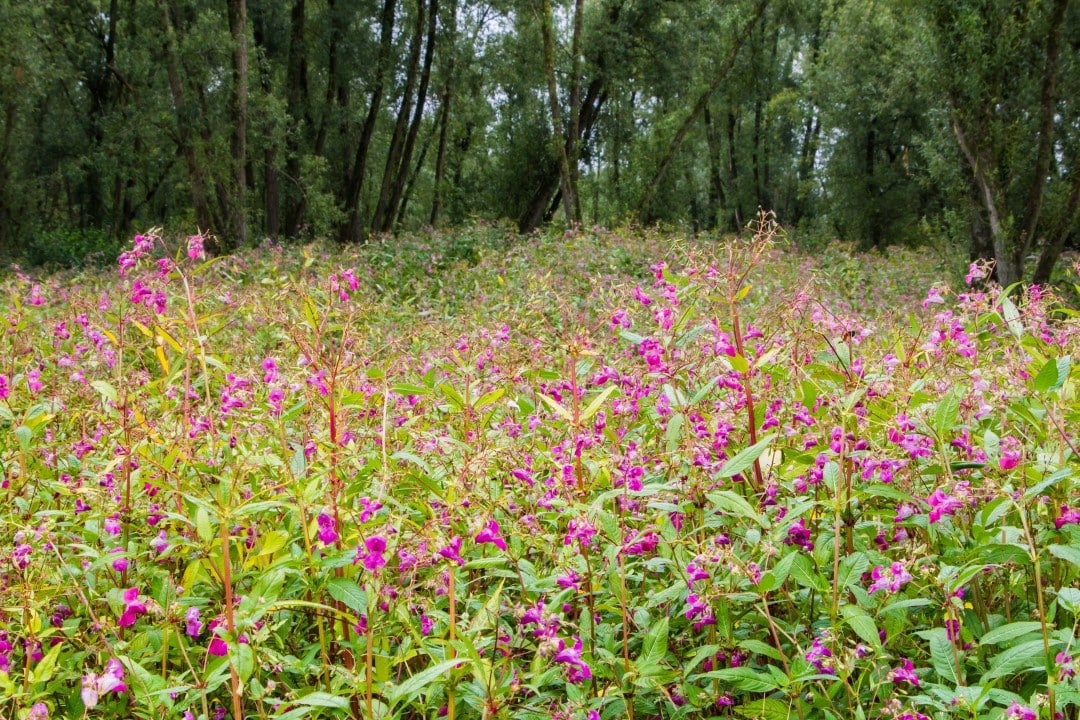
The pink flower that adorns European backyards hides a severe ecological threat and a legal problem for property owners. Originally from the Asian continent, the species attracts attention due to the beauty of its petals, but it has an aggressive biological behavior that suffocates the native flora. The cultivation of this vegetation, which easily reaches between one and a half and three meters in height, has gone beyond the barrier of a mere gardening nuisance to become an environmental infraction monitored by government authorities. The presence of the plant requires immediate action to avoid irreversible damage to the soil and financial punishments.
Morphology of the species and the explosive seed system
The physical structure of the plant facilitates its dominance in the land where it is installed. The thick stems have a hollow interior and accumulate a large amount of sap, ensuring rapid growth during the warmer seasons. Its elongated leaves, which measure ten to twenty-five centimeters, have characteristic serrated edges that help with early identification. The flowering period occurs between the months of July and October, when flowers bloom in vibrant shades of pink, purple or white. The shape of these petals resembles the structure of small orchids or helmets, a detail that historically boosted their ornamental use before the discovery of their destructive potential.
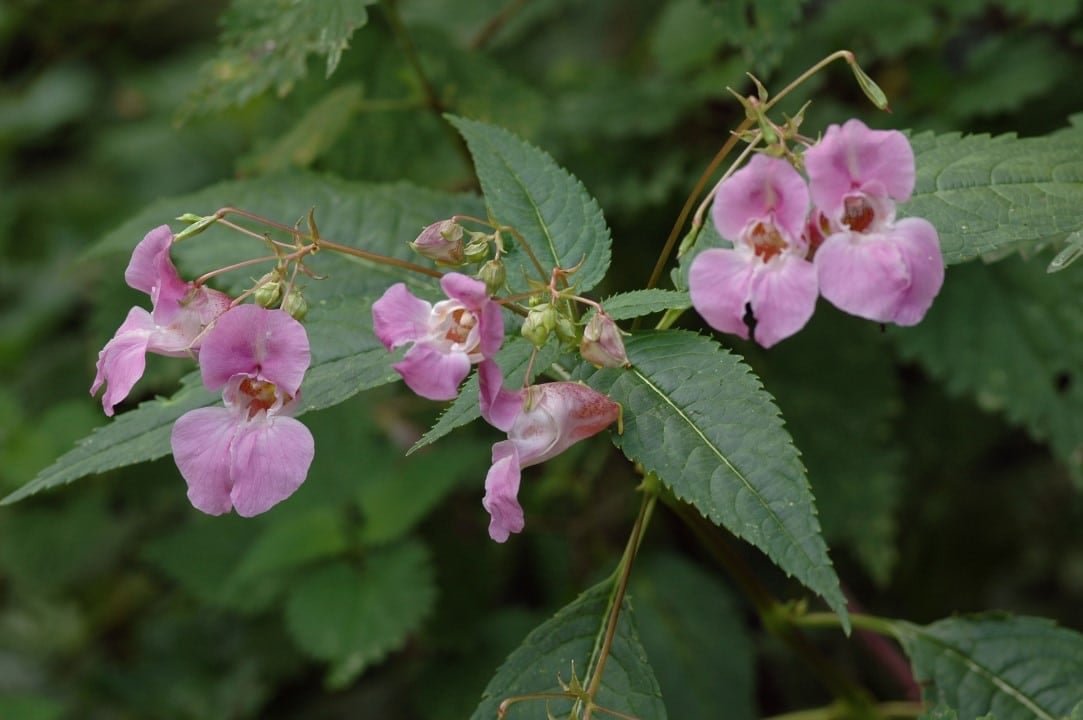
The real danger of proliferation lies in the species’ reproductive mechanism. The fruits develop into green, elongated capsules that operate under extreme mechanical tension. When they reach maturity, these structures explode at the slightest physical stimulus, such as a human touch, the impact of a raindrop or the passage of an animal. This biological phenomenon projects the reproductive material several meters away from the main stem, earning the species the popular nickname of jumping plant. A single flower has the capacity to generate up to eight hundred seeds, a volume that makes natural control unfeasible and guarantees the rapid colonization of new areas.
Destruction of ecosystems and the European regulatory siege
Registered in botanical catalogs as Impatiens glandulifera, Himalayan balsamine does not pose a risk due to chemical toxicity, but rather due to ecological asphyxiation. Its root system is superficial and the plant dies completely during the winter, leaving the soil exposed. When these colonies establish themselves on the banks of rivers and streams, the absence of deep roots during the cold months accelerates severe processes of water erosion, destabilizing ravines and altering the natural course of water. Additionally, the dense growth blocks sunlight, preventing photosynthesis and the survival of smaller native species that support the local food chain.
The severity of this imbalance motivated a unified institutional response on the continent. Since 2017, the plant has been on the European Union’s official list of invasive alien species of concern. Current legislation establishes strict guidelines that directly affect the behavior of rural producers and amateur gardeners. In French territory and in other countries of the European bloc, it has become strictly prohibited to import, cultivate, plant, sell or intentionally release any fragment of this vegetation into the environment. The measure aims to stop the introduction of new outbreaks and force the gradual eradication of populations already established in the wild.
Eradication protocols and safe management on properties
The discovery of specimens on private properties requires calculated intervention on the part of residents. Manual removal of isolated feet is recommended, as long as it is carried out in the correct time window, preferably between June and early July. The goal of this schedule is to uproot vegetation before seed capsules form and enter the explosive stress stage. The procedure requires the extraction of the entire plant, including the surface root system, to ensure that there is no regrowth from fragments left in the soil. Interrupting the flowering cycle is the only effective method to stop the spread immediately.
Disposing of the collected material requires extra attention to avoid transferring the problem to another location. The uprooted vegetable should never be sent to home composting systems, as the seeds and stem fragments maintain their germination capacity even after partial decomposition of the organic material. When the owner comes across extensive colonies that dominate large portions of the land, attempted individual removal may trigger a mass capsule explosion. In these scenarios of advanced infestation, the official guidance is to contact the local city hall or regional environmental protection agencies to request specialized technical support.
- Perform a visual inspection of the land in late spring to identify young shoots before flowering.
- Use thick, sealed plastic bags to transport the uprooted material to the incineration or industrial disposal site.
- Sanitize gardening tools, gloves and shoes under running water after contact with the infested area.
- Monitor the extraction site for at least two following seasons to eliminate late germination in the soil.
Criminal sanctions and government oversight strategy
Negligence in dealing with the invasive species carries heavy legal consequences in France. Article L415-3 of the Environmental Code classifies as a crime the contribution to the spread of prohibited organisms that threaten national biodiversity. The sanctions provided for in the legal text are severe and include penalties that can reach three years in prison, in addition to the imposition of fines that reach a ceiling of 150 thousand euros. The legislation was designed to create a strong deterrent effect, equating biological damage with other high-impact environmental crimes, such as illegal deforestation or groundwater contamination.
Despite the rigor expressed in the law, the practical application of penalties follows a logic of prioritizing State resources. Direct inspections of private residences occur sporadically and generally depend on specific reports about uncontrolled infestations that invade public areas. The main focus of environmental authorities is on the commercial chain, monitoring nurseries, agricultural fairs, internet seed exchange platforms and large-scale voluntary plantings. The government strategy seeks to stifle supply and educate the population, reinforcing the rule that citizens should not produce seedlings, donate or sell the plant under any justification.
