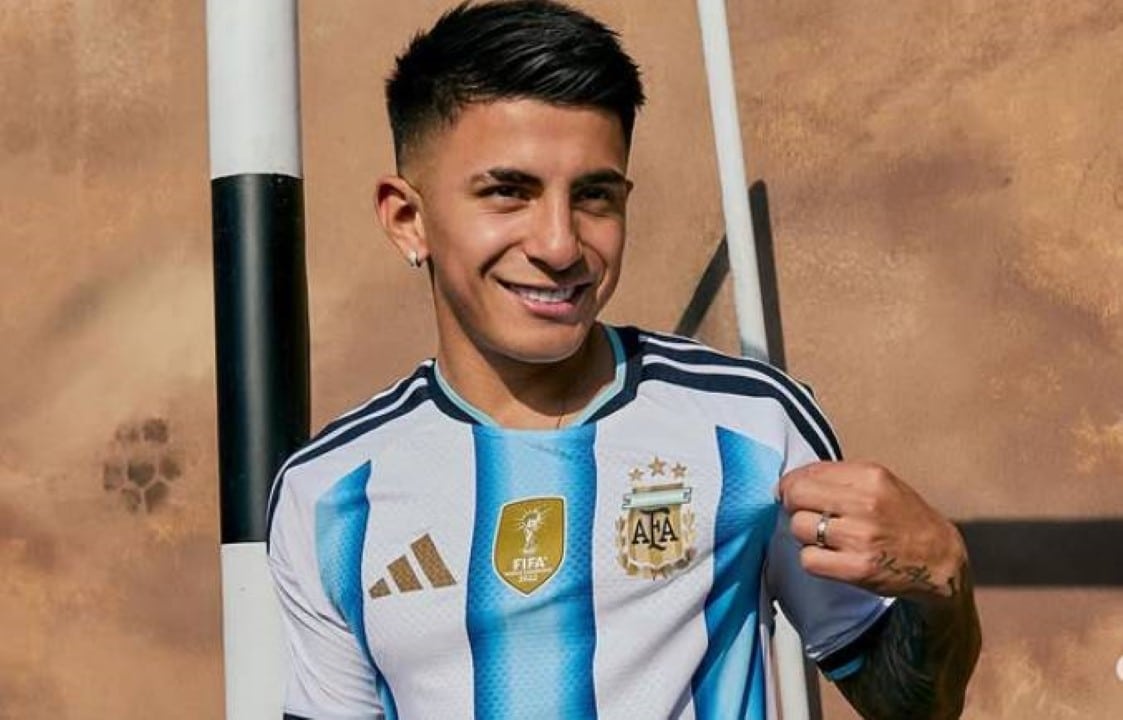
Thiago Almada’s arrival in Argentina marks the beginning of a decisive phase in the 25-year-old player’s career. Chosen by Lionel Scaloni to join the national team’s squad at the 2026 World Cup, the athlete sees the competition not only as a national commitment, but as a professional turning point. The call-up comes at a time of low usage in European football, making the tournament in North America the main platform to redefine its future in the sport.
The attacking midfielder’s presence in the final list of the world champion team reflects a common dynamic in Albiceleste’s technical management. Even without being among the absolute starters at his current club, the player maintains prestige with the national coaching staff. The tactical versatility and the history of consistent performances with the country’s shirt outweighed the lack of rhythm in club competitions, guaranteeing their place in the group that travels to the United States, Canada and Mexico.
During the European season, the numbers recorded a discreet participation by the Argentine. There were three goals scored and one assist distributed over 27 matches played in the Spanish Championship. This volume of games highlights the difficulty of adapting to the scheme required on the continent, a scenario that drives the search for new opportunities after the end of the selection calendar and the opening of the transfer market.
Competition in Spanish football limits athlete development
The game system implemented by Diego Simeone at Atlético de Madrid requires physical characteristics and defensive recomposition that often sacrifice creative players. Within this rigid structure, the midfielder found strong competition in the offensive sector and began to be used mainly as a replacement for the final minutes of matches. The lack of a sequence in the starting eleven raised questions about maintaining its competitive level for high-performance international competitions.
Despite external doubts, the team’s environment offers a direct contrast with the reality experienced in the Spanish capital. The national coach sees the athlete as a fundamental cog in the process of renewing the Argentine midfield, which gradually inserts younger players alongside established veterans. The integration with names like Nico Paz demonstrates the federation’s long-term planning to keep the team at the top of world football.
The player himself adopted a pragmatic stance upon arriving in his home country for the training period. In initial statements, he made it clear that negotiations on transfers and renewals are at a standstill until the end of the team’s participation in the tournament. The exclusive focus on the pitch serves as a necessary shield against the daily speculation in the football market.
Financial strategy and the long contract with the European team
Atlético de Madrid’s board of directors is observing the call-up with great financial and strategic interest. The institution made a significant investment to acquire the athlete’s economic rights and now uses the global exposure of the FIFA event as a capital recovery mechanism. A standout Argentina campaign has the potential to inflate the value of a player’s pass in a matter of weeks, attracting buyers from different continents.
The contractual bond signed between the parties is valid until 2030, which guarantees the Spanish team full control over any ongoing negotiations. However, a prolonged stay on the reserve bank gradually devalues the asset, making a definitive sale or a loan with an obligation to purchase the most logical options for next year’s transfer window.
The player’s staff is already actively working with the changing scenery. The midfielder’s technical priority is to find a sporting project that offers immediate ownership and the possibility of commanding the team’s offensive actions. This demanding profile opens doors both for lower-ranking teams in the main European leagues and for financial powers in South America willing to invest heavily.
Movements in the South American market and surveys in Brazil
Returning to the continent of origin appears as a viable alternative, driven by the economic power of specific clubs seeking strong reinforcements. In Argentina, River Plate took the lead in preliminary conversations behind the scenes. The board of directors of the Buenos Aires club signaled its willingness to pay approximately 20 million euros to acquire the share of rights that belongs to the Spaniards, a value considered extremely high by local standards.
Although the player maintains his initial preference for continuing to play in the European market, the guarantee of protagonism in competitions such as the Copa Libertadores attracts the attention of his representatives. Brazilian football, known for repatriating South American talent with internationally competitive salaries, is also monitoring the situation closely through two of its biggest teams, who are looking for market opportunities.
The scenario of interested parties outside of Europe presents different proposals and approaches to try to convince the midfielder:
- River Plate: Leads the investments in Argentina with a repatriation project valued at around 20 million euros, offering the number ten shirt and protagonism in the home country.
- Cruzeiro: He carried out direct consultations with the athlete’s representatives, betting on the positive history that the player built during his time at Botafogo to convince him to return to Brazilian football.
- Flamengo: Follows the progress of the negotiations remotely, using the recent good traffic with the Atlético de Madrid board as a logistical asset to formalize a possible official proposal.
- Vélez Sarsfield: Club responsible for training athletes in the youth categories, is on the outside in the dispute, appealing for emotional identification and a return to sporting origins.
Tournament performance sets transfer schedule
The transfer window that opens after the world tournament usually sees the most aggressive financial moves in the sport, redefining entire squads. Performance on North American pitches will dictate the pace of offers that will reach the table of Spanish officials. Players who achieve consistent minutes and direct participation in goals during the competition usually receive formal offers even before returning to their home clubs.
For the Argentine midfielder, the tactical and mental challenge is double in this final stretch of the season. He needs to prove to the international market that the lack of minutes in Spain was a matter of tactical incompatibility with the coach, and not a drop in technical performance. The national team’s technical committee offers the ideal platform for this, putting together a scheme that favors possession of the ball and the infiltration of creative midfielders, characteristics that made the athlete famous in the first years of his professional career.
The expectation of the directors of Cruzeiro, Flamengo and River Plate is that the definition of the player’s future will take place shortly after the final whistle of Argentina’s participation in the tournament. Until then, the market analysis departments of these teams continue to evaluate the cost-benefit of the financial operation, aware that each good performance under the command of Lionel Scaloni adds a few million euros to the final transfer price projected for the year 2027.
