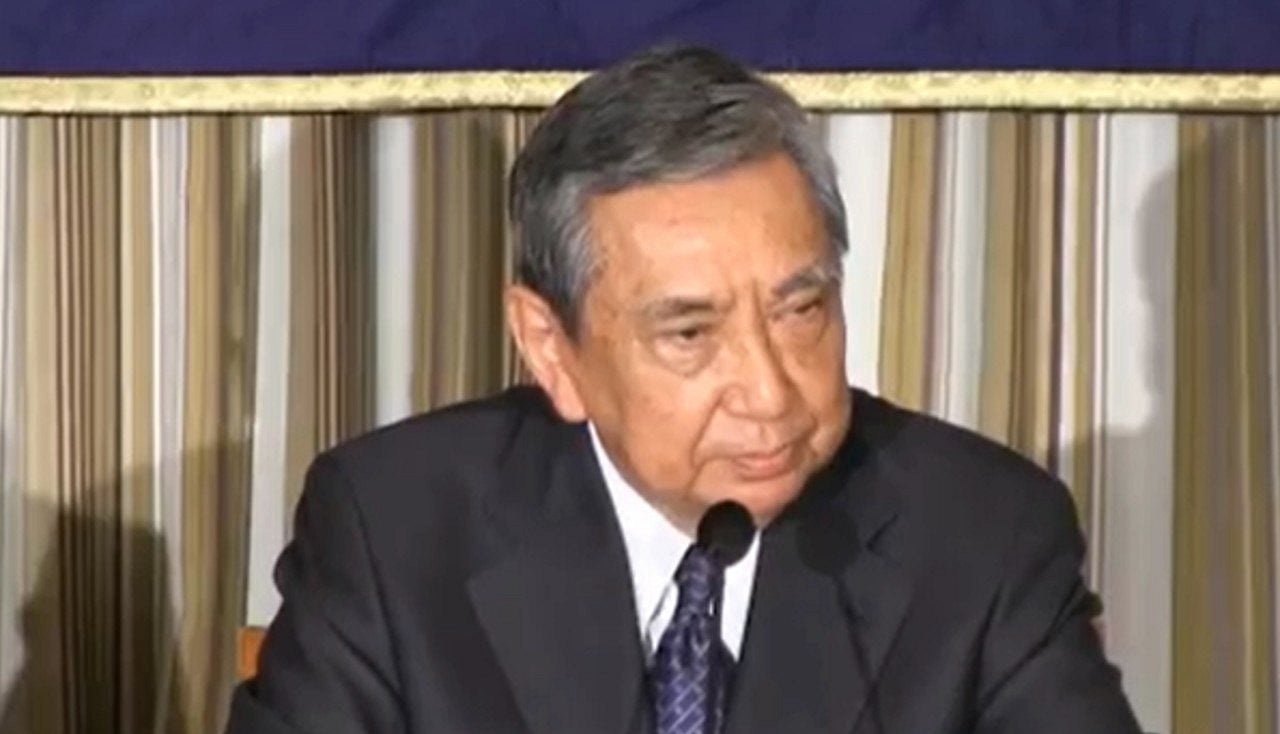
Yohei Kono, former speaker of Japan’s House of Representatives and one of the main figures of the Liberal Democratic Party (PLD), died on June 8, 2026, at the age of 89. Born in Kanagawa Prefecture, he was reported dead by people close to him on Wednesday (10). The funeral and tribute ceremony took place privately, restricted to the family. A seventh-day mass will still be scheduled.
Kono marked post-war Japanese politics as a defender of a constitutionalist and pacifist line. In 1993, as chief cabinet secretary in Kiichi Miyazawa’s government, he issued the declaration that bears his name, acknowledging the Imperial Army’s involvement in coercing women into the “comfort” system during World War II. The text expressed “apologies and remorse” and became a reference in international discussions on the topic.
Political trajectory of almost five decades
A graduate of Waseda University in 1959, Kono was elected to the House of Representatives in 1967 and served 14 consecutive terms. In 1976, he broke with the PLD, criticizing what he saw as self-serving excesses, and founded the Novo Clube Liberal, of which he became leader. Years later, he returned to the party and held ministerial positions, including Science and Technology in the government of Yasuhiro Nakasone.
After the defeat of the PLD in the 1993 elections, he assumed the presidency of the opposition party. During this period, he participated in negotiations that led to the reform of the electoral system, with the introduction of mixed single-member districts and proportional representation. In Tomiichi Murayama’s coalition government in 1994, he served as deputy prime minister and minister of foreign affairs — the first president of the PLD since the party’s founding who never reached the position of prime minister.
Legacy in foreign affairs and in the Chamber
Kono returned to be Minister of Foreign Affairs in the governments of Keizo Obuchi and Yoshiro Mori. In November 2003, he was elected Speaker of the House of Representatives, a position he held for 2,029 days, the longest in the history of the Japanese parliament, until he retired in July 2009.
His trajectory reflects the transformations in Japanese politics in recent decades: from internal critic of the dominant party to negotiator in moments of instability and, finally, institutional guardian of the Chamber. The 1993 declaration, in particular, continues to influence debates about historical memory in Japan and Asia, even as controversies persist to this day.
