
This Wednesday (10), the Moon is in its waning phase. The natural satellite remains visible in the sky with a shape that resembles the letters D and C in the Southern Hemisphere. There are just a few days left until the arrival of the new Moon.
Moon Phase today: 06/10/2026 Today the Moon is in its waning phase.
June lunar calendar
The waning Moon began on the 8th, at 7:03 am. The new Moon arrives on the 14th, at 11:56 pm. The waxing Moon begins on the 21st, at 6:55 pm. The full Moon occurs on the 29th, at 8:58 pm.
The month of June opens with the waning phase. Then the satellite passes to the new Moon. Then comes the crescent Moon. The cycle ends with the full Moon ending the period.
How does the lunar cycle work?
The lunation, also known as the lunar cycle, represents the interval between two new Moons. This period has an average duration of 29.5 days, with little variation. The satellite goes through four main phases: new, waxing, full and waning. Each phase lasts about seven days.
What is the next phase of the Moon?
The next phase of the Moon begins on 06/14/2026. It will be the new Moon.
What are the phases of the Moon like?
The phases of the Moon result from the gravitational interaction between the satellite, the Sun and the Earth. Each of the four stages defines the level of visibility of the star for observers on the Earth’s surface: waning, new, waxing and full.
Waning Moon
The waning Moon shows a shape similar to the letters D and C. This appearance changes depending on the observation position in the Earth’s Southern Hemisphere.

New moon
At the new Moon, the satellite is aligned in the same direction as the Sun in relation to the Earth. Therefore, it remains visible during the day and cannot be observed from the planet, which explains the absence of images recorded at this stage.
Crescent Moon
On the waxing Moon, sunlight illuminates the western half of the satellite. In the Southern Hemisphere, it resembles the letter C. In the Northern Hemisphere, its appearance resembles the letter D.

Full moon
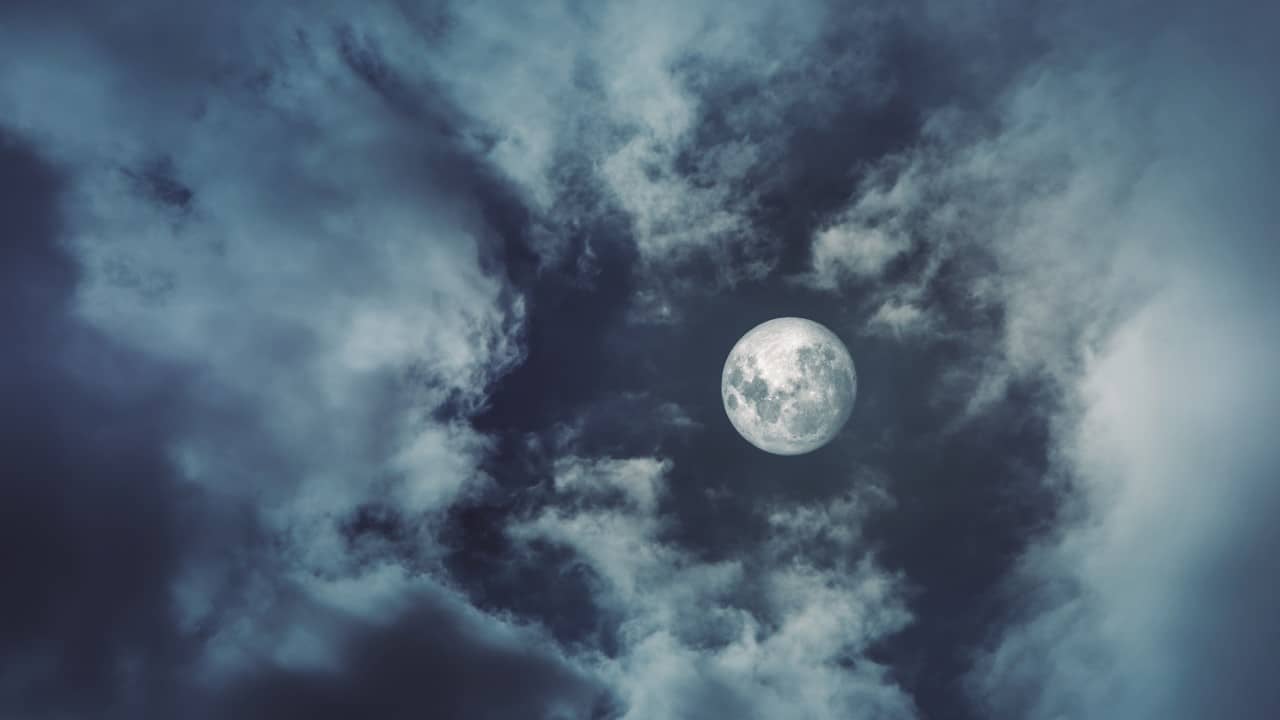
The full Moon is the brightest and most visible phase on Earth. The satellite is positioned in the opposite direction to the Sun, reflecting light across its entire surface.
How far is the Moon from Earth?
The distance between the Moon and Earth reaches about 399,877 km on this date, although it varies throughout the satellite’s elliptical orbit.
Is the Moon in the Southern Hemisphere “different” from the Moon in the Northern Hemisphere?
The Moon is the same for all observers. However, its appearance changes depending on the hemisphere from which it is looked. In the Southern Hemisphere, as in Brazil, the orientation appears inverted compared to what is seen in the Northern Hemisphere.
Another peculiarity is that we always observe the same face of the Moon from Earth. This occurs because the satellite’s rotation time coincides exactly with the period of translation around our planet.
