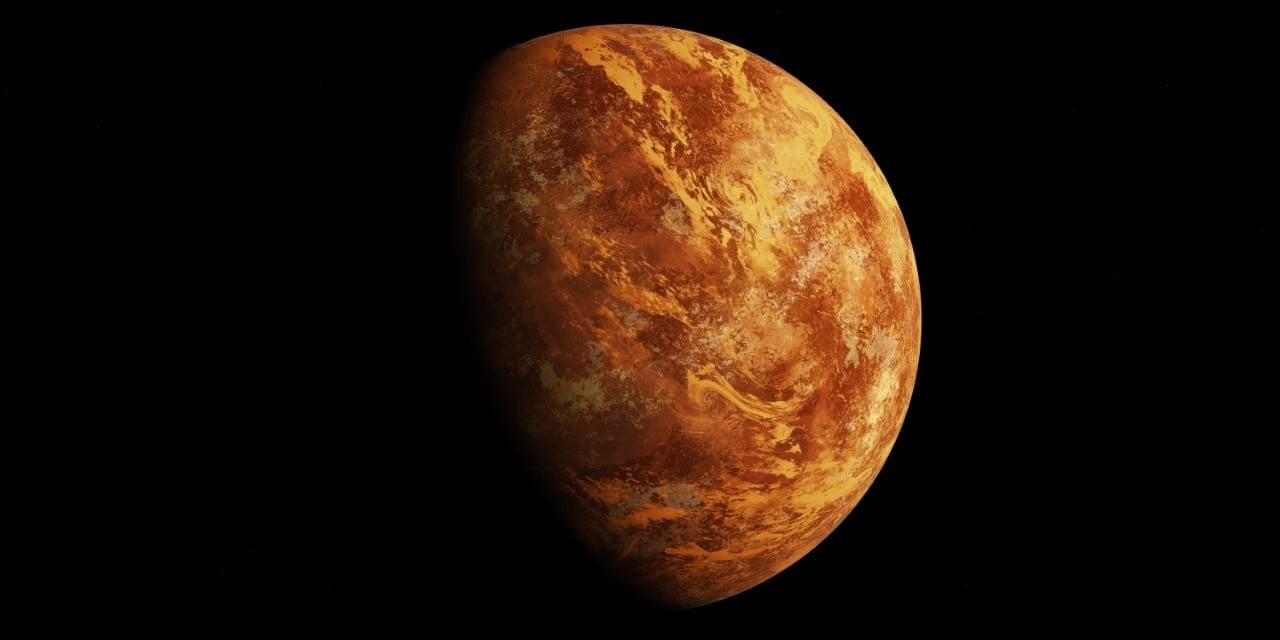
Astronomers have identified what they consider the most convincing evidence to date that planets outside the Solar System have magnetic fields. The discovery could pave the way for significant advancement in the search for worlds capable of retaining water, maintaining a stable atmosphere and, perhaps, harboring life forms.
The study examined seven Jupiter-like gas giant exoplanets. The researchers worked with information collected by the Very Large Telescope (VLT), of the European Southern Observatory, in the Atacama Desert, in Chile, and also by the Gemini North telescope, in Hawaii.
Scientists analyzed the atmospheric winds of these extremely hot planets. The speeds measured ranged from around 7,200 km/h to more than 25,000 km/h, that is, approximately 15 times higher than the strongest air currents ever recorded on Jupiter.
According to the team, the results show that these winds are directly influenced by planetary magnetic fields. The authors highlight that this is the first solid evidence of magnetism on planets located beyond the Solar System.
The main author of the work, Julia Seidel, said that the discovery opens a new stage in investigations into exoplanets. For her, from now on it will be viable to compare the magnetic environments of different distant worlds, which is essential to determine which planets are able to preserve their atmospheres and offer conditions conducive to life.
On Earth, the magnetic field plays a crucial role in protecting the atmosphere from particles coming from the Sun. Experts see this mechanism as relevant for the preservation of liquid water and the existence of life. Other planets in the Solar System, such as Jupiter and Saturn, also have strong magnetic fields.
Even after years of studying exoplanets, scientists have not yet obtained direct measurements of the strength of these magnetic fields on such remote worlds.
The planets evaluated always keep one side facing the star they orbit, while the other remains in permanent darkness.
This configuration causes extreme temperature contrasts between the two sides of the planet. The side facing the star registers intense heat, while the opposite side has much lower temperatures. This difference drives very high-speed atmospheric winds.
At first, the researchers just wanted to check whether the winds on these hot planets followed a similar pattern. However, the data showed an unexpected finding: the hotter the planet, the slower the observed winds.
Study co-author Vivien Parmentier pointed out that the observation seemed counterintuitive. According to him, hotter planets should have more energy to drive atmospheric winds.
The most plausible explanation given by the team was the existence of global magnetic fields. These fields would act as a type of brake, slowing down electrically charged particles and reducing wind speeds.
From this phenomenon, scientists were able to estimate the intensity of the magnetic fields of these exoplanets. The values obtained are comparable to those recorded on planets in the Solar System itself.
Researchers estimate that some of these magnetic fields are about four times as intense as Saturn’s and about half as strong as Jupiter’s magnetic field.
In addition to affecting atmospheric winds, scientists believe that these magnetic fields can generate phenomena similar to the auroras seen on Earth, resulting from the interaction between solar particles and the planet’s atmosphere.
The study was published in the scientific journal Nature Astronomy and represents a relevant advance in understanding the functioning of environments on planets outside the Solar System and which of them could, in the future, meet suitable conditions to support life.
