A bag announced as the first luxury item made with cellular leather inspired by Tyrannosaurus rex will be auctioned this Thursday (11) at the Drouot house in Paris. The unique piece is valued at between US$350,000 and US$580,000, the equivalent of around R$1.8 million and R$3 million. The auction marks a milestone at the intersection of paleontology, biotechnology and high-end fashion.
The material was developed from traces of collagen extracted from the femur of a T. rex discovered 25 years ago in the state of Montana, in the United States. Instead of using fossil skin directly, scientists reconstructed ancient protein sequences and inserted them into cellular systems to produce collagen in the laboratory, resulting in skin that is authentic in structure but created without any current animal extraction.
The bag was presented to the public in early April at the Art Zoo (or Artis) museum in Amsterdam, the Netherlands. Since then, it has sparked international interest as it represents a new frontier in the luxury sector. Experts associate the item with advances that can reduce dependence on intensive livestock farming in the production of traditional leather.
Iacopo Briano, a paleontology specialist linked to the sale, explained the process in a recent interview. “In recent years we have been able to develop techniques, biotechnologies with which we can give instructions to a cell culture to ‘build’ an authentic T. rex skin in the laboratory,” he stated. He highlighted that the material differs from plastic-based vegan options as it is 100% skin grown from cell culture, although it originated from an animal that became extinct 66 million years ago.
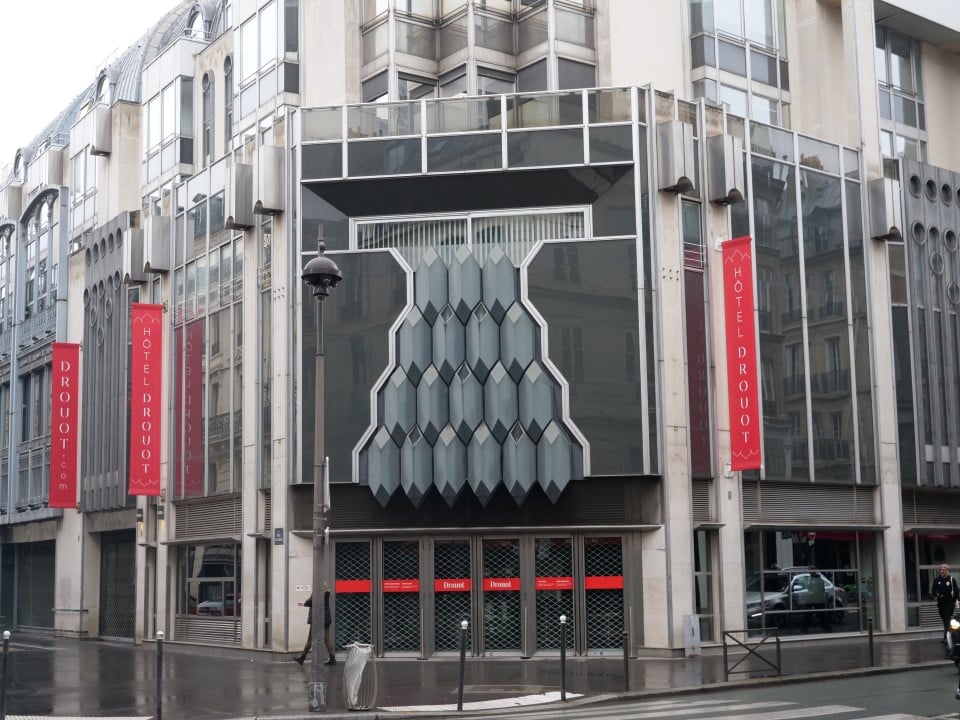
Auction house Drouot, through Giquello, describes the object as “an unprecedented item in the history of luxury” and a “scientific feat.” In the official statement, the company highlights that cellular leather paves the way for exclusivity that no longer depends on extraction or intensive animal farming. The auction takes place at 1pm (Brasília time) at Tentation°4, in a room at the iconic Hôtel Drouot.
Scientific breakthrough behind prehistoric leather
The development involved Lab-Grown Leather Ltd., a subsidiary of BSF Enterprise PLC, in collaboration with companies such as Enfin Levé (responsible for design) and VML (creative direction). The technique reconstructs ancient proteins through computational biology and tissue engineering, transforming them into viable material for fashion products. This is not a genetic clone of the dinosaur, but a targeted collagen recreation that replicates characteristics of the original skin.
Experts see this as a test for larger applications. While traditional crocodile or bovine leather requires animal husbandry and significant environmental impact, cellular allows for controlled, potentially scalable production. The T. rex bag serves as a demonstration piece to showcase commercial viability and attract collectors willing to pay a premium for innovation and rarity.
What does this mean for the luxury market
The auction comes at a time of increasing pressure on the fashion industry for sustainability. High-end brands seek alternatives that maintain status and exclusivity without the ethical and environmental costs of livestock farming. The success of the piece could open doors for future lines using collagens from other extinct species or even from current animals grown in the laboratory, reducing emissions and land use.
Compared to icons such as the Hermès Birkin, the item brings a narrative difference: it carries a 66 million-year-old paleontological history combined with cutting-edge technology. Analysts estimate that the final value could exceed initial projections if art, science and fashion collectors compete. The choice of Paris, the world’s fashion capital, reinforces the symbolism of uniting a profound past with a future of luxury.
Iacopo Briano and the team involved emphasize that the material is not mere curiosity. It demonstrates how fossil remains, previously limited to museums, can generate tangible products that provoke debate about responsible consumption. For the buyer, in addition to the rare object, it represents participation in an unprecedented chapter in the history of sustainable luxury.
The outcome of the auction will be closely monitored by BSF Enterprise investors and the biotech sector. If it reaches the top of the estimate, it will reinforce the thesis that scientific innovation can command premium prices in a traditionally conservative market. Meanwhile, the bag remains on display in Paris before the hammer falls, attracting looks from those who see the dinosaur as more than a fossil — a symbol of future possibilities.
