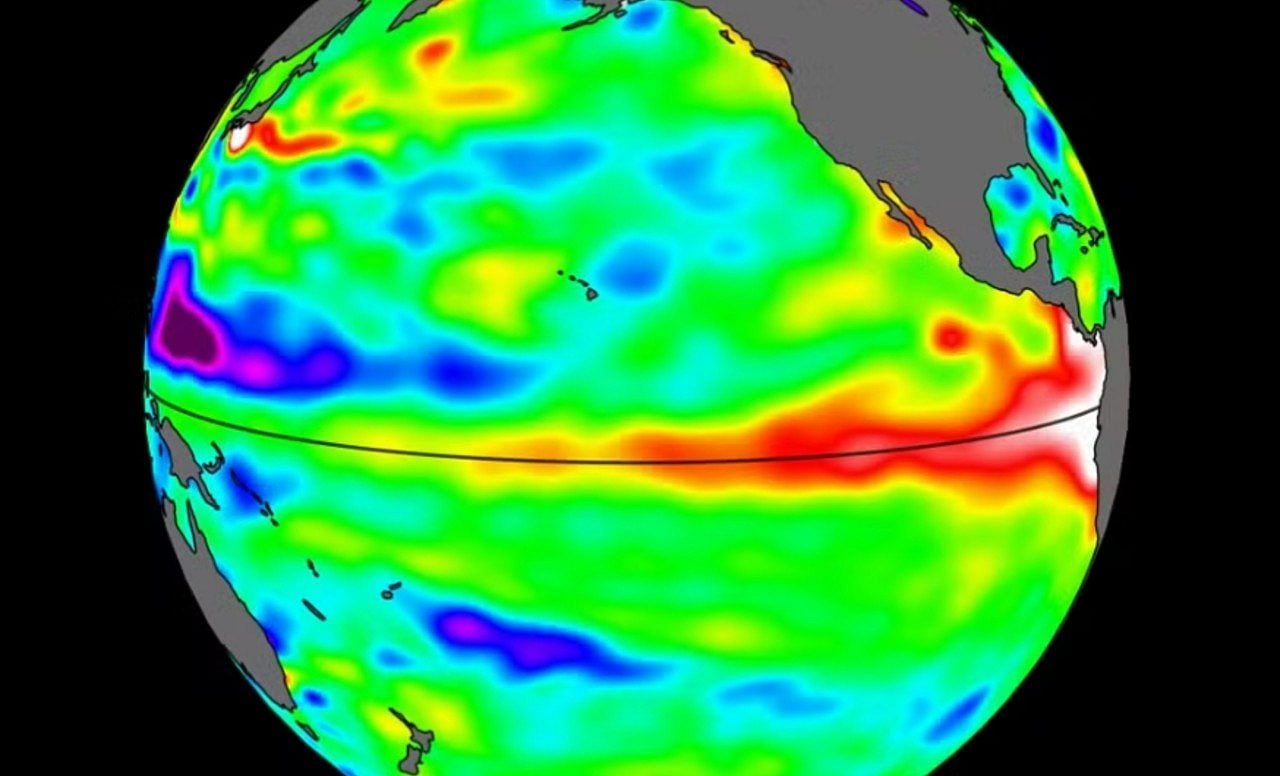
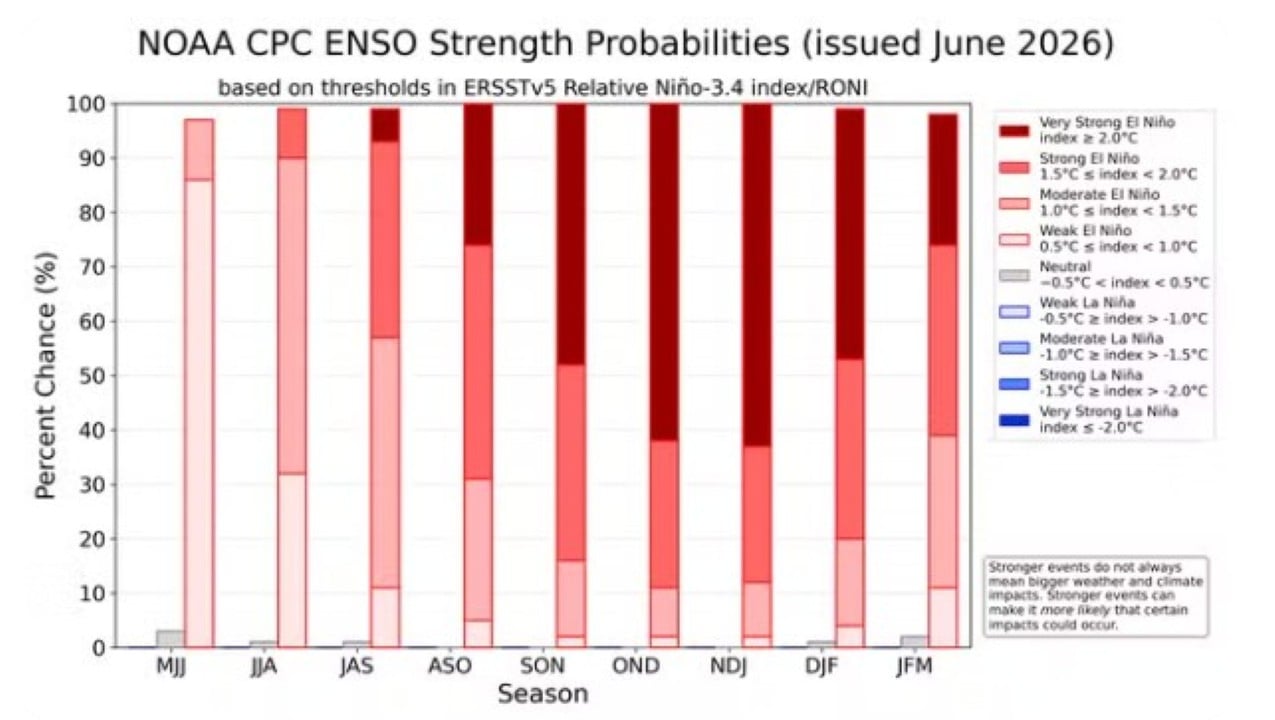
The United States Oceanic and Atmospheric Administration (NOAA) announced this Thursday (11) the official confirmation of El Niño, with conditions already established in the Equatorial Pacific. The agency raised concerns about the intensity, indicating a 63% probability that the phenomenon will become very strong between November and January, and could be among the largest since 1950.
The phenomenon, characterized by the abnormal warming of Pacific surface waters, alters global rainfall and temperature patterns. In Brazil, the effects are expected to intensify from spring onwards, with more precipitation in the South and risk of drought in the North and Northeast.
What changes in practice for Brazil
Experts highlight that, on a planet already heated by climate change, even a moderate El Niño amplifies extremes. In the South, the increase in rainfall increases the risk of floods, storms and landslides — something that is especially worrying in Rio Grande do Sul, which is still recovering from recent events. In the North and Northeast, the reduction in rainfall can worsen droughts, affect rivers in the Amazon, fires and the supply of riverside communities.
In the Southeast and Central-West, projections indicate more frequent heat waves and irregular rains, with impacts on agriculture and hydroelectric reservoirs. The phenomenon can put pressure on energy generation, increase costs and influence food prices.
Comparison with past events
The last strong El Niño, in 2023-2024, has already contributed to global and extreme heat records in Brazil. If the current one reaches “very strong” intensity, it could rival those of 1997-98 or 2015-16, which marked severe droughts, floods and historic heatwaves. The difference now is the context of long-term global warming, which tends to make impacts more intense.
Scientists monitor the coupling between ocean and atmosphere to define the final strength of the event, which usually lasts around 12 months.
Preparation and monitoring
Bodies such as Cemaden and INMET follow developments. Rural producers and public managers are already alerted to adjustments in planting, water management and contingency plans. El Niño does not cause global warming, but it acts as an amplifier in a warmer world.
