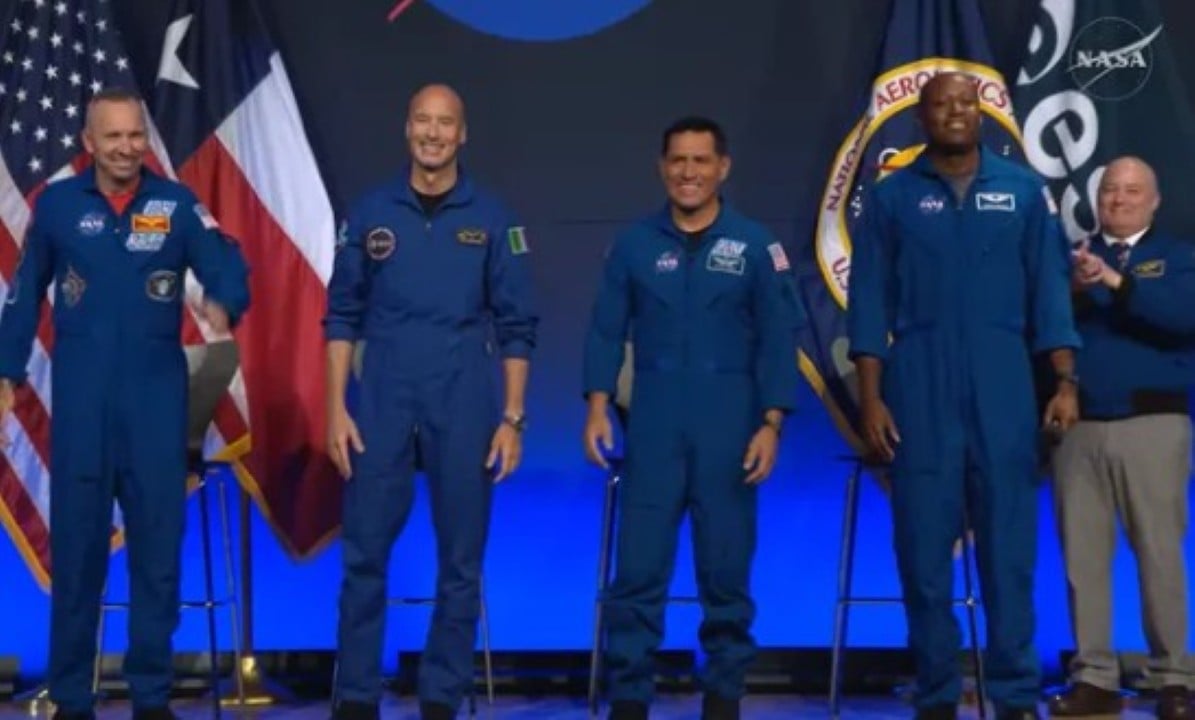
The head of NASA, Jared Isaacman, came out in defense of the crew announced for the Artemis III mission, made up exclusively of men, and reinforced that the choice followed strictly technical criteria.
The decision generated questions on social media, especially because the Artemis program had already promised to include a woman and a black person in the first landing of the century. Isaacman, however, stated that the selection is not related to political decisions.
“I’ve seen reactions ranging from disappointment to outrage,” Isaacman wrote on his X account. He explained that the Astronaut Office chooses the team that offers the greatest chance of success for the mission’s objectives, considering experience, profile and availability.
Artemis III, scheduled for the end of 2027, will not land on the Moon. The focus will be on testing the Orion spacecraft in low Earth orbit, performing rendezvous and docking maneuvers with prototype lunar landing modules developed by private companies, such as SpaceX and Blue Origin. This step is considered essential to validate systems before Artemis IV, which is expected to take astronauts to the lunar surface in 2028.
Experienced crew
The team is made up of commander Randy Bresnik, pilot Luca Parmitano, from the European Space Agency, and mission specialists Frank Rubio and Andre Douglas, all from NASA. Bob Hines was assigned as a backup astronaut.
Bresnik, Parmitano and Rubio have extensive spaceflight experience, including extended stays at the International Space Station. Douglas served as backup for the Artemis II crew. NASA highlights that the group has the ideal skills for complex docking and life support tests in space.
Changes in the context of diversity
Since Donald Trump’s return to the White House, federal agencies, including NASA, have been ordered to eliminate diversity, equity and inclusion initiatives. The agency removed references to previous commitments to land a woman and a person of color on the Moon from some official pages.
Isaacman recalled that NASA has a large and qualified group of astronauts, and that members of the current group undergoing specific training for landing should be prioritized in future landing missions. He asked that the focus be on celebrating those selected and the integrity of the process.
The mission marks another step in the United States’ effort to return to the Moon in a sustainable way, in partnership with private companies and international agencies. The success of Artemis III will be decisive for the ambitious schedule that foresees continuous human presence on the natural satellite.
