North America hosts the biggest tournament in World Cup history, generating great anticipation among football fans globally, especially with the highly anticipated matches and opening festivities scheduled for Thursday and Friday.
In an unprecedented event, cities such as Mexico City, New York and Toronto are preparing to welcome millions of fans, who will follow the 48 national teams competing in the 2026 FIFA Men’s World Cup. This edition marks the debut of the expanded format, a significant increase in relation to the 32 teams that have participated since 1998.
For the first time in history, the championship, considered one of the greatest global sporting spectacles, will be co-organized by three countries.
Details of the 2026 World Cup kick-off festivities
With games spread across eleven cities across the United States, Mexico and Canada, football fans will experience, for the first time in the tournament’s history, three distinct opening ceremonies. This unprecedented approach reflects the logistical complexity and expanded scale of the event, which now encompasses multiple countries and a record number of teams.
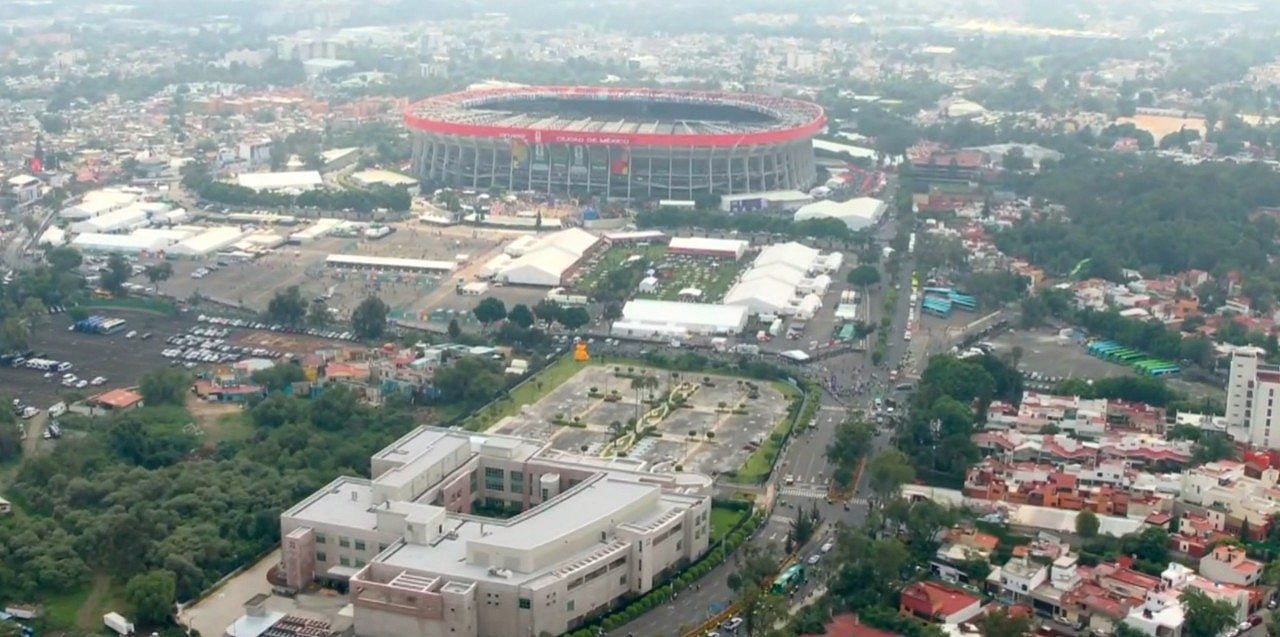
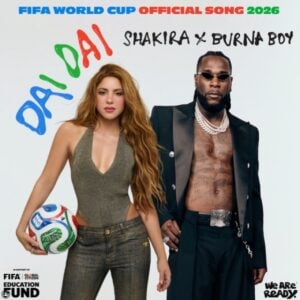
The first inaugural celebration will take place on Thursday at the Azteca Stadium in Mexico City, preceding the Group A clash between Mexico and South Africa. Singer Shakira and Burna Boy are confirmed to perform “Dai Dai”, the official song of the 2026 FIFA World Cup.
Scheduled to start at 11:30 am local time (1:30 pm Brasilia time), the show will also feature the participation of several other musicians from the FIFA World Cup debut album, such as Alejandro Fernández, Belinda, Danny Ocean, J Balvin, Lila Downs, Los Ángeles Azules, Maná and Tyla, as announced by FIFA.
On Friday, the city of Toronto, Canada, will host another landmark event: the host country will face Bosnia and Herzegovina at the newly revitalized BMO Field. The stadium reported that its capacity was expanded from 28,000 to 45,000 spectators, in anticipation of the large turnout for the World Cup.
An hour and a half before kickoff, scheduled for 1:30 p.m. ET, Canada will host its own opening ceremony, with performances by Alanis Morissette, Alessia Cara, Jessie Reyez, Michael Bublé and guests.
The United States will also have its inaugural ceremony on Friday, before the U.S. Men’s National Team’s home opener against Paraguay. The celebrations in Los Angeles, scheduled for 4:30 pm local time (7:30 pm in Brasília), will feature big names such as Katy Perry, Future, Anitta, LISA, Rema and Tyla.
Gianni Infantino, President of FIFA, highlighted that “the choice of artists reflects the cultural diversity and richness of the diverse North American diasporas, highlighting the country’s profound influence on music, entertainment and pop culture, and the power of music to unite the population across the country.”
Initial duels and memorable reunions in Group A of the World Cup
After the opening celebrations on Thursday, June 11, the ball will roll for the clash between Mexico and South Africa, starting at 2pm local time, or 3pm in Brasília time zone.
This clash brings ‘déjà vu’ to fans, as both teams met on June 11 during the 2010 FIFA World Cup, hosted in South Africa. That match ended in a 1-1 draw. However, this time, the Mexican team will enjoy the benefit of playing on their own territory.
Still on Thursday, another dispute for Group A will take place at 9 pm local time (11 pm in Brasília), placing South Korea and the Czech Republic face to face at the Akron Stadium, located in Zapopan, near Guadalajara, Mexico.
On Friday, Canada and Bosnia and Herzegovina will face each other at 3 pm (Brasília time) in Group B. It will be a historic moment for Canada, who will play their first home match in a World Cup.
At SoFi Stadium, in Los Angeles, the game between the United States and Paraguay is scheduled for 6 pm local time (9 pm Brasília time). The last time the North American men’s team played a World Cup game at home was on July 4, 1994, when they were eliminated in the round of 16 by eventual champions Brazil, with a score of 1-0.
Nike reported that the American team will use completely new uniforms, which bring back classic designs, including the famous stripes seen 32 years ago.
Intensified security measures in the United States for the tournament
To accommodate the record influx of fans, the FBI deployed tactical teams to several cities, including Atlanta, Boston, Dallas, Houston, Kansas City, Los Angeles, Miami, New York, New Jersey, Philadelphia, the San Francisco Bay Area and Seattle, FBI Director Kash Patel announced this week.
Patel explained that the group of crisis response experts will be tasked with “supporting the extensive security work necessary to protect athletes, fans and visitors.”
CBS Boston reports that fans planning to attend games at Gillette Stadium in Foxborough, Massachusetts, will need to arrive more than an hour early to comply with safety protocols.
Marlo Graham, special agent at the FBI’s Atlanta office, told CBS Atlanta that the planning for the men’s World Cup is similar to that of other major events, with the exception that the tournament will last an extended period of 39 days.
Graham added: “Our tactical teams have been in joint training with other partner agency teams for months in preparation for this event.”
Immigration and Customs Enforcement (ICE) will also play a crucial role in event security. Tom Homan, the White House border czar, told CBS News last week that ICE’s “top priority” will be national security, not immigration enforcement.
This championship takes place after the efforts of the Trump administration, which for more than a year sought to impose restrictions on entry into the USA, raising concerns about possible impacts on the games.
A Somali soccer referee, originally selected to officiate FIFA World Cup matches, was denied entry into the United States last weekend, according to a statement from Customs and Border Protection, which cited “background check concerns.” A FIFA representative confirmed Omar Abdulkadir Artan’s refusal to enter the USA, however, authorities did not reveal the reason.
Rules on items permitted in the 2026 World Cup stadiums
FIFA’s stadium conduct guidelines specify that non-transparent bags and objects considered dangerous, such as weapons, body protection equipment, helmets, umbrellas, strollers and chairs, are prohibited inside the arenas during tournament games.
Initially, the organization had banned “bottles, cups, pots, cans or any other type of closed container or container with a lid that could be thrown or cause injury”, as well as water bottles with their own brand. However, due to the games being held at the height of summer and growing concerns about extreme heat for health and safety, FIFA was the target of criticism from fans over the ban on reusable water bottles.
English fan group Free Lions spoke out on X, asking: “What’s next? Sunscreen banned and fans forced to buy it in stadiums?” In his view, “naturally, fans’ first thought is that this is just another extortion attempt.”
Subsequently, Heimo Schirgi, director of operations for the 2026 FIFA World Cup, used social media to clarify that spectators will be allowed, in stadiums in the USA and Canada, to carry a disposable water bottle, made of flexible plastic and factory sealed, with a maximum volume of 590 ml (equivalent to 20 ounces). However, rigid and reusable water bottles remain banned.
The Associated Press reported that all drinks sold at the World Cup stadiums, including water, soft drinks and juices, will be supplied exclusively by Coca-Cola, which is a historic sponsor of FIFA.
Fan enthusiasm overcomes challenges with ticket prices
With clashes scheduled for 16 different stadiums, a greater number of fans will have the chance to watch the matches live – provided they can afford what one fan described as “absolutely exorbitant ticket prices”.
Phil Labas, captain of the Chicago chapter of the American Outlaws, a collective of 30,000 football enthusiasts in the United States, criticized: “It’s an absolutely exorbitant amount compared to ticket prices to watch a game.”
Ticket prices for the group stage of the World Cup have increased, reaching hundreds and even thousands of dollars in certain matches. Labas revealed to CBS News that, although he has followed almost all of the U.S. Soccer Team’s events over the past four years, at this World Cup, played at home, members of the Outlaws had to purchase seats in the highest sections of the stadiums.
He lamented: “We’re in section 300. We’re on the top floor, in a corner… It’s a real injustice.”
Although Labas and the other members of the American Outlaws were further away from the field of play than they would have liked, they said they were prepared for the experience.
Labas assured: “You will hear us, you will see us if the camera focuses on us, but we will certainly be present.”
Predictions and featured teams for the 2026 World Cup
Predicting that the 2026 World Cup will be one of the biggest betting events in history, enthusiasts in the segment are already looking to identify the favorites to advance from the group stage.
Joachim Klement, a German economist known for correctly predicting the winners of the last three World Cups, revealed to Ramy Inocencio, from CBS News, that his bet for 2026 is a selection considered unlikely: the Netherlands.
Klement explained that his preference for the European nation is due to the fact that the Netherlands are among the “teams that consistently exceed expectations”, placing them above favorites such as France, Spain, England and Brazil at the bookmakers. The Netherlands, it is worth remembering, reached the FIFA World Cup final on three occasions: 1974, 1978 and 2010.
For Klement, “they have a team that, although it does not have stars of the caliber of [Lionel] Messi in Argentina, is extremely balanced in terms of the performance of all the players, with no significant weaknesses.” He added: “The second characteristic is a very solid defense, and in football, more than in most sports, there is the saying that offense wins games, but defense wins tournaments.”
Regarding the United States team, Klement pointed out a scenario with positive and negative aspects.
With the North American team allocated to Group D, the favorable outlook is that the United States finds itself at a competitive level similar to that of Paraguay, Australia and Turkey, which gives them the opportunity to advance from the group stage and, who knows, reach the quarterfinals, according to him. The disadvantage, however, lies in the fact that football is not the predominant sport among Americans.
Klement noted: “The United States has a wide range of sports that compete for talent, meaning football is not the main or most relevant sport in the country.” In contrast, he mentioned that “in Europe or Latin America, football holds primacy, and other sports come second.”
Even though football’s popularity in the US is lower compared to other sports, Bookies.com estimates that Americans will bet US$3.1 billion on World Cup games through online platforms. This amount represents significant growth compared to the US$1.8 billion recorded in 2022, as reported by CBS News. Additionally, prediction markets such as Kalshi and Polymarket are expected to generate a further US$2.4 billion in bets, according to estimates from the sports betting portal.
