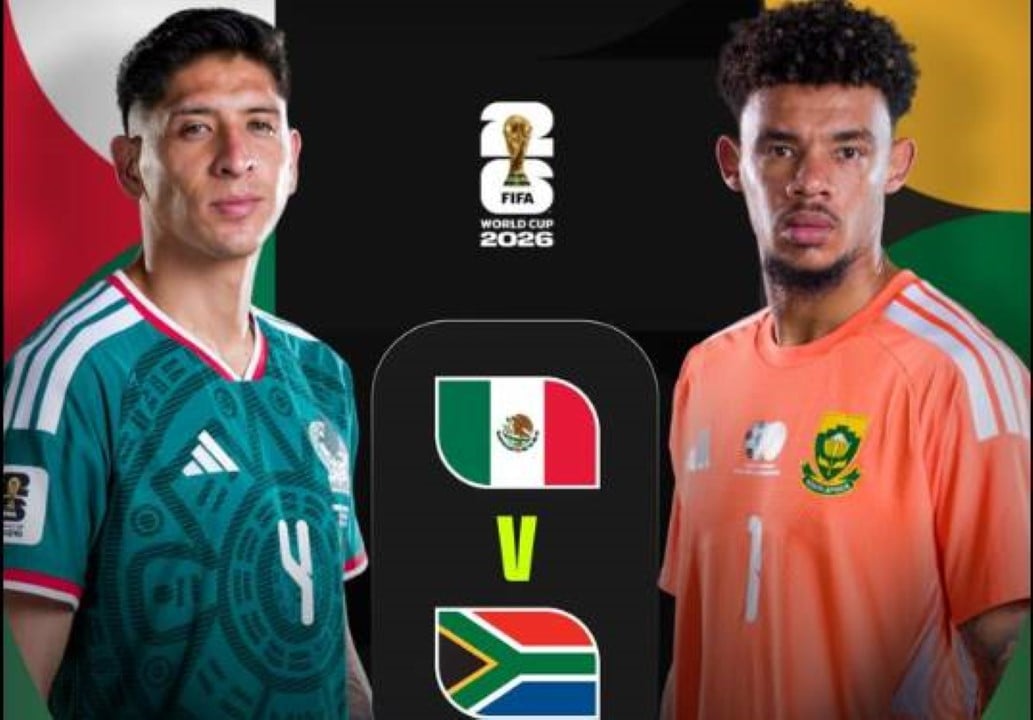
The long-awaited clash between the teams of Mexico and South Africa, valid for the first round of Group A of the 2026 FIFA World Cup, already has its starting lineups defined. The clash is scheduled for June 11, 2026, at 4pm (local time), at the emblematic Azteca Stadium, in Mexico City, promising an electrifying atmosphere for one of the opening games of the competition which, for the first time, will feature 48 teams. This duel not only marks the beginning of the journey for both teams in search of the world title, but also represents a historic milestone for global football.
Expectations are high to see how each team will behave with the lineups chosen by their coaches. The Mexican team, known for its attacking style of play and passion for football, will seek to impose its rhythm from the first minutes of the game. On the other hand, South Africa, with its characteristic speed and tactical organization, will try to surprise the host in its own field. The result of this clash could set the tone for the rest of both countries’ participation in the group stage, making each move crucial for the ambition of advancing in the competition.
Tactical Analysis of Initial Formations Revealed
The playing strategies for Mexico and South Africa were detailed with the release of the confirmed lineups, offering a clear preview of the approaches each coach intends to take on the Azteca Stadium pitch. The Mexican team, under the command of Javier Aguirre, will enter the field with a 4-1-4-1 formation, indicating a strong intention to control the midfield and exert constant offensive pressure. This formation allows Mexico to have defensive solidity with a holding midfielder (Edson Álvarez) and, at the same time, great creative and finishing power with four versatile midfielders and a center forward (Raúl Jiménez) as a reference.
The flexibility of the Mexican 4-1-4-1 suggests an attempt to dominate ball possession and create chances through short passes and constant movement. The full-backs (Jorge Sánchez and Jesús Gallardo) will play a fundamental role in the offensive construction, rising to support the wingers (Alexis Vega and Uriel Antuna) and overloading the South African defense. The presence of midfielders such as Luis Chávez and Orbelín Pineda, known for their passing ability and vision of the game, will be crucial in dictating the pace of the match and fueling the attack. The team’s structure indicates that Aguirre prioritizes creativity and finishing ability, seeking to exploit the opponent’s weaknesses with a dynamic and engaging game.
In contrast, South Africa, led by coach Hugo Broos, opted for a more cautious and reactive formation, the 5-3-2. This tactical arrangement signals a defensive priority, with three defenders and two wing-backs who should assist in marking and quick transitions to the attack. The primary objective will be to neutralize Mexican attacks, closing spaces in the midfield and hindering the opponent’s progression. The line of five defenders offers robustness against attacks from the sides and center, requiring a lot of intelligence from the Mexican attackers to break through the block.
The three South African midfielders (Teboho Mokoena, Siphephelo Sithole and Sphelele Mkhulise) will be tasked with protecting the defense, winning the ball back and initiating counterattacks. The speed of the two attackers (Percy Tau and Zakhele Lepasa) will be the team’s main asset in surprising the Mexican defense, exploiting the spaces left by opponents who advance on the attack. The 5-3-2 is a formation that historically seeks defensive solidity and efficiency in counterattacks, which can make South Africa a difficult opponent to beat, especially playing away from home in a hostile environment like the Azteca Stadium.
The difference in tactical philosophies promises a chess match on the field, where patience and execution of plans will be decisive. Mexico will look to break down South Africa’s defensive lines with clever passing and movement, while Bafana Bafana will look to exploit the speed of their players to catch Mexico off guard in quick transitions. The ability of both teams to adapt during the game, with possible scheme changes or strategic substitutions, will be crucial to the outcome of the match.
Individual Highlights at Gramado do Azteca
The opening clash of Group A of the 2026 World Cup will bring to the field a series of talented players, with the ability to decide the course of the match. On the Mexican side, some names stand out not only for their experience, but also for the influence they exert in their respective positions. The Mexican defense will count on the solidity of Johan Vásquez, a defender known for his physical imposition and good ball release, crucial for starting offensive plays from the rear. His capacity for anticipation and leadership will be vital to contain South African advances.
In midfield, the duo formed by Edson Álvarez and Luis Chávez promises dynamism and control. Álvarez, a holding midfielder with spells in major European leagues, is a defensive pillar who disarms and distributes with precision, while Chávez, with his refined technique and powerful mid-range shots, is the team’s creative engine, responsible for dictating the pace and creating opportunities. In attack, the experience of Raúl Jiménez, a natural goalscorer, will be essential to convert the chances created. His movement and eye for goal are a constant danger for any defense.
The Mexican team also has promising young players like Santiago Giménez, who can enter during the match to give more speed and unpredictability to the attack. Other players such as Hirving Lozano, with his agility and dribbling ability, and Orbelín Pineda, with his vision of the game and precise passing, complete a squad that seeks to combine experience with emerging talent, promising flashy and effective football.
For the South African team, the focus is on the cohesion of the team and the performance of some key players. In the defensive sector, defender Grant Kekana, known for his strength and positioning, will be one of the pillars to hold back the Mexican attack, organizing the line of five defenders. His experience in international clashes will be crucial to the team’s defensive solidity.
In midfield, Siphephelo Sithole emerges as one of the main articulators, responsible for connecting the defense to the attack and for his ability to break the opponent’s lines with vertical passes. His game vision and physical endurance will be essential to the South African game plan. In attack, Percy Tau’s speed and eye for goal will be the main weapons. Tau, with his dribbling and finishing skills, is capable of creating dangerous plays at speed, being a constant threat on counterattacks.
In addition to Tau and Sithole, South Africa has talents such as Teboho Mokoena, a versatile midfielder who contributes both in marking and creation, and Themba Zwane, an experienced player who can bring creativity and intelligence to the attack. The individual performance of these athletes, combined with the team’s tactical discipline, will be crucial for Bafana Bafana to surprise Mexico and achieve a positive result in the opening game. Each person’s ability to excel on a stage as grand as the World Cup will be a determining factor.
The Context of the 2026 World Cup and Team Expansion
The 2026 FIFA World Cup, which will have Mexico as one of the host countries, along with the United States and Canada, represents a watershed in the history of football. For the first time, the tournament will feature 48 teams, a significant increase from the previous 32-team format. This expansion is not just a numerical change; it profoundly changes the dynamics of competition, the chances of qualifying for different countries and, consequently, the level of general competitiveness. The game between Mexico and South Africa is one of the first to be played in this new global scenario.
The decision to expand the number of participants was made by FIFA with the aim of making the tournament more inclusive, giving more nations the opportunity to experience the glory of competing on world football’s biggest stage. This means that countries that traditionally had little chance of qualifying will now have a more accessible path, which can lead to stories of overcoming and the presence of teams with less explored playing styles. This geographic and tactical diversity promises to enrich the World Cup, presenting the public with unprecedented clashes and new rivalries.
Historically, Mexico has been a regular at World Cups, with consistent participation since 1930. The country is proud to have hosted the event on two previous occasions (1970 and 1986), making 2026 the third time that the world’s premier football tournament has been held on its territory. This experience as a host and the fervent passion of its fans gives Mexico an extra advantage, with the Estadio Azteca being a stage for iconic football moments. The team will seek to run a memorable campaign in front of its audience, driven by the unconditional support from the stands.
South Africa, in turn, also has its own particular history in World Cups, although more recent. Bafana Bafana gained prominence by hosting the tournament in 2010, becoming the first African country to host a World Cup. Despite not having advanced from the group stage in that edition, the experience of playing at home left an important legacy for South African football. In 2026, the team seeks to build on this foundation, showing the world the development of its football and competing on equal terms with the great powers. South Africa’s presence in one of the opening games of an expanded World Cup highlights the importance of African representation on the global stage.
The 48-team 2026 World Cup will also introduce a new group format, with more early stage matches and possibly more excitement and twists and turns. Teams will need greater depth in their squads and well-defined strategies to navigate this new structure. The confrontation between Mexico and South Africa, being one of the first games of this new format, will serve as a thermometer for the expectations and surprises that the tournament can bring, ushering in an era of greater inclusion and competitiveness in world football.
Expectations and Predictions for the Initial Confrontation
The opening match between Mexico and South Africa in the 2026 World Cup carries with it a great deal of expectations, both for fans and football experts. Traditionally, opening games of major competitions are marked by nervousness and natural caution on the part of the teams, but the pressure for a good result is immense, especially on a stage like the Azteca Stadium, with the Mexican fans pushing their team.
Mexico enters the field with favoritism, driven by the fact that they play at home and their greater experience in the group stages of World Cups. Bookmakers reflect this scenario, with the odds pointing to a Mexican victory as the most likely outcome. However, it is essential not to underestimate South Africa’s organizational capacity and speed, which can surprise with well-designed counterattacks. Coach Hugo Broos certainly prepared his team to be defensively resilient and effective in transitions.
Despite Mexican favoritism, the unpredictability of football and the importance of the first match could equalize forces on the field. South Africa will seek to nullify Mexico’s main plays and take advantage of any flaw in the opposing defense to create scoring chances. For Mexico, the key will be to remain calm, impose their pace of play and be efficient in finishing their opportunities. An early goal could be decisive in breaking the South African defensive strategy and paving the way for a victory.
Fans and analysts expect an intense game, with Mexico dominating possession and seeking the initiative, while South Africa will defend with discipline and look for gaps to counterattack. The home advantage, with the altitude of Mexico City and the deafening support of the fans, will be a considerable asset for the Mexican team. However, South Africa has shown in other competitions the ability to resist under pressure and surprise higher-rated opponents. This balance between the strength of the host and the resilience of the visitor promises an engaging spectacle for football lovers.
Calendar of the First Games of the 2026 World Cup
In addition to the exciting clash between Mexico and South Africa, the initial phase of the 2026 FIFA World Cup holds other interesting duels in the first days of the competition. The expansion to 48 teams means a fuller calendar and the opportunity to follow different teams around the world. It is essential to pay attention to the next games so as not to miss any details from the start of the tournament.
Here are some of the scheduled early clashes, offering a bird’s eye view of the opening days of the World Cup:
- June 11, 2026:
* 16:00 (local time):Mexico x South Africa (Azteca Stadium, Mexico City) – The opening game of Group A and one of the first of the tournament.
* 23:00 (local time):South Korea x Czech Republic (Stadium to be determined) – A balanced clash between two teams looking to advance to the next stage.
- June 12, 2026:
* 16:00 (local time):Canada x Bosnia and Herzegovina (Stadium to be determined) – The Canadian hosts begin their journey against a European team.
* 22:00 (local time):USA x Paraguay (Stadium to be determined) – Another host on the field, the United States face a traditional South American force.
- June 13, 2026:
* 16:00 (local time):Qatar x Switzerland (Stadium to be determined) – Qatar, former hosts, seeks to show progress against organized Switzerland.
* 19:00 (local time):Brazil x Morocco (Stadium to be defined) – The five-time Brazilian champion begins its search for another title against the surprising Moroccan team, semi-finalist in the previous World Cup.
* 22:00 (local time):Haiti x Scotland (Stadium to be determined) – A clash between two teams with different histories and styles.
- June 14, 2026:
* 01:00 (local time):Australia x Türkiye (Stadium to be determined) – A clash between nations from different continents.
* 14:00 (local time):Germany x Curaçao (Stadium to be determined) – The four-time German champions face an emerging team.
* 17:00 (local time):Netherlands x Japan (Stadium to be determined) – A tactically interesting duel between two teams with good touch of the ball.
* 20:00 (local time):Ivory Coast x Ecuador (Stadium to be determined) – A meeting between African and South American forces.
* 23:00 (local time):Sweden x Tunisia (Stadium to be defined) – Scandinavians against Africans in search of the first points.
Following this initial calendar is crucial to understanding the dynamics of the groups and the first trends that will emerge in the World Cup. The diversity of clashes and the excitement of seeing teams from different parts of the globe in action promise an unforgettable spectacle, ushering in a new era for world football with expanded competition. Each game will be an opportunity for teams to show their worth and take their first steps towards global glory.
