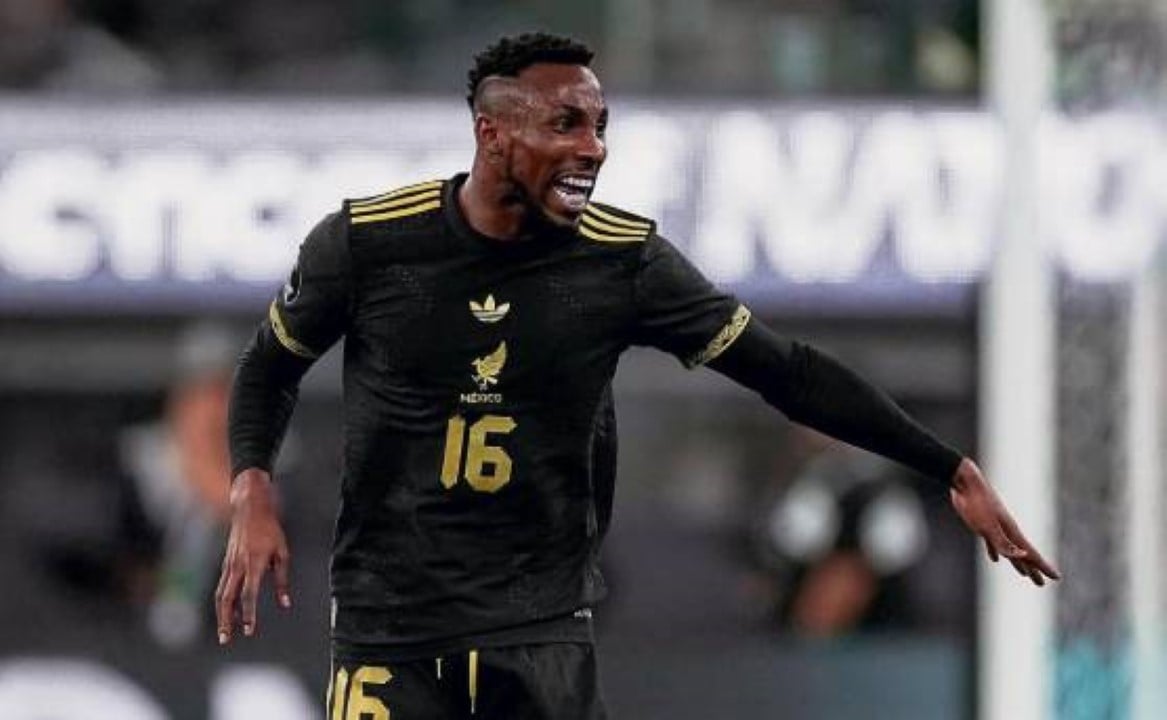
The Mexican team is placing its offensive hopes in the feet of Julián Quiñones for the eagerly awaited opening clash of the 2026 FIFA World Cup. The 29-year-old center forward, who currently defends the colors of Al Qadsiah in Saudi football, emerges as coach Javier Aguirre’s main tactical weapon to face South Africa. The decisive clash will take place this Thursday (11), taking place at the iconic Azteca Stadium, located in the capital of host country. Fans will be able to watch the ball roll from 4pm, considering the Brasília time zone.
Born in the Colombian city of Magüí Payán, where he was born on March 24, 1997, the athlete built a strong identity in North American football. At 1.77m tall, the player combines physical explosiveness, precision in shooting and versatility to play both centrally and on the edges of the field. The naturalization process was completed in 2023, allowing the attacker to accumulate frequent calls to wear the tricolor shirt, culminating in his participation in the global tournament experiencing the peak of his technical and physical form.
The successful path to protagonism in the world tournament
The goalscorer’s career gained prominence after leaving his home country to shine on Mexican soil, defending important institutions such as Tigres, Atlas and América, lifting several Liga MX cups. The change of scenery occurred in 2024, when he accepted the challenge of playing for Al Qadsiah. During the 2025/2026 journey, the athlete dominated the Saudi Pro League statistics by finding the net 33 times, consolidating an impressive record. For the national team, his decisive performances have already won the Gold Cup trophy, transforming him into the fundamental piece that the tactical scheme needed.
Inserted in Group A, the host squad carries favoritism in a group that also includes South Korea and the Czech Republic. The confrontation gains immeasurable historical weight, as the Colossus of Santa Úrsula becomes the first stadium on the planet to host three opening World Cups, repeating the memorable feats of 1970 and 1986. Pushed by a crowd of approximately 87 thousand fans, the home team needs a resounding triumph in this new expanded format of the championship. The number nine’s ability to infiltrate will be vital to breaking through the South African defensive block and turning possession into an advantage on the scoreboard.
Tactical formations prepared for the inaugural clash
The technical committees finalized the preparations and defined the starting eleven that will seek the first three points of the competition. The Mexican tactical scheme relies on aggression on the flanks, while the African visitors try to populate the midfield to exploit speedy counterattacks and surprise the home team.
- Mexico squad (4-3-3 formation): Raúl Rangel takes over the goal; the defensive line has Jorge Sánchez (disputing for a place with Israel Reyes), César Montes, Johan Vásquez and Jesús Gallardo; the creative sector brings Erik Lira, Álvaro Fidalgo (or Edson Álvarez) and Roberto Alvarado; The offensive trident is made up of Brian Gutiérrez, Raúl Jiménez and Julián Quiñones.
- South Africa team (4-2-3-1 formation): Ronwen Williams in goal; the defense formed by Khuliso Mudau, Mothobi Mvala (with Okon as an alternative), Nkosinathi Sibisi and Aubrey Modiba; contention with Teboho Mokoena and Sphephelo Sithole; the frame by Themba Zwane, Elias Mokwana (or Oswin Appollis) and Oswin Appollis; Lyle Foster isolated in attack command.
Historic milestone for South American arbitration
The responsibility for guiding the mood within the four lines will be the responsibility of Brazilian Wilton Pereira Sampaio, who will have direct assistance from linesmen Bruno Pires and Bruno Boschilia. The lineup of this trio represents an unprecedented moment for national sport, marking the first occasion in which a judge born in Brazil receives the honor of refereeing the inaugural match of the biggest football event on the planet.
Complete coverage on Brazilian communication channels
Breton sports fans spread across the country will have a wide range of alternatives to follow each action live. Open television guarantees the show through TV Globo and SBT frequencies. For those who prefer pay TV or digital platforms, SporTV, NSports and the ge portal offer detailed broadcasts. In addition, the virtual environment can be shown free of charge on the CazéTV channel, directly on the YouTube platform.
