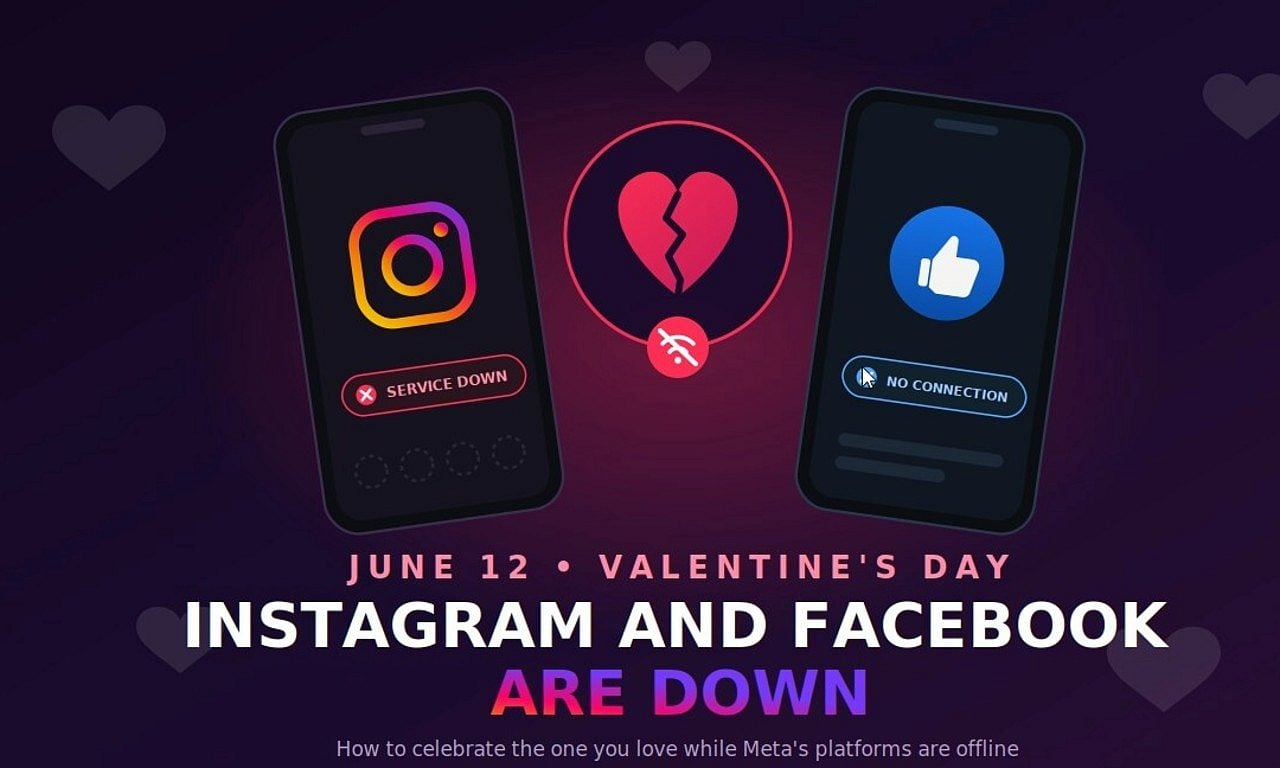
An unexpected interruption globally affects the Instagram and Facebook platforms, both belonging to Meta, on the morning of this Friday, June 12, 2026. The failure, which already exceeds 30 minutes at around 11:24 am (Brasília time), took many users by surprise precisely on Valentine’s Day in Brazil, one of the most romantic and busy dates on the national calendar for declarations of affection on the networks. Without access to the main tools to honor their partners, the Brazilian internet is looking for alternatives to ensure that affection does not fail to be expressed.
Meta’s social networks face global instability on Valentine’s Day
The shutdown of Instagram and Facebook services prevented millions of couples from sharing their statements, photos and videos that have already become tradition on this special day. While WhatsApp, also part of the Meta conglomerate, appears to maintain its functionality for the majority of users, the absence of feed and stories platforms creates a considerable vacuum. Reports of failure spread quickly through other media, such as X (formerly Twitter), where the hashtag #MetaDown is already among the most talked about topics. However, monitoring sites such as Down Detector, which usually map these problems, also present instability, making it difficult to confirm the extent of the problem. To date, the company Meta has not issued any official statement about the cause or expected return of the platforms, increasing anxiety and uncertainty among users.

The downtime of social media on Valentine’s Day is, for many, an unprecedented setback. The expectation of seeing and posting tributes, interacting with friends and family who also celebrate the date, and even discovering promotions or special events, was frustrated by the interruption. The dependence of a large part of the population on these platforms for daily communication and, especially, for festive occasions, was evident. The lack of communication from Meta worsens the situation, leaving a large number of people without clear information about what is happening and when normality will be restored. This instability highlights the vulnerability of the digital environment and the importance of having contingency plans, even for personal celebrations.
The cultural impact of digital absence on such a special date
For Brazil, Valentine’s Day goes beyond the simple exchange of gifts. It is a celebration of romantic love, marked by gestures of affection that, in the last decade, have migrated significantly to the digital environment. Instagram, in particular, has become the main stage for “couple photos” with inspired captions, “stories” with dedicated collages and music, and even elaborate videos that compile moments together. Facebook, although with a slightly different audience, is still essential for many more traditional statements and for remembering relationship milestones. The interruption of these channels on June 12th is not just a technical failure; It is a direct impact on a social and emotional ritual deeply rooted in Brazilian culture.
The impossibility of carrying out these public tributes can generate a feeling of frustration or even “loss” for some couples. For many, social validation of the relationship, through “likes” and comments on their posts, is part of the Valentine’s Day experience. The absence of the Goal forces a reevaluation of how love is expressed and celebrated, pushing people to seek more intimate or, perhaps, more creative ways of showing affection. This unexpected situation serves as a reminder of the fragility of digital infrastructures and the way they have become intertwined with our lives and traditions, to the point where a technological failure could alter the dynamics of such a significant commemorative date.
Return to traditions: how love was celebrated before digital platforms
Long before the era of smartphones and social networks, the celebration of Valentine’s Day (and other romantic dates around the world) depended exclusively on physical gestures and more direct communications. The technology of the time, such as landline telephones, telegrams or even the mail, was used to connect lovers, but the focus was always on personal interaction and the materiality of affection. Declarations of love, while not having the instant reach of a viral post, often carried an emotional weight and effort that made them all the more memorable.
- Handwritten Letters and Postcards:Writing a love letter, in your own handwriting and using special paper, was a classic and deeply personal way of expressing feelings. The time and dedication involved in the process — from choosing the words to posting — gave the message invaluable value. Postcards with beautiful landscapes or short messages were also popular, especially for long-distance couples.
- Phone calls and dedications on radios:Calling your loved one on a landline, often at agreed times, was an act of intimate connection. In smaller cities or on regional radio stations, it was common to have programs that allowed listeners to request songs and make public dedications, which became a sound gift for the partner.
- Planned In-Person Meetings:The focus was entirely on the meeting. Romantic dinners in cozy restaurants, picnics in parks, walks in places significant to the couple or trips to the cinema and theater were the heart of the celebration. Quality time together, without the constant distractions of screens, was paramount.
- Personalized and Handmade Gifts:In addition to jewelry or flowers, many couples took time to create unique gifts, such as physical photo albums (with developed photos!), crafts, music compilations on cassette tapes or CDs, or even preparing special meals. The value was in the effort and customization.
- Serenades and Public Surprises:Although less common, serenades in front of the loved one’s house, with the help of musician friends, were a grand and unforgettable gesture. Other surprises, like leaving flowers at the door or a romantic note in an unexpected location, were also appreciated.
These traditions show that the essence of celebrating love lies in intention and gesture, regardless of the platform. The failure of social media today may be an invitation to revisit and adapt these practices, finding new and meaningful ways to connect.
Digital and offline alternatives to honor your love now
Even though Instagram and Facebook are inaccessible, love doesn’t need “likes” to be validated. Various options, both in the digital universe (with caution) and outside of it, can transform this Valentine’s Day into an even more memorable and intimate occasion. Creativity and intention are the best guides in this moment of adaptation.
Digital Options (With platforms that still work)
- WhatsApp as Priority:
* Detailed Text Messages:Instead of a photo caption, write a long, heartfelt message. Remember moments, praise qualities and express your feelings in depth.
* Short Audios and Videos:An audio of your voice singing a special song, reading a poem, or a quick video saying “I love you” can be much more personal than a post.
* Voice and Video Calls:How about making a video call at the time of that post you would make? A virtual meeting can have a unique charm, allowing real-time interaction and the exchange of smiles.
* Custom Photo Collages and Gifs:Use photo editing apps to create a small collage with your images and send it directly to WhatsApp. There are also tools to create personalized GIFs that can express the mood of the moment or a specific affection.
- Other Alternative Social Networks (If access is possible):
* X (Former Twitter):While not ideal for large visual statements, it can be used for a more concise and direct message, or to express sentiment in a humorous way about the Goal’s situation.
* TikTok:If the platform is working for you, a short video with a creative message or a special dance could be a fun alternative.
* Telegram:Similar to WhatsApp, it offers messaging, audio and video features, with some differences such as channels and groups.
- Email or SMS:
* The Classic Romantic Email:Write a detailed email, with photo attachments or even a playlist. It is a more formal form, but it can carry a great emotional weight.
* Unexpected SMS:A short text message, in the style of pre-internet times, can be a simple but touching gesture, especially if it’s sent at an unexpected time of day.
Offline Options and Personal Experiences (Where the contact is the star)
- Handwritten Letters and Surprise Tickets:
* Old Fashioned Love Letter:Take paper and pen. Write down everything you feel in your own handwriting. It’s a tactile, deeply personal gift that your loved one will cherish forever.
* Scattered Tickets:Hide small notes with loving messages in places where your partner will find them throughout the day: in their wallet, in their coffee cup, on the bathroom mirror, under their pillow.
- Romantic Dinner at Home:
* Chef for a Day:Prepare your loved one’s favorite meal, set up a special table with candles, flowers and a playlist that reminds you of your story. The effort and care in preparation are an invaluable gesture of love.
* Indoor or Outdoor Picnic:If the weather permits and there is a nice park or garden nearby, a picnic is a charming option. If not, a picnic in the living room, with a towel on the floor and delicious food, can be just as romantic.
- Shared Experiences:
* Home Cinema Session:Choose a movie or series to watch together, with popcorn and blankets. Full immersion in the story, without digital distractions, can strengthen the connection.
* Cooking Together:Preparing a new recipe as a pair can be a fun and connecting activity, culminating in a delicious meal made by you.
* Tour in a Special Location:Visit a place that has meaning for your relationship – where you met, where your first date was, or simply a place with a beautiful view.
- Gifts with Meaning:
* Physical Photo Album:If you have developed photos or the possibility of printing some quickly, create a small album. Add notes and dates.
* Custom Playlist:Although social media is down, music streaming services generally work. Create a playlist on Spotify, Deezer or YouTube with songs that marked the relationship and share the link.
* Relaxing Massage:Give your partner a relaxing massage, creating a peaceful environment with essential oils and soft music.
- Quality Time and Conversation:
* Turn Everything Off:The best tribute may be to simply turn off all screens (including WhatsApp, for a while) and dedicate yourself completely to each other. Talk, share dreams, listen actively. Full presence is one of the greatest gifts.
* Board or Card Games:A game night can be fun and relaxed, promoting laughter and genuine interaction.
These alternatives reinforce that the demonstration of affection is multifaceted and is not limited to digital platforms. The current situation is an invitation to explore new (or old) ways of celebrating love and, who knows, create even more authentic and lasting memories.
Creativity in times of crisis: examples of overcoming
History has repeatedly demonstrated that moments of crisis and limitation often serve as catalysts for human creativity. The interruption of Meta’s social media on Valentine’s Day is a practical example of how adversity can force people to think outside the box and rediscover forms of expression. Instead of lamenting the impossibility of online publishing, couples are being encouraged to innovate and create their own “analog tributes” or explore less conventional channels.
Imagine a couple who, having planned a series of elaborate stories, now find themselves with extra time for a project. Maybe they decide to create a home video, just for themselves, documenting the day and their statements, to watch together in the future. Or, perhaps, a boyfriend who was going to buy a gift online is now inspired to cook his partner’s favorite recipe, dedicating the day to cooking and company. The “crisis” of an offline social network can, ironically, lead to a more intimate, personal, and ultimately more memorable celebration. Stories of couples who improvised picnics in the living room, wrote poems or even organized small treasure hunts at home for their partner may emerge in the next few hours, proving that love finds its way, with or without the internet.
Q&A on Meta’s fall and data privacy
Faced with such a broad and unexpected interruption, especially on platforms as central as Instagram and Facebook, it is natural for users to have doubts and concerns. The lack of official communication from Meta only intensifies this scenario. Below, we address some of the most common questions that arise at times like this:
- Is my personal data safe during the fall?
* In general, yes. A service outage like this is a failure in the infrastructure that prevents access and functionality of the platforms, not necessarily a security breach or a hacker attack on user data. Technology companies often have robust systems to protect information, even during failures. It is crucial, however, to pay attention to official communications from Meta (when they are issued) and avoid clicking on suspicious links that promise to “solve” the problem or ask for your data.
- When should the platforms start working again?
* There is no exact forecast without an official statement from Meta. Large technology companies like Meta often have teams of engineers working 24 hours a day to solve these types of problems as quickly as possible. Significant outages like this can last anywhere from a few minutes to a few hours, depending on the complexity of the cause. Experience shows that the priority is always to restore service as soon as possible to minimize the impact.
- Is there any risk of losing my old photos and publications?
* It is extremely unlikely. Service failures generally do not result in loss of user data. The information is stored on servers and backup systems. Temporary inaccessibility means that the “bridge” between you and your data is broken, not that the data itself has been destroyed.
- Why does WhatsApp continue to work, but Instagram and Facebook don’t?
* Although they all belong to Meta, Instagram, Facebook and WhatsApp operate on different infrastructures and server networks, or at least with a degree of segregation. This means that a problem in one part of Meta’s infrastructure may not necessarily affect the others. WhatsApp’s resilience at this point suggests that its network is more isolated or that the original flaw did not reach its core operating systems.
- What should I do while the platforms are down?
*The best approach is to be patient. Avoid trying to log in repeatedly as this may put additional strain on systems. Use communication alternatives that still work (such as WhatsApp, SMS, email) or, better yet, take the opportunity to disconnect and interact in a more direct and personal way, especially this Valentine’s Day. Consult trusted news sources to stay informed about the return of service.
These responses seek to bring peace of mind and guidance to users in a time of uncertainty, reinforcing the importance of information and digital prudence.
Lessons for the future: diversification and digital contingency plans
The fall of massive platforms like Instagram and Facebook, especially on a day of great communication flow like Valentine’s Day, offers valuable lessons for individual users and even for companies and content creators. Overreliance on a single platform for communication, marketing, or self-expression can lead to significant vulnerability and disruption when that platform fails.
For the average user, the main lesson is the importance of diversifying communication channels and not putting “all your eggs in one digital basket”. Having alternatives to communicate with friends and family – whether via WhatsApp, email, SMS or even a good old phone call – is crucial. Furthermore, the situation reinforces the value of offline interactions. The opportunity to rediscover the pleasure of a face-to-face conversation, writing a letter, preparing a meal together or simply enjoying each other’s company without the pressure of documenting everything for social media can be a huge benefit in the long run.
For companies and content creators, who directly depend on these platforms for their marketing and engagement strategies, the disruption is a wake-up call to the need to build a robust and diverse digital presence. This includes having your own website, an email list for newsletters, and exploring multiple platforms (even with strategies adapted for each one) to avoid complete shutdown in the event of a primary channel failure. Creating “plans B” for communicating with customers and followers in times of crisis should be a priority.
In short, Meta’s instability this Valentine’s Day 2026 is not just a setback; is a powerful reminder of the ephemeral and sometimes unpredictable nature of the digital environment. It invites us to value human resilience, creativity in adversity and the undeniable importance of real and meaningful connections, which transcend any screen.
