Goals from Harry Kane and performance from Jude Bellingham propel England to hard-fought victory over DR Congo in the World Cup
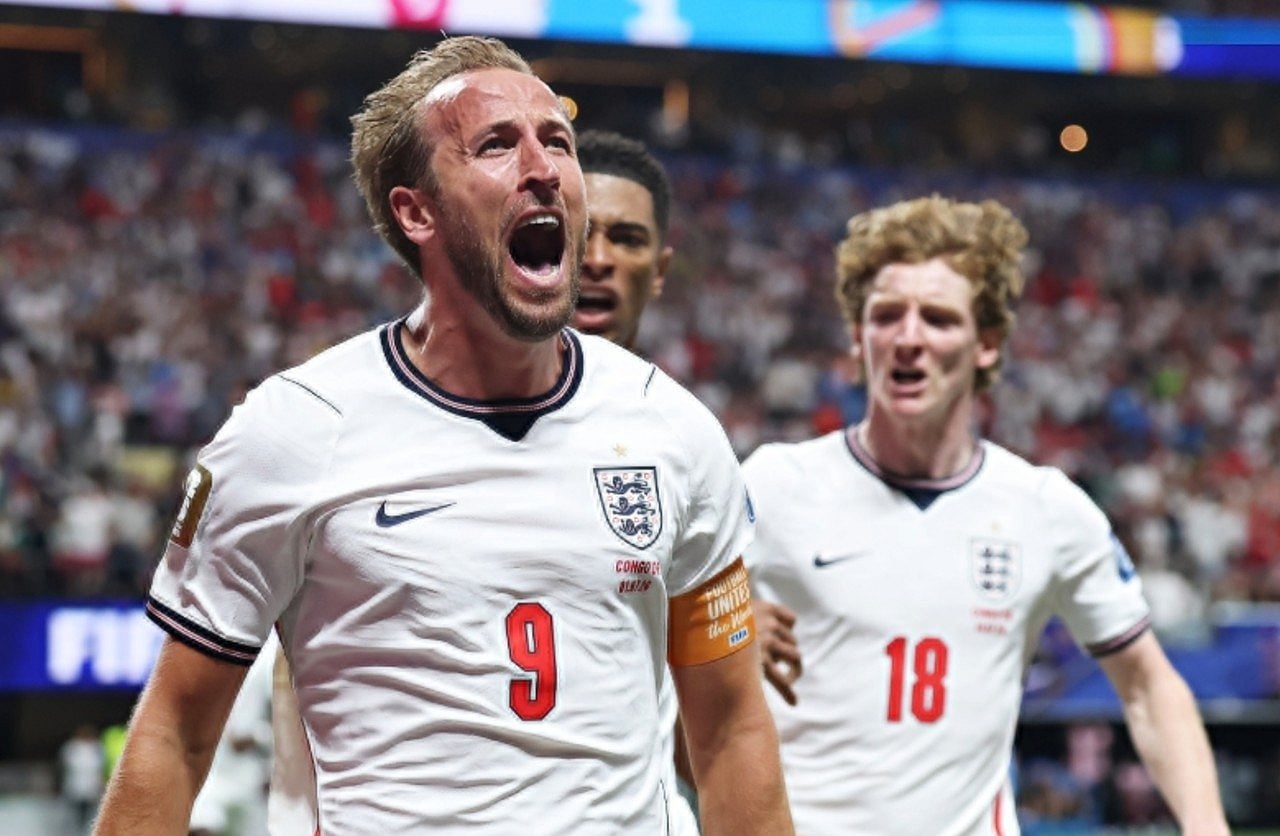
The 2026 World Championship has been referred to by many as the “Protagonists’ Cup”, and the England team demonstrated that it has two athletes that live up to that definition. Jude Bellingham and Harry Kane were essential for the team to overcome the collective difficulties they faced against the Democratic Republic of Congo. While the midfielder displayed a more consistent high-level performance, the striker was responsible for two decisive goals.
Center forward Harry Kane reached the mark of five goals in four matches in the tournament, ranking among the second top scorers. The English team is now preparing to face Mexico in the next phase. The Democratic Republic of Congo performed better in the first half of the match, surprising those who anticipated a more defensive posture, similar to their performances against major teams in the group stage. The African team displayed a more elaborate offensive repertoire at the beginning, but could not resist the pressure exerted.
Tactical changes to England’s lineup for the clash
For the game, coach Thomas Tuchel chose to include Spence at right-back. Quansah and Reece James were among those called up, but not in their best physical shape. Rice returned to midfield, and Madueke played as a right winger. Players like Saka and Stones started the match on the bench. The defense duo, Konsa and Guéhi, were maintained.
In turn, Sébastien Desabre, coach of the Democratic Republic of Congo, decided on a formation with four defenders, unlike the matches against Portugal and Colombia. Sadiki was chosen to replace Edo Kayembe in the central sector. Mbuku and Cipenga remained as wingers, while Bakambu started the dispute on the bench.
Democratic Republic of Congo’s early performance surprises English team
England found themselves facing an unexpected game scenario and appeared to be significantly destabilized by the initial events of the match. The surprise began with the strategy of the Democratic Republic of Congo, which dominated possession. The Africans tried to work with the sphere and progress in a coordinated way towards the attack.
The Congolese team released its full-backs and allowed Mbuku to move from the right to the center, in addition to Cipenga’s advances towards the penalty area. Sadiki and Mudau demonstrated great activity and mobility in the opposing midfield. The English team, in turn, seemed unprepared for this tactic, with ineffective marking. There was little intensity in the approach to players with the ball, disarticulation between sectors and the defensive area was poorly protected.
The deficit on the scoreboard came early, after six minutes. Mbemba launched Sadiki towards the area, but the ball went past both him and Spence, arriving free for Cipenga to finish and open the score. Eliott Anderson failed to follow Sadiki’s infiltration, creating space that the English full-back tried to cover without success. The Democratic Republic of Congo’s goal destabilized the Europeans, who were at risk of conceding more goals.
The hydration break proved to be a crucial moment, as it reduced the series of technical errors, insecurity and hasty decisions that allowed the Democratic Republic of Congo to roam the area and play with ease. Naturally, England managed to increase their control of the ball in the offensive sector, forcing the “Leopards” to adopt a more defensive posture, although they did not give up attacking with bravery and organization.
Even without a clear definition in the occupation of spaces and the coordination of collective movements, the English showed an improvement. Madueke and Spence contributed significantly to creating plays on the right and delivering crosses into the area. The right-winger performed two lifts that only did not result in goals due to the good performance of the opposing defense.
Goalkeeper Mpasi made a remarkable save from a Bellingham header, and Wan-Bissaka, who had an excellent first half, prevented a Rashford goal by saving the ball over the line. Moments before, Bellingham had already stopped the archer after heading a great cross from Rice. There were some gaps in the aerial balls aimed at Mbemba’s sector, although Tuanzebe, on the other hand, was winning most of the duels and providing security.
There were complaints about a penalty from England for a deep pass to Harry Kane, who dribbled past the goalkeeper and was touched. The referee, however, assessed that the contact was not enough to award the penalty. The striker almost managed to equalize in stoppage time, when he shot powerfully after a corner, but Mpasi again intervened to correct a mistake in Mbemba’s marking.
While the attack showed signs of improvement, the English defensive sector remained below expectations. The team demonstrated lack of coordination in pressing, poor positioning when reversing plays and insecurity in protecting the area. Yoane Wissa came close to extending the score, finishing a beautiful collective play that he himself had started, but the ball ended up hitting the post.
After the unfavorable first twenty minutes, which affected the entire team, Bellingham showed a reaction and became the most threatening player. Visibly dissatisfied with the way the match was going, he sought a draw in several ways. The midfielder created two dangerous plays at the beginning of the second half. In one of them, he served Rashford in a counterattack, but the shot went wide, hitting the net from the outside. In another, he again stopped Mpasi, with a left-footed shot.
There was still little cohesion in the collective game of the “English Team”. The offensive actions were mainly limited to Madueke’s crosses into an area already filled by defenders and Bellingham’s individual initiatives. Coach Tuchel made his first changes in the 15th minute, replacing Saka and Gordon with Rashford and Madueke. On the African side, Mbuku, who was one of the highlights, was replaced by Elia on the right wing.
Tuchel’s tactical adjustments to seek an English comeback
Immediately after the hydration break, Tuchel opted to replace Spence and insert Eze, forming a midfielder duo with Bellingham. Rice was moved to right-back. This tactical reorganization gave the team more discipline to develop plays on the right side, and the team benefited from the infiltrations of Eze and Rice among the defenders in constructing the equalizing goal.
Gordon received the ball on the left following the play and made a precise cross for Kane to find the net. The striker managed to free himself from Tuanzebe’s marking and beat Mpasi with a finish that looked defensible. The goal boosted the English’s confidence in the search for a comeback. Shortly afterwards, Edo Kayembe and Bongonda entered the field for the Africans, while Cipenga and Mukau were substituted.
In addition to aerial plays, England began to create scoring chances through low passes. Eliott Anderson had a rising performance, Gordon came on well, and Bellingham remained an influential player, but Harry Kane’s determination to decide the match was already evident. It was this combination that allowed England to win in the final moments of regulation time.
Kane seals the comeback with a spectacular late goal
Kane received the ball at the edge of the area in an elaborate play that involved Anderson, Bellingham and Gordon, and finished with remarkable power and accuracy into Mpasi’s left corner, making any defense impossible. The Democratic Republic of Congo still tried to react in the final minutes in search of a new draw, but the score of the match was already defined.
