Michael Schumacher’s health status in 2026 and the strong secrecy maintained by the family
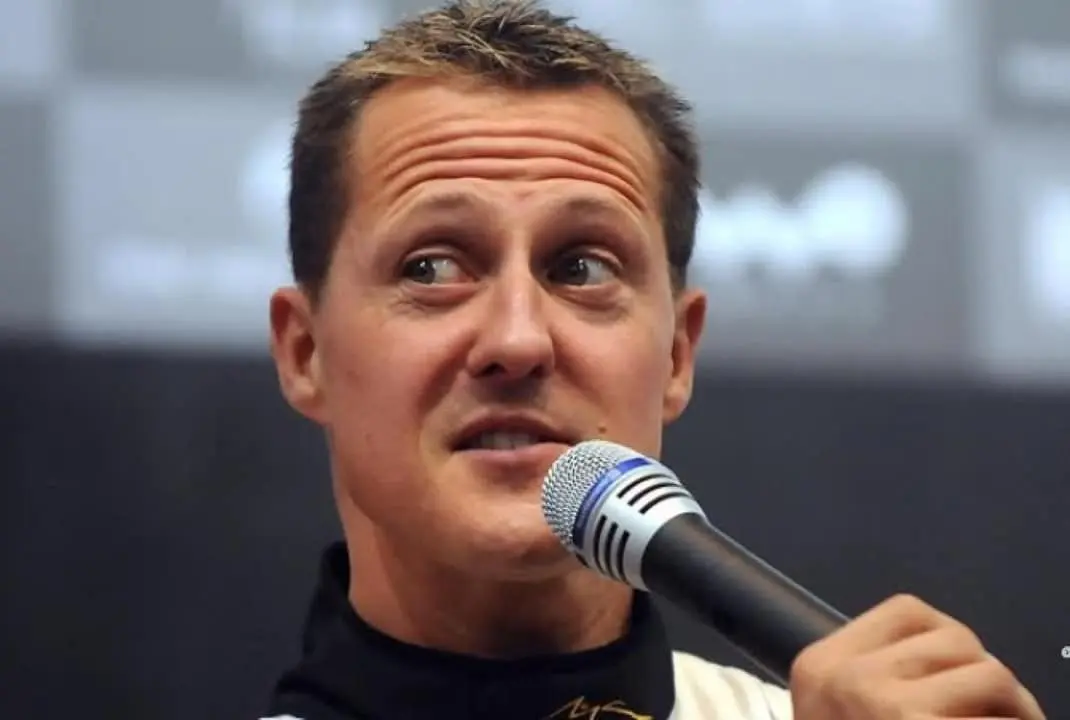
About to turn 57 in May 2026, seven-time Formula 1 world champion Michael Schumacher has lived under a strict privacy shield since his serious ski fall in December 2013, at the Méribel resort. More than a decade after the head injury that definitively altered his trajectory, the true clinical picture of the former German driver remains restricted to an extremely trustworthy inner circle. The idol’s wife, Corinna, assumed absolute control over the flow of information, shielding the residence against any type of leak and ensuring that her husband receives continuous treatment away from the spotlight of the international media.
The man who built his legend by mastering machines at more than 300 km/h today faces a routine focused on motor and neurological rehabilitation. To support this structure, the family matriarch divides care management between the main property located in Gland, on the shores of Lake Geneva, Switzerland, and a winter mansion in Mallorca, Spain. The entire body of nurses and physiotherapists sign draconian confidentiality contracts, being expressly prohibited from carrying smartphones or cameras during shifts, a radical measure to prevent any visual recordings from reaching the European tabloids.
Million-dollar structure guarantees vital support and daily therapies for the German idol
The impact against rocks in the French Alps required the setting up of a private Intensive Care Unit inside the family home. Health professionals take turns in 24-hour shifts to monitor the former athlete’s vital signs and administer stimulation therapies. Maintaining this state-of-the-art hospital apparatus requires a massive financial injection, with estimates from the European market pointing to spending in excess of 100,000 pounds per week just on life support equipment, medications and medical fees, highlighting the financial effort to provide the maximum comfort possible.
The recovery protocol involves specialists in advanced neurology and intensive physiotherapy, seeking to preserve the muscles and stimulate the remaining cognitive functions. Although official records have never been released, the team’s central goal is to ensure a family-friendly, stress-free environment. The relatives’ defensive stance aims to protect the seven-time champion’s dignity against public curiosity, rejecting millionaire offers from television stations and documentary filmmakers who try, unsuccessfully, to obtain exclusive access behind the scenes of the treatment.
Recent reports from former managers and journalists provide clues about the routine
Despite the barrier imposed by family members, the beginning of 2026 brought new perspectives through press professionals and former paddock colleagues. British journalist Jonathan McEvoy, from the Daily Mail, published information indicating that the idol is not restricted to bed full-time. According to the investigation, the former driver is placed in an adapted chair for a few hours of the day and is occasionally positioned in front of the television to follow the broadcasts of Formula 1 races, suggesting a basic level of sensorial interaction with the sport that made him famous.
In the same period, the former Benetton team boss and current Alpine advisor, Flavio Briatore, addressed the topic during an appearance on an Italian radio program. The executive, who was instrumental in the German’s first world titles, avoided going into clinical details out of respect for the pact of silence, but revealed that he cherishes the memories of his victories and maintains indirect contact with his family. The statement highlighted the emotional weight that the former driver’s absence still exerts on veterans of European motorsport.
Weeks later, former Italian driver Riccardo Patrese also commented on his former rival during a sports program on television in his country. He mentioned having heard from close sources that Germans react to visual stimuli and can recognize the faces of their closest family members. However, Patrese made a point of clarifying that his information is second-hand, admitting that he has not visited his residence in Switzerland for more than half a decade, which reinforces the difficulty of obtaining accurate data even for historical figures in the category.
The list of visitors authorized to cross the property’s gates is extremely restricted, with Jean Todt as one of the rare exceptions. The former president of the International Automobile Federation and former boss of Ferrari built an unbreakable relationship of loyalty with the clan. Todt has already publicly confirmed that he travels frequently to meet his friend and that they both usually attend major awards together, maintaining the ethical commitment of never describing the seven-time champion’s physical condition to reporters.
Legal battles punish blackmailers and magazines for invasion of privacy
Protection of the idol’s image also unfolds in European courts against individuals who attempt to profit from the family’s vulnerability. In February 2025, German justice sentenced a group of blackmailers, including a former property security guard, who demanded millions of euros to avoid leaking unpublished images of the former pilot on the dark web. The criminals had copied confidential digital files during the time they worked at the mansion, but police moved quickly to arrest those involved and recover the hard drives before any material was published.
The family’s legal department also acts relentlessly against sensationalist publications that cross the ethical boundaries of journalism. The most emblematic case resulted in the conviction of the Funke media group, responsible for the magazine Die Aktuelle, which published a false interview generated by artificial intelligence simulating the former athlete’s responses. The negative repercussion forced the immediate resignation of the publication’s editor-in-chief and culminated in the payment of compensation of 200,000 euros to the pilot’s wife, establishing an important legal precedent against the use of technology to forge statements.
Historical brands and the technical legacy left on racetracks
Far from legal disputes and hospitals, the German’s name remains a fundamental pillar in the history of motor sport. His ability to combine pure speed with in-depth mechanical understanding redefined the role of the driver within a racing team. Even with the technological evolution of current cars, the work methods he implemented in garages still serve as an instruction manual for the new generations arriving on the grid.
- Won seven world championships, lifting the cups in the 1994, 1995, 2000, 2001, 2002, 2003 and 2004 seasons.
- An impressive 91 grand prix victories, a record that remained unattainable for more than a decade.
- Remarkable stints with the teams Jordan (1991), Benetton (1991 to 1995), Ferrari (1996 to 2006) and Mercedes (2010 to 2012).
The idol’s professional career is divided into two distinct phases, marked by his first retirement at the end of 2006 and his strategic return to help structure the Mercedes project from 2010 onwards. The record of seven global titles was only recently equaled by the British Lewis Hamilton, highlighting the level of excellence achieved by the German. Alongside brilliant engineers such as Ross Brawn and Rory Byrne, he was the centerpiece of Ferrari’s restructuring in the late 1990s, transforming a team in crisis into the greatest winning dynasty of that era.
Children keep their surname prominent on the international sporting scene
The family’s sporting heritage continues to live on through the performance of its two sons in high-level competitions. Gina-Maria chose equestrianism and built a successful career in reining, accumulating medals in world and European championships. Mick, on the other hand, chose to follow in his father’s footsteps on the asphalt, reaching the highest category of motorsport with the Haas team and, later, taking on the role of reserve driver for Mercedes, in addition to competing in the World Endurance Championship for Alpine, ensuring that the famous helmet continues to accelerate around the racetracks.
While the daily battle for rehabilitation continues silently and protected by the walls of the Swiss property, the seven-time champion’s influence on motorsport culture shows no signs of wear. The absolute respect that team directors, mechanics and drivers show when talking about his current condition reflects the magnitude of his sporting achievements. The extreme dedication he demanded of himself and his engineers transformed the category forever, leaving a mark that transcends the statistics and trophies accumulated over a twenty-year career.