Evaluation of the new Slate 2027 electric pickup truck reveals simplicity as a differentiator in test

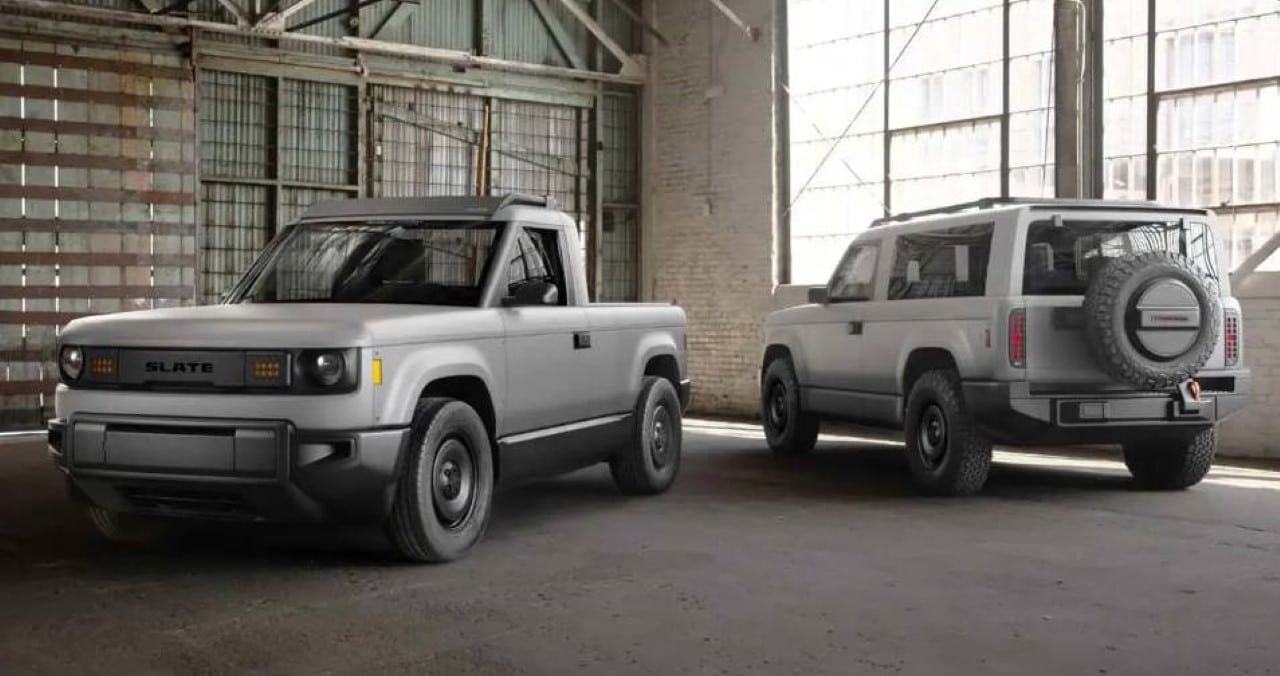
A compact and functional electric pickup truck, the 2027 Slate Truck, began its first test drives on July 30, 2026, drawing attention for its unpretentious approach and focus on simplicity. Designed to be a “blank slate” for its users, the vehicle challenges the trends of super-connected and luxury-filled cars, opting for a more direct and economical user experience. With a starting price of $26,400, the Slate Truck is targeting a niche market that values practicality above all else, including quirky details like crank windows.
The philosophy behind Slate’s design is clear: less is more. The pickup’s interior is intentionally basic, with manually operated seats, few rotary climate controls, and a universal dash mount so drivers can use their own smartphones as an entertainment and navigation hub via Bluetooth. There is no radio or infotainment system on board, a marked contrast to most modern vehicles. Despite the savings, the manufacturer ensured that important touch points, such as the coated metal door handles, convey a feeling of quality and durability, avoiding the perception of excessive cost cutting.
Performance and mechanical characteristics of the vehicle
On a 45-minute journey around Aquidneck Island, the Slate Truck demonstrated surprising agility for its size. With an estimated acceleration of 0 to 96 km/h in 8.0 seconds, the electric pickup is faster than some hybrid cars on the market. Equipped with a single rear electric motor that delivers 181 horsepower and 26.9 kgfm of maximum torque, the vehicle reaches an electronically limited top speed of 145 km/h.
Weighing around 1,973 kilograms, the Slate Truck, despite being more compact than models such as the Ford Maverick Hybrid, has a payload capacity of 703 kilograms and can tow up to 907 kilograms. The front suspension is MacPherson strut type, combined with a robust De Dion rear axle, a system that, according to the company, is shared with luxury electric vehicles. The steering proved fluid and pleasant, adapting well both to parking maneuvers and at higher speeds. The regenerative braking system, which allows driving with a single pedal, was a positive highlight, offering an intuitive and efficient driving experience.
Autonomy, recharging and the start of large-scale production
The Slate Truck uses a 65 kWh lithium iron phosphate (LFP) battery, a choice that prioritizes cost-effectiveness and durability in line with global trends toward affordable electric vehicles. The autonomy estimated by the company is 330 kilometers on a single charge. Equipped with a NACS charging port, the pickup can be charged at rapid stations at up to 90 kW, allowing a 10% to 80% recharge in approximately 30 to 45 minutes. On Level 2 chargers (11 kW), the full recharge time is about five hours.
Production of the pre-series model was carried out on a simulated line in Warsaw, Indiana. The main assembly line is expected to begin mass production of the Slate Truck between October and November of the same year, in a 130,000 square meter factory. The company revealed that it has already received more than 10,000 pre-orders with a non-refundable deposit of $300 in the first few hours of opening, in addition to another 180,000 purchase intentions with refundable deposits of $50. Deliveries to first buyers are scheduled for the end of the year and the first quarters of 2027. Slate also offers SUV and five-passenger fastback versions, which can be purchased for additional prices.
The potential market and future of Slate Truck
Slate’s trajectory, which began in 2022 as the “Re:Car” project with the support of investors such as Jeff Bezos, demonstrates the challenges inherent in the entry of new automakers into the electric vehicle market. In March, the company underwent a leadership change, with Peter Faricy, former vice president of Amazon Marketplace, taking over as CEO, while Chris Barman, one of the few female executives in the auto industry, remained as president of vehicles. The company says its business plan is designed to operate without government subsidies, a crucial strategy given fiscal uncertainty.
Although the starting price of $26,400 is higher than the initial “mid-range $20,000” projection, the model represents an option for consumers looking for an affordable and practical electric vehicle. Slate believes one of the most promising markets for its pickup truck is municipal and commercial fleets, including parks and recreation departments, public works, forestry, landscapers, contractors and service technicians. To this end, the company has already established a “Fleet Team” dedicated to exploring the potential of these sales for light vehicles. The success of other compact pickup trucks on the market, such as the Ford Maverick, suggests there is pent-up demand for smaller, more efficient utility vehicles, and Slate hopes to capitalize on this trend.
Slate Truck 2027 Quick Fact Sheet
- Base price: $26,400
- Configuration: Rear engine, rear wheel drive, 2 passengers (pickup) or 4 passengers (SUV)
- Engine: Electric 181 hp / 26.9 kgfm
- Transmission: Single-speed with direct drive
- Curb weight: 1,973 kg (estimated)
- Wheelbase: 276.6 cm
- Dimensions (L x W x H): 443.5 x 179.3 x 171.4-172.7 cm
- Acceleration 0-96 km/h: 8.0 seconds (estimated)
- EPA combined range: 330 km (estimated)
- Launch: Late 2026
