Scientific Estimates Reveal the Sun’s Remaining Billions of Years and Earth’s Fate
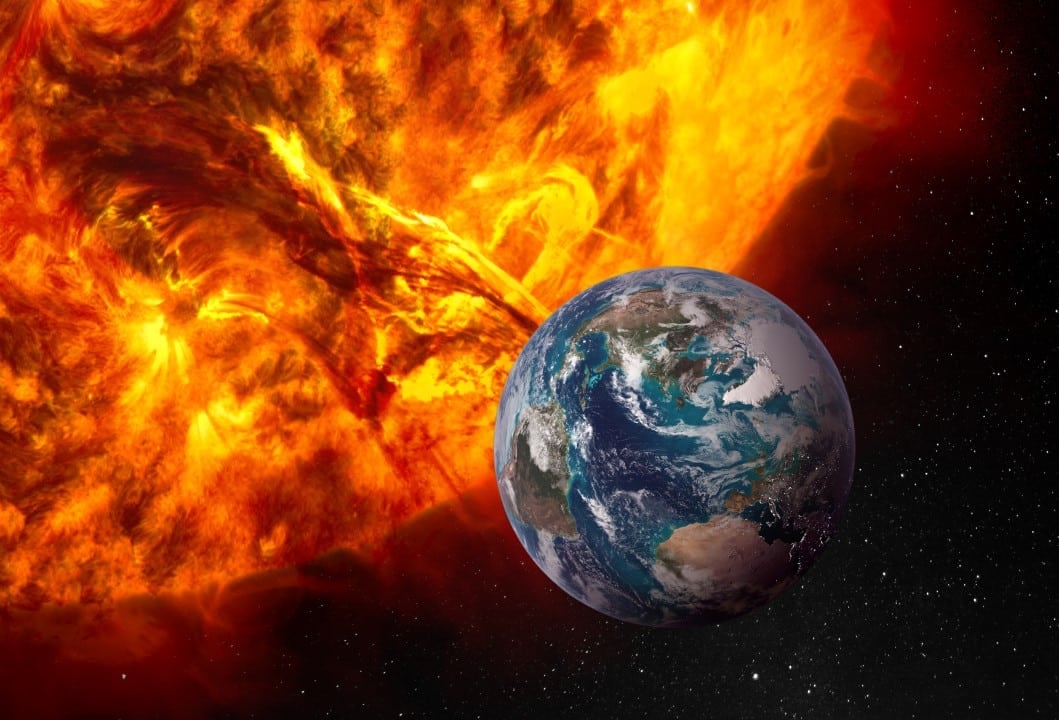
The center of the Sun operates on nuclear fusion, continually converting hydrogen to helium to generate the glow and heat that has sustained life on Earth for eons. This incredibly efficient energy source is fundamental to guaranteeing the cosmic stability that we have known for a long time, allowing our planet to receive constant radiation, avoiding major climate changes caused by variations in the star.
This delicate balance defines the maintenance of life on Earth over eons, ensuring a constant supply of energy. The continuous fusion at its core is the driving force behind its long and stable existence.
What is the scientific projection for the Sun’s remaining lifetime?

Astronomical studies show that the main star of our solar system still has approximately five billion years of activity before undergoing significant transformations in its internal composition and size. This long period offers humanity ample opportunity for technological advancement and, possibly, for the colonization of other locations in the galaxy and nearby systems.
What will happen when the hydrogen at the center of the Sun runs out?
Once the primordial fuel runs out, the star will undergo a dramatic expansion, transforming into a red giant with the potential to alter the orbits of neighboring planets. Chemical changes will drastically affect the star’s temperature and size over the millennia.
The gravitational balance will undergo profound changes with the gradual loss of mass. The Sun’s outer layers will advance through space, swallowing nearby worlds and completely altering the thermal configuration of the planetary system. These are the main physical consequences of this transition period:
- Significant increase in the luminosity emitted by the star over time.
- Absorption of the nearest worlds due to the growth of the solar beam.
- Total loss of habitable climatic conditions on the original earth’s surface.
How will solar evolution directly impact planet Earth?
The progressive warming caused by stellar maturation will cause the oceans to completely evaporate long before the maximum expansion projected by current astronomical models. This global thermal rise will compromise the biosphere, making the planet inhospitable to complex life forms even before the star’s final collapse. The most relevant temporal milestones of this climate change include:
- Boiling of Earth’s oceans due to the intense flow of radiant heat.
- Gradual extinction of biological species sensitive to high temperatures.
- Definitive disappearance of the original atmosphere due to the action of the stellar wind.
From red giant to white dwarf: the final phase of the Sun
After expelling its outer layers into the cosmic void, the remaining compressed core will transform into a cold, highly dense white dwarf.
What will be the outcome of the star after the giant phase?
The final stage of our star, after the giant phase, will be the formation of a dense and cold white dwarf. This phase will represent the definitive termination of solar energy activity, leaving only a small inert body wandering silently through the depths of the Milky Way.


