

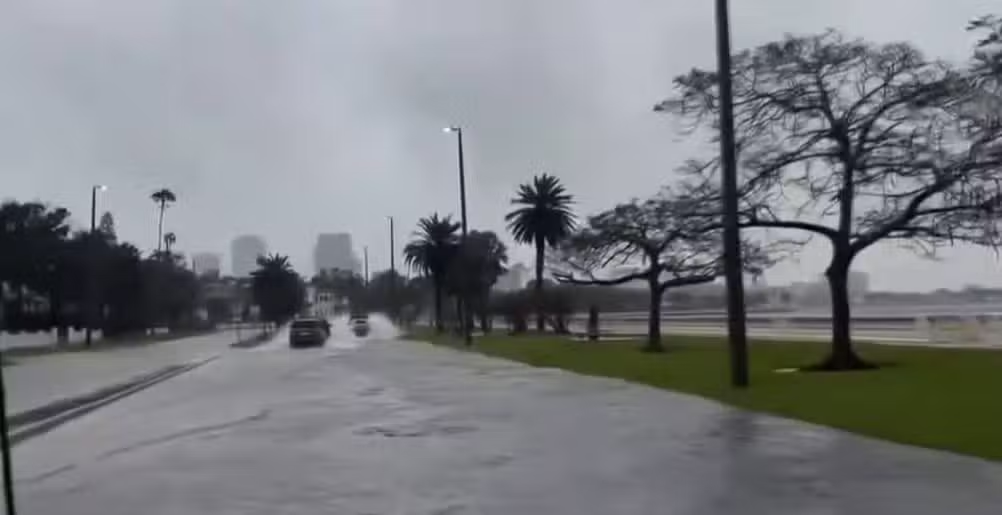
The city of Tampa, Florida, is facing a severe flooding crisis due to the arrival of Hurricane Milton, considered one of the most intense storms to hit the region in recent years. Classified as a category 5 hurricane, Milton brought winds exceeding 280 km/h, violent gusts, and torrential rains that resulted in significant flooding in various areas. This event is being compared to historical storms like Hurricane Katrina, which devastated New Orleans in 2005.
Catastrophic flooding in Tampa
As Hurricane Milton approached, meteorologists predicted that the storm would have a direct impact on Tampa, causing widespread flooding due to rising tides and heavy rainfall. In fact, Tampa Bay, already a vulnerable area for hurricanes, was one of the hardest hit, with water levels rising between 3 and 4.5 meters, surpassing even the most pessimistic forecasts.
Major areas of the city were transformed into rivers, with streets and avenues completely submerged. The combination of heavy rain and the overflow of local rivers and canals caused flooding in residential neighborhoods, destroying homes and forcing thousands to evacuate their properties. Many homes, especially those located in coastal areas or lower grounds, were completely cut off.

Mass evacuations and congested roads
Since the beginning of the week, local authorities issued mandatory evacuation orders for areas most susceptible to flooding and high winds. The region’s roads became clogged with people trying to flee the city before the storm hit. Tolls were waived, and the local government provided logistical support to accelerate residents’ departure. However, not everyone heeded the warnings, and some chose to stay in their homes, defying the authorities’ recommendations.
Those who stayed behind in Tampa faced extreme difficulties. Power was cut off in much of the city, and emergency services struggled to reach the areas most affected by flooding. The local government and state authorities warned that those who chose to remain would not receive immediate assistance due to the severe conditions and the inability of rescue teams to move through the flooded areas.
Preparations and government actions
Before Milton’s arrival, officials like U.S. President Joe Biden and Florida Governor Ron DeSantis reinforced pleas for residents to evacuate and properly prepare for the storm. Milton was described as the most dangerous hurricane to hit Florida in a century, even surpassing Hurricane Helene, which caused significant damage just a few weeks earlier.
Local authorities took drastic measures to minimize damage and protect the population. Tampa completely closed its schools, businesses, and public establishments. Additionally, sandbags were distributed to residents to help protect homes from flooding. Major regional transport companies also suspended operations, and flights and trains were canceled until the situation stabilizes.

Economic impacts and compromised infrastructure
The economic impact of Hurricane Milton will be felt for many years. Early estimates indicate billions of dollars in losses, not only from direct property damage but also from the halt in economic activities in the region. Tampa’s infrastructure, especially the power grid, road networks, and sanitation systems, was severely compromised. Entire streets were destroyed, and rebuilding will take months, perhaps years, depending on the extent of the damage.
The Port of Tampa, one of Florida’s main commercial and maritime transport hubs, was also hit by the force of the winds and elevated tides, completely halting commercial activities. The disruption of port operations will have ripple effects across various sectors, including exports and imports, creating a temporary supply crisis for the region.
Timeline of events
- October 7, 2024: The first evacuation orders were issued for Tampa and surrounding areas as Hurricane Milton intensified in the Gulf of Mexico.
- October 8, 2024: Strong winds began to be felt along Florida’s west coast, with gusts reaching the first residential areas. The city of Tampa prepared for the imminent impact.
- October 9, 2024: Milton reached category 5 and struck Tampa, bringing torrential rain and devastating winds. Floods began to form in the city’s most vulnerable regions, and the flooding quickly spread.
Outlook and recovery
Tampa’s recovery after Hurricane Milton will be a long and challenging process. The government has already mobilized federal and state resources to assist in rescue and rebuilding operations. However, with the severity of the storm’s damage, local authorities expect many families to be displaced for an extended period. The forecast of new hurricanes in the Gulf of Mexico in the coming weeks only adds to the apprehension of both the population and authorities.
Beyond the immediate damage, there is also growing concern about the long-term climate consequences. The increasing frequency and intensity of hurricanes are being attributed to the warming of ocean waters, a symptom of global climate change. Scientists and meteorologists warn that events like Hurricane Milton could become more common, requiring even greater preparedness for coastal cities.
Conclusion
Hurricane Milton marked a tragic moment in Tampa’s history, a city that has faced other devastating hurricanes in the past but now finds itself amidst an unprecedented crisis. The hurricane’s force, combined with massive flooding, has resulted in a city nearly paralyzed, with thousands of residents displaced and widespread destruction. Recovery will be long and will require joint efforts from the government, the population, and humanitarian organizations. However, with Florida’s historical resilience, there is hope that Tampa will rebuild and rise again.