

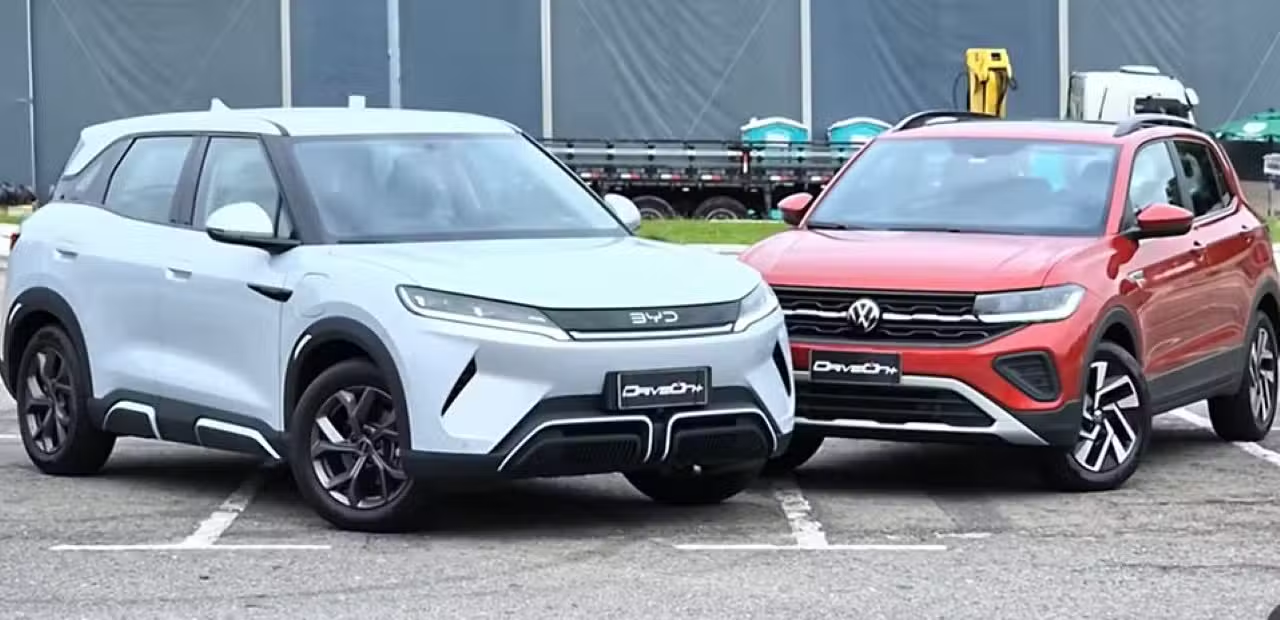
The compact SUV segment in Brazil has a new contender as the BYD Yuan Pro, an electric model, squares off against the VW T-Cross, the best-selling combustion SUV in its class. Priced almost identically—R$ 184,490 for the T-Cross Highline 250 TSI and R$ 182,800 for the Yuan Pro—these vehicles present buyers with a choice that goes beyond specs and features. The Volkswagen leans on its established reputation and a versatile flex-fuel engine, while the BYD promises modernity and savings through electric power. As the Brazilian market flirts with electrification, this clash highlights the practical and philosophical divide between old and new.
The near-identical pricing reflects a seismic shift in the automotive landscape. Just a few years ago, electric vehicles were synonymous with premium price tags, confined to luxury niches, but the Yuan Pro enters the fray to democratize this technology, targeting the compact SUV segment’s top dogs. For buyers, the decision hinges on factors like range, operating costs, charging infrastructure, and brand loyalty. The T-Cross, a proven workhorse, faces a rival poised to revolutionize urban driving—but is the electric option ready to dethrone the traditional champ?
This duel also mirrors a broader transition in Brazil’s car market. In 2024, the T-Cross solidified its lead among combustion compact SUVs, while the Yuan Pro quickly rose as the country’s most affordable electric SUV. Both cater to different audiences yet compete for the same garage space among those seeking practicality and compact dimensions. The question looms: is it worth trading traditional conveniences for a greener, tech-driven alternative?
Dimensions and design: similarities with a twist
Breaking down their measurements, these compact SUVs reveal distinct approaches despite close sizing. The VW T-Cross clocks in at 4.22 meters long, 1.76 meters wide, 1.57 meters tall, and boasts a 2.65-meter wheelbase, delivering generous interior room for its class. The BYD Yuan Pro edges out slightly in some dimensions: 4.31 meters long, 1.83 meters wide, and 1.67 meters tall, though its wheelbase is shorter at 2.62 meters. The lack of a central tunnel—a perk of electric designs—offsets this, ensuring comparable rear-seat comfort.
Visually, the T-Cross sticks to Volkswagen’s no-nonsense playbook, with bold, straight lines echoing the brand’s larger SUVs. A recent facelift added full-LED headlights and refreshed trim details, keeping its rugged compact SUV vibe intact. Meanwhile, the Yuan Pro embraces a futuristic flair, sporting a closed front grille—standard for EVs—and LED taillights linked across the rear, aligning with BYD’s global aesthetic. For those drawn to cutting-edge looks, the Chinese model stands out on the road.
Luggage space, however, marks a clear divide. The T-Cross offers 373 liters, perfect for families or road trips, while the Yuan Pro lags at 265 liters, hampered by a conventional spare tire—an odd choice for an EV, where repair kits are more common. This gap could sway buyers prioritizing cargo capacity, though the BYD counters with a tech-savvy interior and upscale finishes that boost perceived quality.
Interior and tech: tradition meets innovation
Stepping into the VW T-Cross feels familiar to Volkswagen fans. The cabin maximizes space with comfy seats and a 10.1-inch VW Play infotainment system offering solid connectivity. Yet, heavy use of hard plastics, a handbrake lever, and manual driver’s seat adjustments hint at an aging design. The 10.25-inch digital instrument cluster is crisp and functional but lacks the wow factor in a market craving boldness.
The BYD Yuan Pro dives headfirst into modernity. Its cabin features a standout 12.8-inch rotating touchscreen—a BYD signature—and an 8.8-inch digital dash, both woven into a sleek, tech-forward layout. Higher-quality materials on the doors, console, and dash, plus perks like power-adjustable seats and an electronic parking brake, create a near-premium vibe. The shift to screen-based climate controls, now fixed at the bottom of the display after a 2025 update, remains divisive but has improved usability.
In the equipment showdown, the T-Cross shines with its ADAS suite—blind-spot monitoring, lane-keeping assist, and emergency braking—plus an optional panoramic sunroof. The Yuan Pro fires back with a 360-degree camera, multicolor ambient lighting, and wireless charging but falls short on advanced safety aids. Tech enthusiasts will lean toward the BYD, while safety-first drivers may favor the Volkswagen.
Performance in action: combustion or electric?
Driving these SUVs reveals their core differences. The VW T-Cross Highline 250 TSI packs a 1.4-liter turbo flex engine with 150 hp and 25.5 kgfm of torque, paired with a six-speed automatic. It delivers smooth power, hitting 0-100 km/h in 9.6 seconds and resuming from 80-120 km/h in 6 seconds. Despite a slight turbo lag, it performs well in urban and highway settings, with stability from its McPherson front and torsion-beam rear suspension.
The BYD Yuan Pro’s electric motor churns out 177 hp and 31.6 kgfm, offering instant torque typical of EVs. It beats the T-Cross to 100 km/h in 8.6 seconds but trails in the 80-120 km/h sprint at 6.6 seconds. Its extra 250 kg from the 45.1 kWh battery is offset by immediate power delivery, making it nimble in town. Near-silent operation and zero vibrations outshine the combustion rival, while its identical suspension setup ensures a firm, controlled ride.
On highways, the T-Cross excels with a 700-km range from its 52-liter tank, sipping gasoline at 14.9 km/l. The Yuan Pro shines in cities with up to 360 km of range, dropping to around 300 km on open roads—its urban focus clear. For long hauls, the VW reigns supreme; for daily drives, the BYD’s efficiency steals the show.
Operating costs: what’s the damage?
Crunching the numbers on cost per kilometer underscores the Yuan Pro’s edge. With an urban efficiency of 8 km/kWh, it costs $0.02 per km on home charging ($0.15/kWh) or $0.05 on fast chargers ($0.44/kWh). The T-Cross, at 10.9 km/l in the city with gasoline at $1.23 per liter, runs at $0.11 per km. Over 1,000 km, the VW totals $110, while the BYD ranges from $20 to $54, depending on the power source.
- Maintenance: EVs like the Yuan Pro have fewer moving parts, cutting long-term costs. The T-Cross, though reliable, demands typical combustion upkeep.
- Depreciation: Electric models face steeper value drops in Brazil, a factor for resale planning.
- Infrastructure: The Yuan Pro relies on charging availability, while the T-Cross thrives on ubiquitous fuel stations.
This cost gap could tip the scales for city commuters, but the VW’s refueling ease holds sway in broader contexts.
Launch timeline and updates
The journey of these models in Brazil highlights contrasting strategies. The T-Cross debuted in 2019 and got a 2024 facelift, refining its looks and tech to stay atop the heap. The Yuan Pro arrived in 2024 as Brazil’s cheapest electric SUV, with 2025 tweaks enhancing its infotainment. Key milestones include:
- 2019: VW T-Cross launches in Brazil.
- 2024: T-Cross facelift and Yuan Pro debut.
- 2025: Yuan Pro update with fixed climate controls on-screen.
The T-Cross evolves steadily, while the BYD races to carve out its electric niche.
Buyer profiles: who picks what?
The VW T-Cross appeals to those craving reliability and flexibility. Its vast dealer network and hefty range suit families, frequent travelers, and Volkswagen loyalists. Advanced safety features and the sunroof option sweeten the deal for gearheads. Its flex-fuel setup sidesteps charging woes, perfect for areas with sparse EV support.
The BYD Yuan Pro targets urban trendsetters. Its low running costs, sleek design, and tech appeal draw buyers eager to embrace electrification on a budget. Ideal for city dwellers with charging access, it falters on safety extras, potentially deterring the cautious. Young drivers and innovation fans will gravitate to the Yuan Pro, while the T-Cross holds steady for those favoring the tried-and-true.