
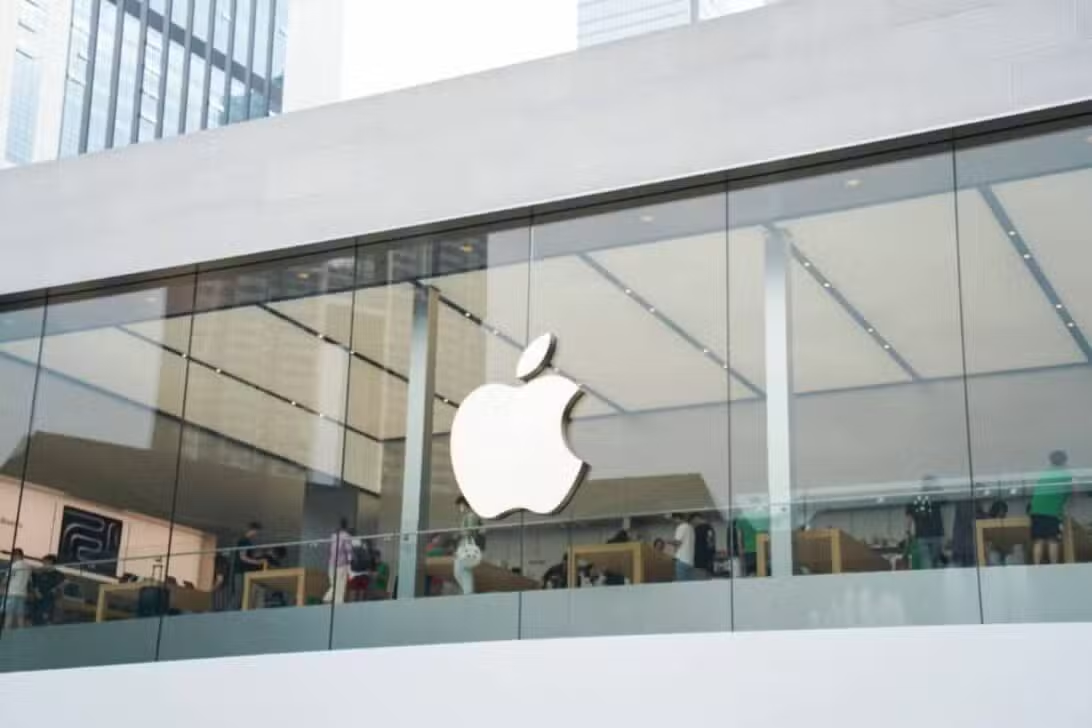
Apple announced in March 2025 the discontinuation of three iconic models from its smartphone lineup: the iPhone 14, iPhone 14 Plus, and the third-generation iPhone SE. Launched in 2022, these devices captivated a generation of users with their established designs and technologies like the A15 Bionic chip, but they are now making way for a new phase at the company. The decision underscores the Cupertino giant’s commitment to prioritizing cutting-edge devices equipped with the A18 chip and features under the Apple Intelligence umbrella. With official production ceasing, Apple stores will phase out sales throughout the year, directly affecting millions of consumers worldwide. This move paves the way for the highly anticipated iPhone 17, as the company reshapes its portfolio to meet growing demands for performance and sustainability.
The shift comes amid fierce competition in the tech market. With over 1.2 billion active iPhones globally, Apple aims to maintain its leadership by steering users toward newer models like the iPhone 16 and the recently launched iPhone 16e. These devices bring significant upgrades, including USB-C ports and support for AI tools, which the discontinued models cannot match. Additionally, the change aligns with regulatory requirements from the European Union, which, since December 2024, mandates USB-C as the standard for all new smartphones sold in the bloc, phasing out the Lightning connector globally.
For users of the discontinued models, the immediate impact is minimal, but the future holds challenges. Apple typically provides software support for about five years post-launch, ensuring iOS updates for these devices until at least 2026 or 2027. However, the lack of compatibility with future innovations, such as those expected in iOS 19, may limit the experience for those who choose to keep their iPhones longer. Meanwhile, the market braces for the ripple effects of this decision, from a surge in used device sales to a decline in production of model-specific accessories.
Reasons driving the retirement of these models
Focusing on advanced technology is the primary driver behind Apple’s decision to end production of the iPhone 14, 14 Plus, and SE third generation. Released in 2022, the iPhone 14 and its Plus variant introduced enhancements like improved computational photography and the A15 Bionic chip, but they were quickly outpaced by the iPhone 15 and 16, featuring the A16 and A18 chips. The iPhone SE, meanwhile, retained a compact design inspired by the iPhone 8 but lagged in modern features like the Dynamic Island and dual-camera systems. By prioritizing newer devices, Apple optimizes software and security updates while freeing up production lines for innovative projects, such as the rumored iPhone 17 Air, expected to boast an ultra-thin design.
Global regulations also play a key role. The European Union’s USB-C mandate for all new devices sold in the bloc forced Apple to standardize its connectivity approach. While recent models have adopted the standard, the iPhone 14 and SE, still reliant on Lightning, became incompatible with this shift. In 2024, roughly 70% of Apple users were already using iPhones launched within the past three years, reinforcing the rapid migration to updated technology. Thus, this discontinuation aligns with the company’s natural renewal cycle.
Sustainability is another factor. By streamlining its production lineup, Apple enhances resource efficiency and focuses on devices with better energy performance, like those with the A18 chip. This supports the company’s goal of achieving carbon neutrality by 2030, blending technological innovation with environmental responsibility.
What to expect from support for discontinued iPhones
Owners of the iPhone 14, 14 Plus, and SE (3rd generation) can count on several years of Apple support. Based on the company’s track record, these devices are expected to receive full iOS updates until 2026 or 2027, likely covering versions like iOS 20. After that, only security updates will be provided, with full support likely ending by 2028. This timeline gives users ample time to plan their next upgrade, though staying on top of software updates remains crucial while support lasts.
Here’s the projected timeline for the affected models:
- 2025: Production ends, and official sales cease in Apple stores.
- 2026-2027: Final full iOS updates, depending on the release cycle.
- 2028: Likely end of security updates, marking the end of their lifecycle.
Even with active support, limitations may emerge soon. Advanced AI features, anticipated in Apple Intelligence and iOS 19, require more powerful hardware found in the iPhone 15 and 16. For basic tasks like browsing and messaging, the discontinued models remain functional, but the full Apple experience will be exclusive to newer generations.
Options for affected users
Replacing discontinued iPhones depends on individual needs. The iPhone 15 lineup, available in standard and Plus versions, offers 48 MP cameras, better battery life, and the A16 chip, making it a balanced choice for cost and performance. The iPhone 16 Pro and Pro Max, with 120 Hz displays and the A18 Pro chip, cater to those prioritizing power, ideal for gaming and video editing.
The used market also shines as an alternative. In 2024, the iPhone 14 accounted for 15% of global used iPhone sales, suggesting these models will remain available for years. For those seeking a new, budget-friendly option, the iPhone 16e, launched in March 2025, emerges as a spiritual successor to the SE, pairing the A18 chip with a competitive price. This range of choices ensures users have viable paths forward, whether through upgrades or savings on pre-owned devices.
Market and economic impacts worldwide
The discontinuation of these three models ripples across industries. Accessory makers, such as those producing cases and Lightning cables, will likely scale back output, while retailers face the task of clearing remaining stock. In 2023, the iPhone 13’s exit boosted the used market by 20%, and a similar surge is anticipated now, benefiting resale platforms like eBay and local marketplaces.
Economically, Apple doubles down on premium models. In the last quarter of 2024, Pro iPhones accounted for 60% of the company’s revenue, highlighting the profitability of high-end devices. In emerging markets, however, the absence of affordable options like the SE may strain small retailers reliant on budget-friendly models, potentially boosting competitors like Samsung and Xiaomi, which maintain low-cost lines.
Tips to maximize your current iPhone’s lifespan
Extending the usability of discontinued iPhones is a priority for many. Here are practical steps to consider:
- Keep iOS updated to ensure security and optimal performance.
- Check battery health in Settings and replace it at authorized service centers if below 80%.
- Back up regularly to iCloud or a computer to safeguard photos and data.
- Sell or trade in the device while it retains market value, especially before 2027.
These actions help keep devices running smoothly for as long as official support continues.
Looking ahead with iPhone 17 and beyond
Halting production of the iPhone 14, 14 Plus, and SE marks the start of a bold new chapter for Apple. Rumors suggest the iPhone 17 lineup, slated for September 2025, will introduce the Air model, featuring a lighter design and deeper Apple Intelligence integration. Generative AI tools, like smarter virtual assistants, are expected to shine, powered by the A18 chip. The iOS 19, set for reveal at WWDC in June, promises enhanced customization and augmented reality optimizations.
Between 2022 and 2024, Apple sold over 300 million iPhones worldwide, holding a 20% share of the global smartphone market in 2024. Portfolio updates, including iPads and MacBooks with M3 and M4 chips, strengthen device integration with features like iPhone Mirroring and expanded Apple Pay options. This discontinuation is a strategic move to keep Apple at the forefront of technological innovation.