

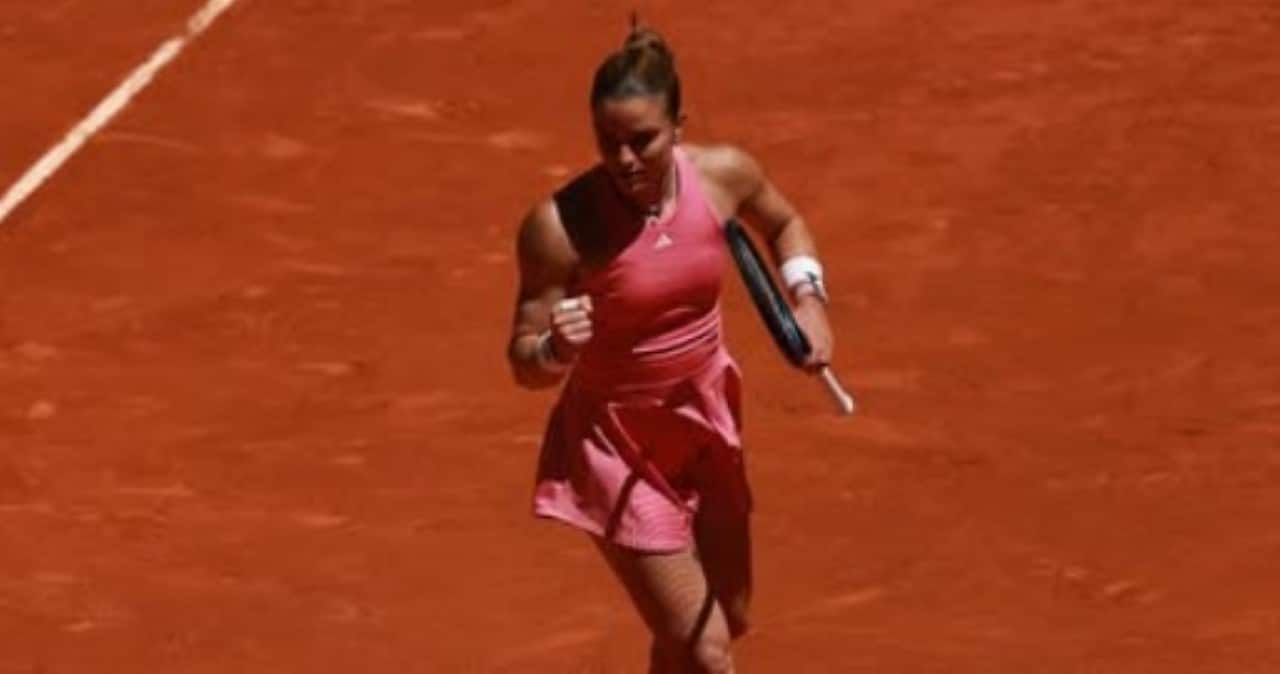
A heated confrontation marked the WTA Bad Homburg in Germany on Sunday (22), when tennis players Maria Sakkari from Greece and Yulia Putintseva from Kazakhstan engaged in a tense argument at the net after their match. Sakkari’s 2-0 set victory was overshadowed as the customary handshake escalated into an exchange of insults. The conflict began when Putintseva avoided eye contact during the handshake, an action that irked the Greek player. The incident, captured on video, sparked widespread attention in the tennis world, raising debates about fair play and rivalries in the sport. The argument exposed personal tensions between the athletes, who compete in a highly competitive circuit, and highlighted issues of behavior and respect in professional sports.
The altercation didn’t go unnoticed by fans and the media. Putintseva’s refusal to make eye contact during the handshake triggered Sakkari’s reaction, who demanded a more respectful demeanor. The brief but intense scene revealed a moment of high tension, with harsh words exchanged that reverberated across social media and news outlets. The incident also reignited discussions about the competitive environment of women’s tennis, where rivalries and strong personalities often collide.
- Key points of the incident:
- Match played at the WTA Bad Homburg, a Wimbledon warm-up tournament.
- Sakkari defeated Putintseva 2-0 in sets.
- Argument occurred during the net handshake.
- Video of the clash went viral on social media.
The controversy gained further traction due to Sakkari’s humorous yet firm response in a post-match interview. When asked about the possibility of dining with Putintseva, the Greek quipped that she’d rather dine with her friends. The episode, though isolated, reflects the intensity of the professional circuit and the challenges of maintaining composure under pressure.
Origin of the conflict
The dispute between Sakkari and Putintseva stemmed from a seemingly simple but significant gesture in tennis: the net handshake. After her loss, Putintseva shook Sakkari’s hand but avoided eye contact, which the Greek interpreted as disrespectful. Known for her competitiveness and candor, Sakkari didn’t hesitate to confront her opponent, stating, “If you shake hands, you make eye contact.” The firm remark marked the start of an exchange that quickly escalated.
The moment was captured by tournament cameras and widely shared online, where fans and analysts were divided. Some supported Sakkari, arguing that eye contact is a common and expected practice in the sport, while others deemed her reaction excessive, suggesting Putintseva was simply frustrated with the loss. The brief argument included a controversial remark from Sakkari, who said, “Nobody likes you.” Though spoken in the heat of the moment, the comment amplified the incident’s fallout.
The rivalry between the two players isn’t new. While they don’t have an extensive head-to-head record, the WTA circuit is known for fostering tensions among regularly competing athletes. The Bad Homburg WTA, a grass-court event preparing players for Wimbledon, heightens the pressure on players aiming to fine-tune their game for the Grand Slam. This context likely contributed to the friction, as both players were focused on boosting their performance ahead of a major tournament.
Sakkari’s interview response
Post-match, Maria Sakkari faced the media with a blend of humor and resolve. Asked about the incident, the Greek didn’t hide her displeasure with Putintseva’s attitude but tried to keep things professional. When questioned about dining with her opponent, Sakkari replied with a smirk, “I don’t think she’ll invite me to dinner, but I don’t mind. I have great friends, so I’ll dine with them.” The quip drew laughs from journalists while underscoring that Sakkari has no interest in a friendly off-court relationship with Putintseva.
Sakkari, however, emphasized her respect for her opponent as a player. “I respect her as an athlete, but that’s it,” she stated, clarifying that their relationship is strictly professional. The comment reflects Sakkari’s approach, as the 29-year-old, a top-10 WTA player, has navigated numerous high-pressure situations and maintains a reputation for being straightforward. Currently a Wimbledon contender, the incident may fuel her drive moving forward.
Tournament context
The WTA Bad Homburg is a key event on the grass-court calendar, serving as a gauge for players’ Wimbledon readiness. Held in Germany, the tournament draws top players aiming to adapt to the fast, challenging surface. Sakkari, a standout on hard courts, struggles to replicate that success on grass, making her win over Putintseva particularly noteworthy.
Putintseva, known for her defensive style and ability to extend rallies, can thrive on grass. However, her loss to Sakkari exposed her frustration, culminating in the net incident. The match was competitive, with Sakkari needing two hard-fought sets to secure the win. Tournament data shows Sakkari converted 70% of her service points, while Putintseva struggled, with only 55% service point success.
- Match statistics:
- Duration: 1 hour and 45 minutes.
- Total points played: 128.
- Unforced errors: Sakkari (15), Putintseva (22).
- Aces: Sakkari (4), Putintseva (1).
Social media fallout
The video of Sakkari and Putintseva’s clash went viral, amassing thousands of views and comments. Tennis fans split between backing Sakkari’s defense of handshake etiquette and criticizing her approach as overly aggressive. Others focused on Putintseva’s demeanor, noting that a more courteous gesture could have avoided the drama. Online discussions also drew parallels to past tennis rivalries, like Serena Williams and Maria Sharapova, which defined women’s tennis.
The controversy reinforced Sakkari’s image as an intense, emotional player, a trait that has won her fans but also drawn scrutiny. Putintseva, who has a history of on-court flare-ups, including disputes with umpires, saw her “fiery” reputation grow. Though brief, the incident underscored how tennis, despite its individual nature, is ripe with human interactions that can spark conflict.
Tennis rivalry history
The Sakkari-Putintseva clash isn’t unique in tennis. The sport, with its strict etiquette, often sees moments of tension. In the 1980s, Martina Navratilova and Chris Evert’s rivalry was marked by mutual respect but occasional frostiness. More recently, Serena Williams’ dispute with Naomi Osaka in the 2018 US Open final highlighted how pressure can boil over.
In the women’s circuit, close rankings and frequent matchups intensify competition. Sakkari and Putintseva, both top-50 WTA players, have faced off before, but the Bad Homburg incident stands out. The clash also raises questions about etiquette in tennis and how players navigate the pressure of representing their nations and sponsors.
Player profiles
Maria Sakkari, 29, is a leading figure in tennis. Hailing from Athens, she hit the WTA top 5 in 2021 and is known for her physical and mental toughness. While yet to win a Grand Slam, Sakkari has reached semifinals at Roland Garros and the US Open. Her Bad Homburg win bolsters her Wimbledon preparations, where she aims to improve on grass.
Yulia Putintseva, 30, was born in Moscow but has represented Kazakhstan since 2012. Known for her tenacity and defensive play, she’s claimed two WTA singles titles and reached the top 30. However, her fiery temperament has led to past controversies, including run-ins with officials and fans. The loss to Sakkari was a setback in her grass season, but she remains a formidable opponent.
- Player trivia:
- Sakkari is the first Greek woman in the WTA top 10.
- Putintseva switched nationalities in 2012 after growing up in Russia.
- Both players have deals with major sports brands.
- Sakkari leads their head-to-head 3-1.
Expert opinions
Tennis analysts noted that the incident reflects the professional circuit’s pressures, especially in Wimbledon lead-up events. With the Grand Slam looming in July, players face heightened stress to build confidence and rhythm. Commentators suggested Putintseva’s behavior stemmed from defeat frustration, while Sakkari’s reaction showed her intolerance for perceived disrespect.
The clash also sparked discussions about tennis etiquette. The net handshake, though formal, symbolizes mutual respect, and deviations often stir controversy. Experts note that in a sport driven by rivalry, small gestures can be seen as provocations, particularly in emotionally charged moments.
Tournament next steps
Sakkari’s win over Putintseva advanced her in Bad Homburg, positioning her as a title contender. The tournament, offering crucial WTA ranking points, is a chance for the Greek to gain momentum before Wimbledon. Her next opponent will be determined in subsequent rounds, but she’s shown strong form.
Putintseva exits Bad Homburg with a bitter loss and the controversy in tow. The Kazakh now turns to Wimbledon, aiming to rediscover her best game. Despite the incident, her passionate play keeps her a fan favorite.
Fair play’s role
The Sakkari-Putintseva incident reignited debates about fair play in tennis. The sport, which prizes exemplary conduct, often tests players’ ability to handle pressure and mutual respect. Such moments reveal that even in a highly professional setting, emotions can flare, captivating audiences.
The net dispute, though brief, reminds us that tennis is more than skill—it’s about the personalities and interactions that shape the game. The Sakkari-Putintseva clash, thus, isn’t just a controversy but a glimpse into the human side of the sport.