What is the phase of the moon today 12/4/2025: full and supermoon end cycle; see December calendar
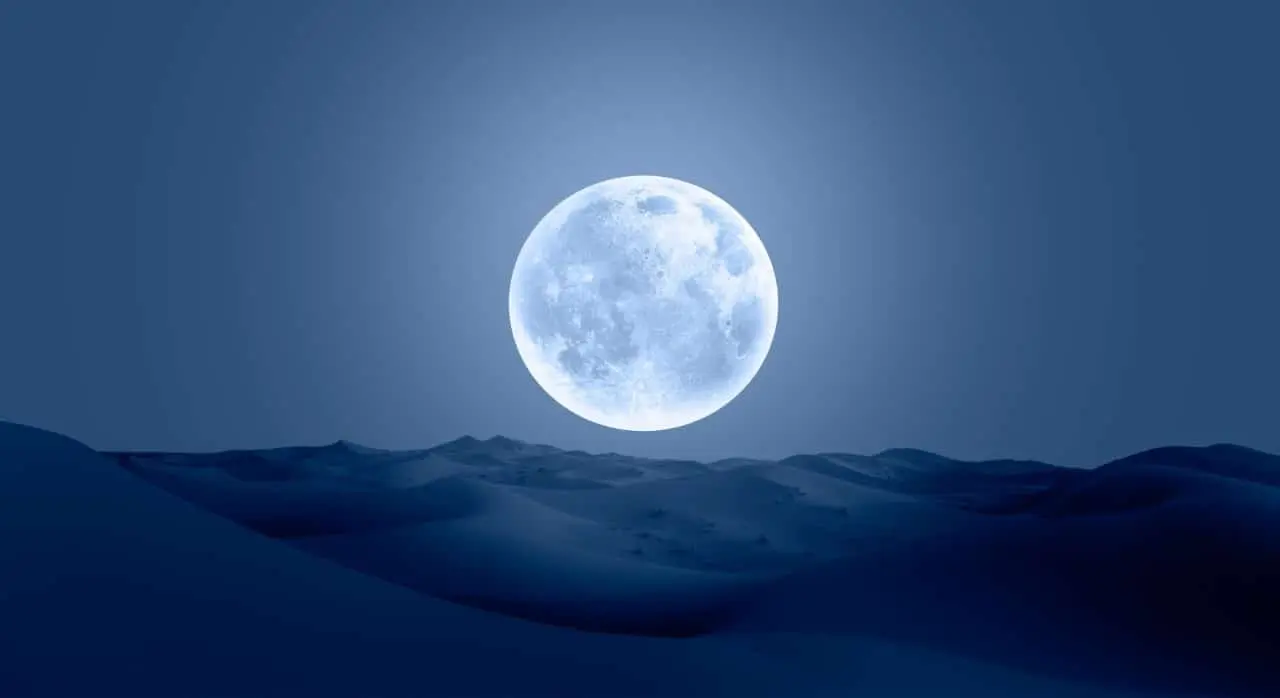
This Thursday, December 4, 2025, Lua reaches its full phase at exactly 8:14 pm, Brasília time, marking the moment when the natural satellite of Terra is fully illuminated by Sol. The phenomenon occurs when Lua is positioned directly opposite Sol in relation to the planet, allowing 100% of its visible disk to receive sunlight. Essa configuration, known as
December’s supermoon, also called Lua Fria by North American indigenous peoples due to the harsh winter in the northern hemisphere, represents the third consecutive event of its kind at the end of 2025, following those in October and November. Observadores around the world may notice the slightly larger and brighter lunar disk, especially shortly after Lua rises on the eastern horizon. The lunar cycle, which lasts an average of 29.5 days, influences terrestrial phenomena such as spring tides, with higher levels due to the combined gravity of Sol and Lua.
Astronomers recommend observing the sky in places with little light pollution to appreciate the intense glow that dominates the night sky. Essa full phase begins the transition to waning, with visible changes throughout the week.
- Visibility: 100% at the peak, gradually decreasing.
- Duration of maximum brightness: Estende until December 5th.
- Gravitational influence: Aumenta tides in coastal regions.
The lunar cycle explained in detail
The lunar cycle, or lunation, refers to the synodic period of approximately 29 days and 12 hours, during which Lua completes its four main phases: new, waxing, full and waning. Esse interval results from the orbit of Lua around Terra, which takes 27.3 days for one complete rotation, but varies due to the rotation of Terra around Sol. In December 2025, the current cycle began with Lua Nova on November 20th and continues until the next one on December 19th.
During a flood phase, like today, Lua reflects all possible sunlight to ground-based observers, creating ideal conditions for night photography and telescopic observations. The supermoon amplifies this effect, as the orbital proximity makes the disk appear up to 14% larger in diameter and 30% more luminous than a common full Lua.
Astronomical studies indicate that the lunar cycle affects the oceans in measurable ways, with more extreme tides in alignments like this. However, scientific evidence rules out direct impacts on human behavior, focusing on practical applications such as navigation and agriculture.
Lunar calendar for December 2025
Supermoon as an astronomical phenomenon
A supermoon occurs when the full phase coincides with lunar perigee, increasing the apparent size of the satellite. In 2025, December records the last of five supermoons in the year, following events in March, April, May and November. The perigee on December 4th occurs 356,128 kilometers from Terra, which increases the brightness compared to full moons at apogee.

Astronomers calculate that supermoons like this happen on average once a year, but 2025 features a rare sequence of three in a row in autumn. The phenomenon was accurately predicted by Instituto Nacional of Meteorologia (Inmet), based on orbital models established since the 17th century by Johannes Kepler.
For observation, the ideal time is between 6pm and 10pm, when Lua rises in the eastern sky. In southern hemispheres, such as Brazil, the disc appears high in the sky, facilitating unobstructed viewing.
Simple equipment, such as binoculars, reveals craters such as Tycho and Copernicus, visible on the upper edge of the disk.
Main phases and their characteristics
Lua Nova starts the cycle, with the satellite between Terra and Sol, making it invisible. In December, this occurs on December 19 at 10:43 pm, ideal for stargazing as the sky completely darkens.
Intermediate phases follow:
Phase Minguante, from December 11th, progressively decreases visibility, symbolizing the luminous decline until the new occultation.
Each transition lasts about seven days, with minimal variations due to the orbital ellipse.
Observing the full moon in different regions
At América of Sul, including Brasil, the December 4 supermoon rises at 6:45 pm in São Paulo, reaching the zenith at around 11 pm. In local time of Brasília, the peak at 8:14 pm allows viewing across the entire continent without the need for adjustments by time zone.
At Europa, observers at Londres see the event at 1:14 a.m. on December 5 local time, with the disk slightly lower on the northern horizon. Ásia, like Tóquio, records the maximum at 8:14 am, coinciding with dawn, which reduces nighttime contrast.
These differences result from time zones and latitude, but the global phenomenon maintains uniformity in total illumination. Aplicativos and Stellarium help with precise localization.
Polar regions face variable conditions, with long nights in the northern hemisphere magnifying the spectacle.
Gravitational influences on Terra
Lunar gravity during the full phase generates spring tides, where the Sol-Earth-Moon alignment maximizes attraction. In December 2025, Atlantic coasts record peaks of up to 2 meters above average, according to data from Inmet.
The cycle affects marine ecosystems, synchronizing coral spawning and turtle migrations on equatorial beaches. In agriculture, farmers use waning phases for root crops, based on empirical traditions validated by modern studies.
Research by Nasa indicates that Lua stabilizes the Earth’s axis, preventing extreme climate variations over millennia. Sem this influence, seasons would be unpredictable.
Cultural traditions linked to the phases
Indigenous cultures from América to Norte name December’s Lua as In the Chinese calendar, the full phase marks the eleventh lunar month, with remote harvest festivals.
In Índia, the festival of Kartik Purnima celebrates the November full moon, but December echoes in purification rituals. Ancient Astronomia, like the Babylonian, used lunar cycles for civil calendars, integrating 12 or 13 synodic months per solar year.
These practices persist in rural communities, where the moon guides harvests without modern technology.
Preparation for next phases
The transition to waning begins on December 5th, with 99% visibility decreasing daily. Até December 11, Quarto Minguante displays half hidden, preparing the sky for Lua Nova.
Enthusiasts set up telescopes to capture details during the decline, when lunar shadows lengthen. The 2026 calendar starts with a crescent on December 26, boosting year-end observations.
Photographic records of supermoons assist in amateur studies of orbits.
Complete lunar calendar for December
- Moon Cheia: December 4, 8:14 pm (100% illuminated, supermoon).
- Room Minguante: December 11, 2:18 pm (50% visible, decline).
- Moon Nova: December 19, 10:43 pm (0% visible, beginning of cycle).
- Room Crescente: December 27th, 4:09 pm (50% increasing).
The synodic month ends in 29.5 days, with visibility ranging from 0% to 100%. Dados of Inmet confirm times in Brasília, adjustable by local time zone in other regions.
Scientific aspects of supermoons
Supermoons like the one in 2025 occur when perigee aligns with solar opposition, a phenomenon predicted by Nasa ephemerides. The angular diameter increases from 0.5 to 0.56 degrees, measurable by optical instruments.
Orbital studies reveal that Lua moves 3.8 cm away from Terra per year, altering future alignments. In 2025, five events highlight the rarity, with average distances of 356 thousand km.
Gravimetry research uses lasers to measure variations, confirming impacts on GPS and satellites.
The full phase facilitates spectroscopy experiments, analyzing lunar composition from regolith to basalt.