

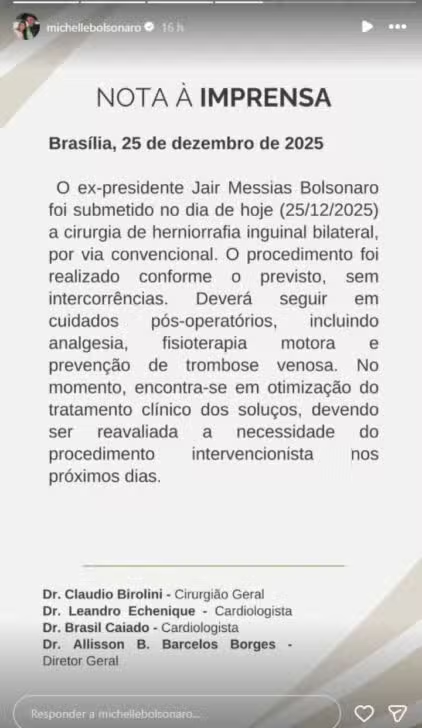
Former President Jair Bolsonaro began a brief walking regimen at the DF Star hospital in Brasília on Friday, December 26, 2025, a crucial measure to mitigate the risk of thrombosis following his inguinal hernia surgery. This important update was shared by his son, former councilman Carlos Bolsonaro, who detailed the former president’s medical condition and his initial steps towards recovery. The medical team prescribed this activity as an integral part of his post-operative care, emphasizing the importance of early mobilization.
Prior to his surgical procedure on Thursday, December 25, Bolsonaro also received iron supplementation. This was administered due to a previously diagnosed condition of anemia, highlighting the comprehensive approach doctors are taking to manage his health complexities. The focus remains on stabilizing his condition and ensuring a smooth recovery process.

Post-Surgical Care and Pre-Op Preparations
On Thursday, before entering surgery for the inguinal hernia repair, Jair Bolsonaro received a targeted iron supplementation to address his pre-existing anemia. This preparatory step was essential for optimizing his overall health profile, ensuring he was in the best possible condition for the operation and subsequent recovery phase. Managing his anemia is a key component of preventing further complications and supporting his body’s healing capabilities.
The brief walk performed on Friday morning, under strict medical supervision, marked a significant milestone in his immediate post-operative recovery. Early ambulation is a standard practice in modern surgical protocols, specifically designed to stimulate circulation and drastically reduce the chances of developing deep vein thrombosis, a serious condition involving blood clots.
Ongoing Health Challenges and Recurrence Risks
Carlos Bolsonaro expressed significant concerns regarding the ongoing management of his father’s health, particularly emphasizing that a lack of consistent medical and personal accompaniment could potentially lead to the emergence of new hernias. He stressed the critical need for a disciplined routine and rigorous dietary control to maintain the former president’s stability.
The unique and complicated nature of Jair Bolsonaro’s abdominal wall, severely compromised since the 2018 assassination attempt and the subsequent eight surgeries, makes him particularly vulnerable to such recurrences. This long-standing issue requires continuous monitoring and a proactive approach to prevent further complications that could escalate rapidly. His medical history dictates a heightened level of vigilance and specialized care to prevent future health crises.
The Impact of Past Injuries
The former president’s abdominal wall functionality has been significantly impaired, a direct consequence of the 2018 stabbing incident and the extensive series of eight surgical interventions he has undergone since. This complex medical history has left him with a compromised physical structure, making him susceptible to various post-surgical complications. The repeated surgical trauma has fundamentally altered his abdominal integrity.
Carlos Bolsonaro further articulated concerns about his father’s ability to perform necessary exercises within a confined environment, such as a Federal Police superintendence, given his delicate medical state. He highlighted that such a setting might not provide the specialized facilities or conditions required for his ongoing physical rehabilitation and the precise management of his fragile abdominal condition.
Clinical Complications and Severe Risks
Bolsonaro’s clinical condition demonstrates a tendency to worsen, as became evident during this latest episode of hernia development. The recurring hernias are a direct result of the implanted mesh not being able to adequately support abdominal expansion, leading to persistent structural weaknesses. This issue requires constant medical attention and proactive management to prevent severe health events.
This structural vulnerability carries significant risks, including the potential for grave internal adhesions, which can form between tissues and organs. Such adhesions can impede normal bodily functions and cause considerable discomfort or pain. Moreover, the rapid onset of intestinal adhesions, if not promptly addressed, poses a life-threatening risk, necessitating immediate medical intervention to prevent potentially fatal outcomes.
Medical Bulletin Details and Next Steps
According to a medical bulletin released on Friday, the former Chief Executive has also commenced rehabilitation with physiotherapy sessions, indicating a progressive step in his recovery. These sessions are crucial for restoring strength, mobility, and preventing muscle atrophy following surgery. Simultaneously, doctors have been optimizing his analgesia, making adjustments to his pain medication regimen to ensure maximum comfort and effective pain management during his healing process.
The medical team additionally reported making necessary adjustments to medications specifically targeting his persistent hiccups and gastro-esophageal reflux disease. Furthermore, physicians are actively evaluating the possibility of subjecting the former president to a new procedure aimed at definitively stopping the hiccups, which involves an anesthetic block of the phrenic nerve. Cardiologist Brasil Caiado indicated that the medical team is expected to make a final decision regarding this potential procedure by Monday, December 29.
Understanding Thrombosis Prevention
The implementation of a brief walking regimen for Jair Bolsonaro immediately following his inguinal hernia surgery is a critical preventative measure against deep vein thrombosis (DVT). Post-operative immobility significantly increases the risk of blood clot formation in the deep veins, primarily in the legs. Walking helps stimulate blood circulation, preventing stasis and encouraging healthy blood flow, thereby greatly reducing the chances of these dangerous clots developing. This proactive approach underscores the medical team’s commitment to mitigating common surgical complications and ensuring a safe and effective recovery for the former president.