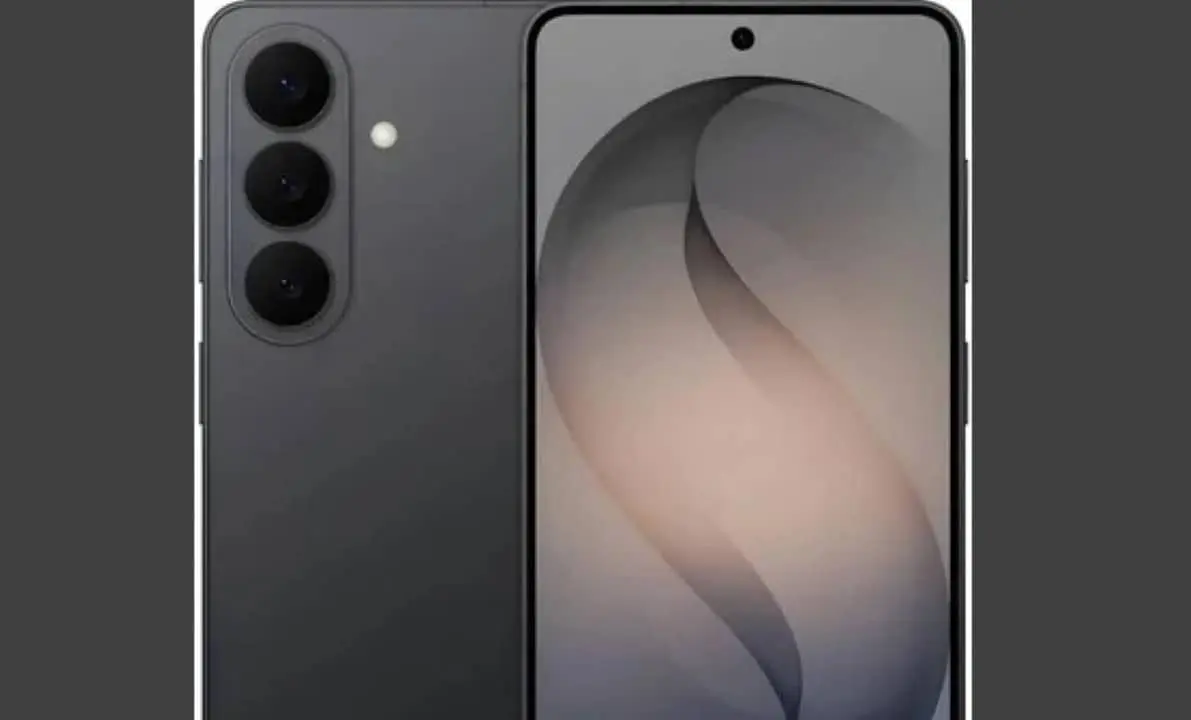
Details of the Galaxy S26 Ultra leak with renewed design and unified camera module for more comfort
The first information about the Samsung Galaxy S26 Ultra, which is scheduled to launch in early 2026, indicates a significant change in its design and a strategic approach to charging technology. The South Korean giant plans to introduce a device with rounder corners and a thinner construction, aiming to improve ergonomics and comfort during prolonged use.
This visual change directly responds to growing consumer demand for a more comfortable device compared to the straight and angular lines of previous generations. The expectation is that the new format will provide a safer and more pleasant grip, establishing a new identity for the brand’s premium smartphone line.
However, one of the main technical novelties involves a limitation on reload speed in specific variants. Testes internals revealed that, to ensure battery safety and longevity, charging power will be controlled on models equipped with the Snapdragon processor, a preventive measure against the risk of components overheating.
Renewed appearance and focus on ergonomics
The Galaxy S26 Ultra represents a notable step forward in the search for a design that balances aesthetics and functionality. The decision to soften the edges of the device is a direct response to feedback from users, who pointed out discomfort during continuous use sessions as a problem to be improved. Ergonomics has become a decisive factor in customer satisfaction in the luxury segment.
In addition to the curves, the thickness of the smartphone will be reduced to 7.9 mm, making it 0.3 mm thinner than its predecessor, the S25 Ultra. Essa decrease, although subtle, contributes to a feeling of greater lightness and portability, demonstrating a considerable advance in the device’s internal engineering. Vazamentos of protective films, already in circulation, confirm these changes.
Unified camera module and new possibilities
At the rear, the Galaxy S26 Ultra will abandon the individual floating lens layout characteristic of recent models. In its place, the Samsung will opt for a single pill-shaped module, which will group all the photographic sensors in a single block, giving the device a cleaner and more organized appearance. The new configuration not only optimizes visual alignment, but also suggests a renewed approach to component integration.
Leaks from a protective case also indicate the presence of an integrated magnetic ring, which suggests high compatibility with the Qi2 wireless charging standard. Isso opens up a growing ecosystem of magnetic accessories, expanding device versatility and enhancing wireless charging capabilities, ensuring perfect and efficient alignment with compatible bases.
This change represents more than a simple aesthetic change; it reflects an evolution in Samsung’s design philosophy. By unifying the cameras, the company creates a more cohesive and modern visual identity, aligned with trends in the high-end smartphone market, where simplicity and sophistication are increasingly valued by consumers.
Thermal management and safety decision
Although market expectations pointed to 65W charging, in line with the competition, internal evaluations by Samsung identified temperature problems with the Snapdragon 8 Gen 5 processor, which will equip the device in some markets. Para To protect the integrity of the 5000 mAh battery and ensure user safety, the company decided to limit the charging power in these specific variants, avoiding any risk of overheating.
This strategic decision reflects the brand’s ongoing commitment to the safety of its products, a strict policy established following incidents with previous models. Reliability is placed above top speed, demonstrating a conscious engineering choice focused on long-term user experience.
Thermal management has become a crucial battleground for high-performance smartphones. A device’s ability to dissipate heat efficiently directly impacts the wearing comfort and durability of the product, making this limitation a deliberate and responsible engineering choice.
The measure, although it may seem like a step backwards for some, reinforces the image of Samsung as a manufacturer that prioritizes stability and security. The company seeks a balance between innovation and reliability, ensuring that technological advances do not compromise the integrity of the hardware or the security of its customers.
Processor strategy and energy efficiency
The Galaxy S26 Ultra will maintain the launch strategy with two processor variants, a common practice for the In some markets, the device will be equipped with the Snapdragon 8 Gen 5, while others will receive the version with the proprietary Exynos 2600 chipset. The choice of processor directly influences temperature management, especially during fast charging and intensive use.
Reports indicate that the Exynos 2600 has superior thermal efficiency, which may allow for more stable charging with less heat generation. Essa advantage ensures a more stable and safer interaction for the user compared to the Snapdragon variant, as well as contributing to increased battery life and reduced wear on internal components over time, potentially making it a more reliable option.
Details confirmed by leaks
Prototypes of tempered glass films, which have emerged in recent leaks, clearly demonstrate the new contours of the Galaxy S26 Ultra, confirming the ergonomic changes. Visual comparison with the Galaxy S25 Ultra highlights the significant difference in design, aimed at improving grip. At 7.9 mm thick, the device is positioned as one of the thinnest flagships in its category. Integrated support for the Qi2 standard, evidenced by case prototypes, represents an important upgrade in the area of wireless charging, ensuring greater convenience and compatibility with a growing assortment of accessories.
Release forecast
The official launch of the Galaxy S26 Ultra is planned for February 2026, with the unveiling event taking place in São Francisco, USA, following the brand’s tradition for its major global announcements. The changes reflect a strategy focused on usability and durability.
Advances in wireless charging
Support for the Qi2 standard represents an important upgrade in the area of wireless charging. Essa technology uses magnets to perfectly align the smartphone with the charging base, optimizing energy transfer efficiency. Essa improvement eliminates incorrect positioning issues, which were common in older wireless chargers, ensuring that the device receives the maximum charge stably and safely. The integration of the magnetic ring also opens the door to a new ecosystem of accessories, such as vehicle mounts, wallets and external batteries, which magnetically attach to the back of the device, increasing its functionality in everyday life.