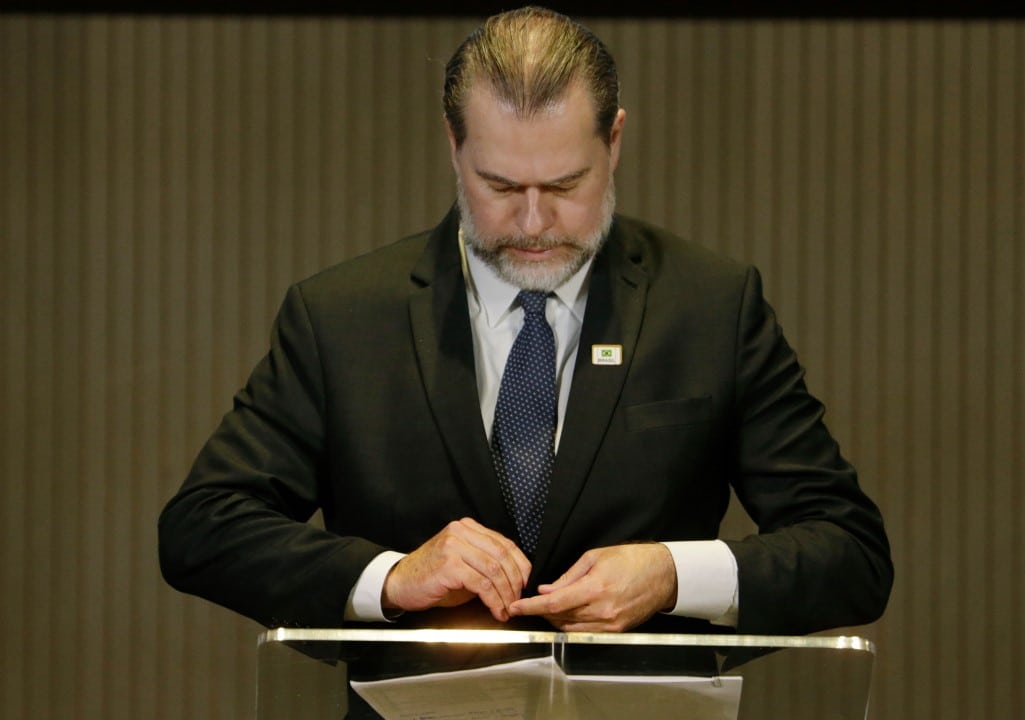
A robust discussion unfolded recently regarding the necessity and implications of investigating Supreme Federal Court (STF) Justice Dias Toffoli over alleged irregularities linked to the Master case. The debate featured journalist and former Senator Ana Amélia Lemos alongside lawyer Alessandro Soares, probing whether such an inquiry would represent a crucial step towards accountability or an unnecessary overreach within the judicial system. This critical question emerged following a formal request for investigation against Toffoli, forwarded to the Prosecutor-General’s Office (PGR) and the National Council of Justice (CNJ) by Federal Deputy Sanderson (PL-RS).
The deputy’s initiative to seek a probe into the justice’s conduct has reignited public discourse surrounding judicial ethics and the mechanisms for overseeing high-ranking magistrates in Brazil. This move underscores persistent concerns about transparency and the potential for conflicts of interest within the highest echelons of the country’s judiciary, prompting a closer look at the institutional safeguards in place.
Calls for judicial scrutiny grow amid public doubts
Ana Amélia Lemos firmly expressed her view that an investigation into Justice Toffoli’s conduct is imperative. She highlighted a series of events, starting with the Master bank issue, and pointed to the shifting position on evidence initially collected by the Federal Police. This evidence was first slated for inclusion within the Supreme Court’s proceedings but was later requested to be held by the PGR, creating what Lemos termed “situations that raise many doubts in society.”
Lemos further argued that Justice Toffoli’s continued presence in the STF “somehow contaminates” the Supreme Court itself, making other justices uncomfortable. She underscored the perceived lack of effective legal or institutional mechanisms to facilitate the removal or even temporary afastamento of a minister when such questions arise, exacerbating public skepticism regarding judicial independence and impartiality.
Transparency and the judiciary’s image at stake
Alessandro Soares concurred that Justice Toffoli’s actions require clarification, emphasizing that the Master case remains “obscure.” He noted that while there is no definitive proof of criminal practice, “much needs to be explained.” Soares pointed to continuous media reports uncovering situations tied to Toffoli, which contribute to a “media bleeding” effect on the STF and fuel widespread public uncertainty.
Soares stressed that holding a position as a Supreme Court Justice demands more than just an unblemished reputation; it requires a commitment to a dynamic of responsibility inherent to the office. This commitment, he argued, translates into a life of transparency, where actions and associations are open to public scrutiny, safeguarding the integrity and trust placed in the judiciary.
The Master case and institutional responses
The Master case, which forms the core of these allegations, involves reported financial irregularities that have periodically resurfaced in public debate. Deputy Sanderson’s formal complaints to both the PGR and the CNJ represent a direct challenge to the perceived lack of accountability for members of the highest court. These petitions aim to compel a detailed examination of Toffoli’s involvement or influence related to the case.
Historically, investigations targeting high-level judicial figures have often encountered significant institutional resistance. The very structure designed to protect the independence of the judiciary can, at times, appear to shield its members from external scrutiny, leading to criticisms of a “blindage” effect. This dynamic fuels the public’s demand for clear, demonstrable actions toward accountability.
STF and PGR actions draw criticism
Analysis from various fronts, including judicial observers, has frequently suggested that both the Supreme Federal Court and the Prosecutor-General’s Office have, over time, acted in ways that protect Justice Toffoli in the Master case. For instance, reports have detailed decisions by the PGR to archive representations made against the minister.
This trend was highlighted when Justice Edson Fachin reportedly defended Toffoli, asserting that the minister’s actions were “regular.” Similarly, Justice Gilmar Mendes publicly supported the PGR’s decision to close certain investigations or representations against Toffoli. Such institutional defenses, while often grounded in legal technicalities, contribute to the narrative that mechanisms for internal oversight may not be sufficiently robust to address public concerns effectively.
Ongoing debate on accountability in 2025
The debate surrounding Justice Toffoli’s investigation is not merely a historical footnote but remains a live issue, continuously informing discussions on judicial accountability and integrity in 2025. Despite institutional decisions to archive or dismiss initial requests, the underlying questions about transparency and conflicts of interest persist. Public interest in ensuring that no public official, regardless of their position, is above scrutiny continues to drive calls for a more robust and transparent system of checks and balances.
Public trust and the path forward for Supreme Court oversight
The continued public discussion surrounding high-profile cases involving judicial figures underscores a fundamental societal demand for transparency and accountability. Maintaining public trust in institutions like the STF is paramount for the health of democratic processes. The challenges observed in investigating sitting justices raise critical questions about the adequacy of current oversight mechanisms, suggesting a need for:
* Clearer protocols for handling allegations against Supreme Court justices.
* Enhanced transparency in the decision-making processes of oversight bodies like the PGR and CNJ.
* Mechanisms that balance judicial independence with the imperative for public accountability.
These ongoing discussions reflect a broader societal effort to strengthen democratic institutions and ensure that justice is not only done but is also seen to be done, without exception or perceived immunity.
