

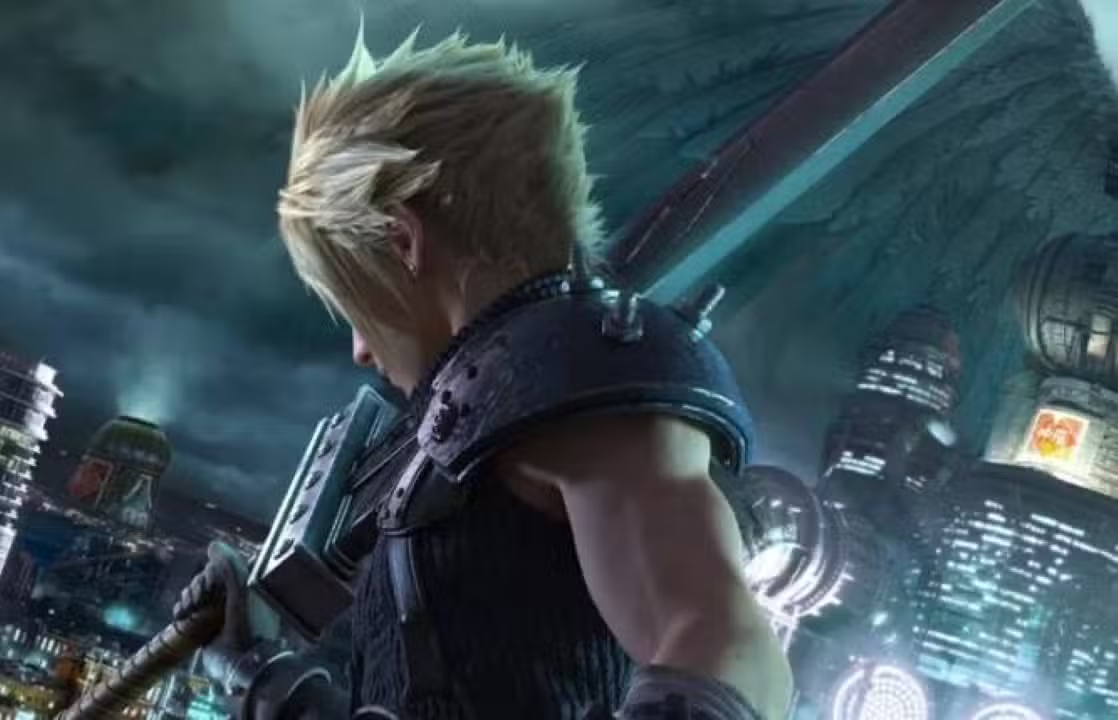
The conclusion of the ambitious saga of Cloud Strife and his allies will maintain the technological base of the previous chapters, according to a strategic decision by Square Enix to ensure deadlines are met. Director Naoki Hamaguchi confirmed that the third and final part of the project to recreate the 1997 classic will continue to use Unreal Engine 4, ruling out a migration to the latest version of the graphics engine. The choice aims to ensure that the development team maintains the accelerated pace of production without the technical obstacles that a software transition would require in this final stage.
Esta technical definition ends months of speculation about a possible visual upgrade to Unreal Engine 5, technology that has been widely adopted in the industry for new generation games. Segundo the project leadership, the stability found in the current version of the tool outweighs the visual benefits that the new engine could offer at this specific moment. The studio’s total focus is on delivering a cohesive narrative and polishing the mechanics already established by fans.

Technological continuity allows developers to leverage all assets and systems created for the first two games, significantly optimizing workflow. With the base ready, the team can dedicate more time to expanding the content and closing the story, instead of spending valuable months readjusting codes and shaders for a new development environment.
Deep customization of the current tool
One of the main factors for staying with the Unreal Engine 4 is the level of customization that the Square Enix has applied to the engine over the last decade. Hamaguchi explained that the tool used today is drastically different from the standard version available on the market, containing exclusive modifications that perfectly meet the needs of the Gaia universe. Descartar these customizations would require rebuilding complex systems from scratch.
Entre the crucial adaptations made by the technical team stand out:
– Aprimoramentos in the dynamic lighting system for open scenes;
– Otimização high-resolution texture loading;
– Ferramentas specific for rendering kinematics in real time;
– Ajustes fines on combat physics and magic particles.
Essas changes transformed the engine into a robust platform tailor-made for the trilogy. Tentar replicating this level of specificity in Unreal Engine 5 would require engineering time that would compromise the planned launch date, something that the company’s management sought to avoid at all costs.
The internal debate on technological migration
The decision not to migrate was not made without a careful analysis of the options available in the current market. Durante the initial planning phases of the third part, there were serious discussions about the feasibility of adopting the most modern technology to end the saga with the maximum possible graphical fidelity. However, the risk analysis demonstrated that the visual gains would not justify the potential delay in the schedule.
Producer Yoshinori Kitase and Creative Director Tetsuya Nomura actively participated in this review, prioritizing user experience and consistency across the three games. The conclusion was that players value the fluidity of the narrative and the speed of launch more than a graphic leap that could distort the visual identity established in 2020 and maintained in 2024.
Advanced development status
Progress in creating the final chapter continues at a steady pace, with important steps already completed by the production team. Hamaguchi revealed that the main story is finished and that the game’s official title has already been chosen by Nomura, although it is still kept an absolute secret to generate anticipation in the community. The game’s structure already allows large sections to be played from start to finish for balance testing.
Além of the central narrative, the team works on refining side content that has become popular, such as the card game Queen’s Blood. The promise is that the final part will bring even more minigames and extra activities, expanding the freedom that was introduced in the second title of the trilogy. The objective is to deliver a product that exceeds expectations in volume of content and emotional depth.