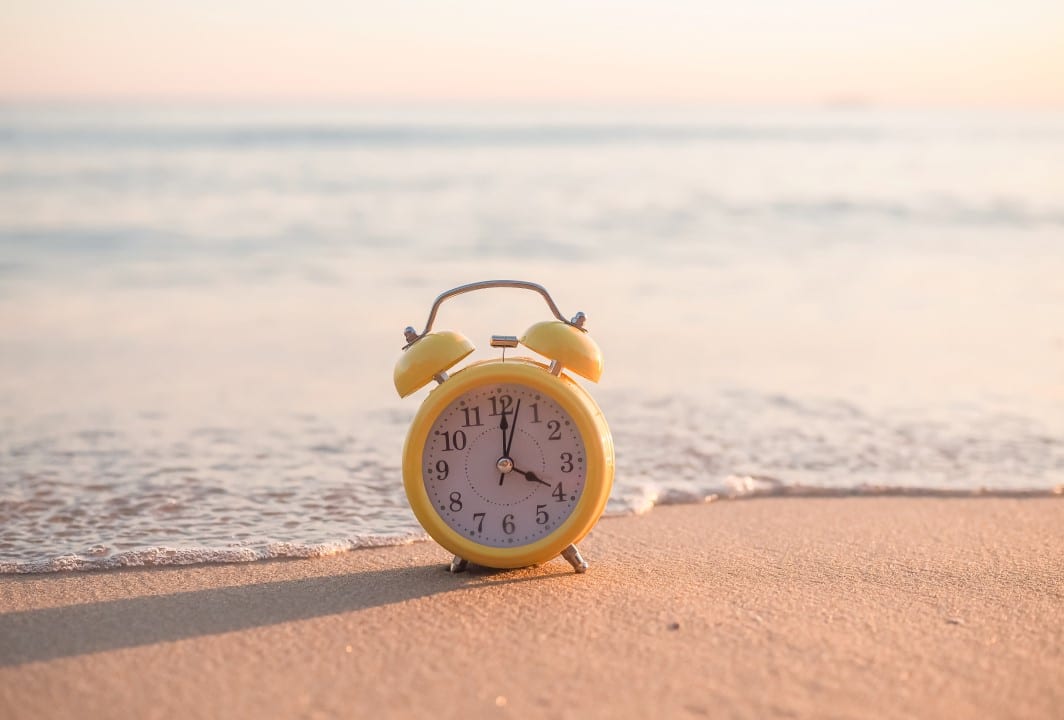
The population of the European continent will undergo new changes in official timekeeping, following the biannual guideline that regulates the advance and delay of hands. The measure directly affects the work routine, the functioning of public transport and logistical coordination between the bloc’s member countries.
The mechanism requires citizens to adjust their equipment on two specific mornings throughout the year, ensuring commercial and social synchrony. The practice divides opinions among health experts and government authorities, but remains a legal obligation throughout the territory.
The dates are stipulated in advance to avoid operational disruptions in aviation systems and stock exchanges. Standardization ensures that physical borders do not become confusing temporal barriers for those who travel between different European nations on a daily basis.
Rules and dates established for changing hands
The first change in the annual cycle always occurs at the end of March, marking the transition to the hottest period of the year. Neste moment, the equipment must be advanced by sixty minutes, artificially reducing the duration of that specific dawn.
This initial change causes sunlight to extend later into the late afternoon, altering the visual perception of the evening. The adjustment takes place simultaneously in all territories that follow the central guideline, avoiding regional discrepancies.
Later, at the end of October, the reverse process is carried out to adapt society to the colder period. The hands return to their original position, moving back one hour and returning the sixty minutes subtracted in the first half.
The return to the winter pattern means that the mornings become clear earlier, while the nights arrive earlier. Continuous switching requires extra attention on analog devices, as digital devices connected to the internet perform the update automatically.
Political impasses over the unification of continental time
The obligation for this temporal alternation has motivated intense discussions in European parliaments for more than half a decade, driven by public consultations that demonstrated strong popular rejection of the current model. The majority of voters expressed the desire to establish a single time zone for the twelve months of the year, eliminating the need for biannual adaptation. However, the execution of this will is hampered by the lack of consensus among national governments on which standard should be definitively adopted. Países located further north have different natural lighting needs than those located in the Mediterranean region, making it difficult to reach a unanimous agreement that satisfies all geographic latitudes.
The absence of a joint decision prevents the abolition of the rule, as the creation of fragmented temporal zones would harm the European single market. Freight transportation, international flight stops, and financial transactions depend on strict synchronization to function efficiently. Enquanto political leaders do not reach a common denominator that avoids a temporal patchwork, current legislation determines the maintenance of the exchange system. Especialistas in economics warn that any unilateral change by an Estado-member would cause incalculable damage to the continental supply chain.
Historical motivations linked to energy consumption
The origins of clock manipulation date back to the beginning of the 20th century, during the first major world conflict, when the German empire sought ways to ration fuel. The strategy consisted of aligning working hours with the availability of sunlight, reducing the burning of coal in factories and homes.
The tactic was abandoned and resumed several times over the following decades, always linked to periods of scarcity of resources or severe economic crises. The oil shock in the seventies consolidated the return of the practice in a large part of the West, aiming to reduce electricity consumption.
Currently, electrical engineers and researchers question the effectiveness of this measure, pointing out that the adoption of LED lamps and efficient appliances has changed the energy expenditure profile. Consumption with air conditioning and heaters often cancels out the savings obtained with artificial lighting, undermining the original argument.
Effects on the human organism and biological adaptation
The abrupt transition imposed by the change in hands generates physiological reactions documented by doctors and sleep medicine specialists. The loss of an hour of rest in the transition to the hottest period acts on the human body in a similar way to a quick trip across time zones, disrupting the circadian cycle. Esse internal biological clock depends on the regularity of natural light to control the release of essential hormones, such as melatonin, responsible for inducing relaxation and deep rest. Quando the alarm sounds sixty minutes earlier than usual, the brain has not yet completed its neurological repair processes, resulting in episodes of acute fatigue, difficulty retaining information and mood changes. Registros hospital staff frequently point out a slight increase in admissions for cardiovascular events and traffic accidents in the mornings immediately after the clocks go forward, showing that physical adaptation requires a period of acclimatization that varies from individual to individual, depending on age and previous health conditions.
Medical recommendations to alleviate physical exhaustion
Health professionals recommend adopting preventive measures to reduce the metabolic shock caused by subtracting rest time. The main guideline involves gradually adjusting your routine in the days leading up to the official New Year’s Eve, bringing your bedtime forward by fractions of fifteen minutes a day.
Other practices include maintaining a dark and silent environment, as well as taking strict care with the nighttime eating routine and managing artificial lighting inside homes.
– Evitar the consumption of stimulating drinks, such as coffee and caffeinated teas, after the end of the afternoon.
– Reduzir exposure to blue light emitted by cell phone and television screens at least one hour before bed.
– Buscar immediate exposure to sunlight upon waking, helping the brain to recognize the beginning of the new daily cycle.
Calendar projections for upcoming seasonal cycles
European legislation establishes a fixed mathematical formula to determine the exact days of changes, always using the last Sunday of the designated months. Essa strategic choice ensures that the majority of the population is off work during the early hours of the changeover, minimizing delays in commuting to work.
Future dates are already mapped out by aviation and technology authorities to ensure operational systems are updated. Predictability allows logistics companies to adjust their delivery routes and the tourism sector to schedule attraction opening times according to the availability of natural light.
Practical method for memorizing the direction of the hands
To avoid confusion when configuring analog devices, a simple mnemonic rule is widely disseminated among citizens. The analogy compares the movement of time with the opening and closing of a door: at the beginning of the hot period, the door opens forward, moving the mechanism forward; upon returning to the cold, the door closes backwards, retracting the marking.
