

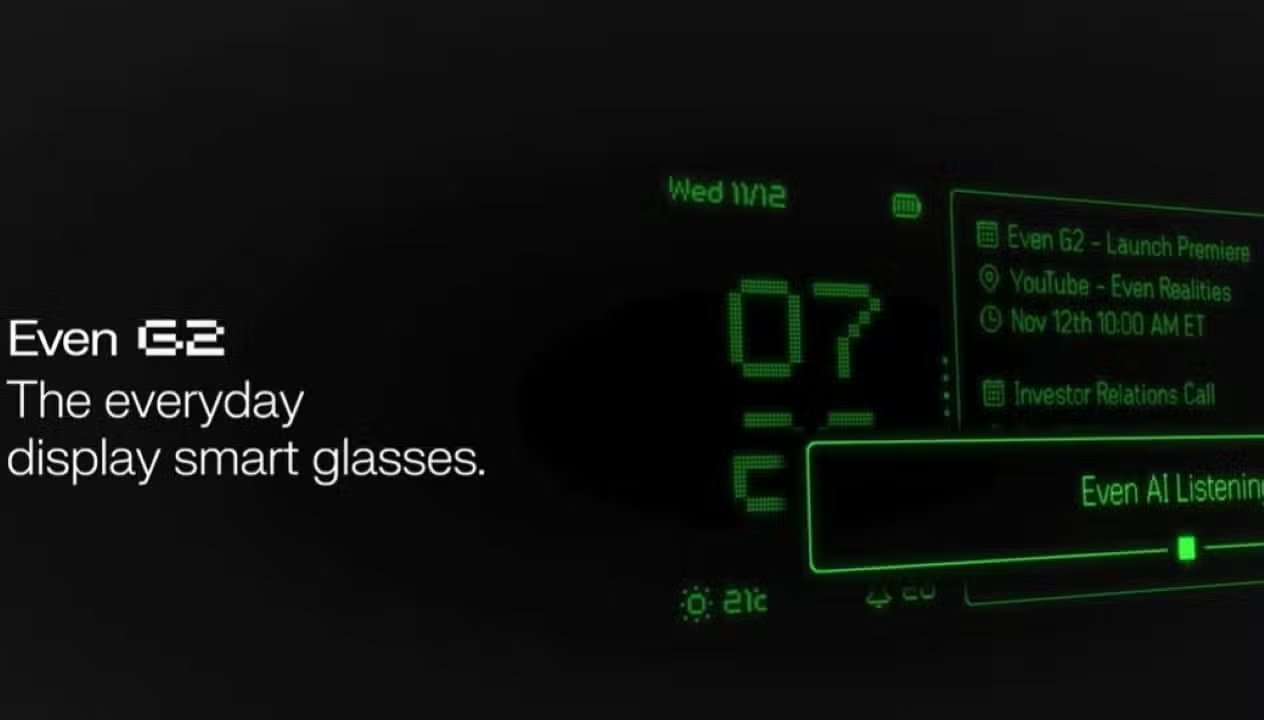
Wearable technology maker Even Realities has begun rolling out a major software update to G2 smart glasses users, introducing an open ecosystem for third-party apps and new AI-based assistance tools. The strategic move changes the dynamics of use of the device, which until then operated exclusively with native tools of the proprietary operating system, allowing independent programmers to create customized solutions for the hardware. The initiative aims to transform the accessory into a productivity and daily entertainment center, maintaining the premise of a minimalist design that does not interfere with the traditional aesthetics of a conventional frame. The update process occurs remotely, requiring only that the equipment be connected to the wireless network and paired with the control application on the user’s smartphone.
The changes implemented in the device’s operating system encompass different usability fronts, focused on expanding daily usefulness without generating excessive visual distractions:

- Opening the system for installing software developed by partner companies and independent programmers.
- Integration of a system for reading previous documents for real-time assistance during dialogues and meetings.
- Graphical interface refinement to reduce visual pollution on holographic projection lenses.
Dynamics of use and adaptation to the technology market
The wearable devices sector focused on augmented reality and visual assistance is going through a moment of transition, where manufacturers seek to balance the offering of advanced features with battery life and users’ physical comfort. The decision to open the glasses’ operating system reflects a growing demand for customization, allowing the hardware to adapt to different professional profiles and leisure routines, without depending solely on the original manufacturer’s development roadmap. Para To ensure system stability, the software architecture was designed to isolate third-party processes from the device’s vital functions, preventing unexpected crashes.
The development guidelines established by the company prioritize specific categories of applications that make sense for the display format on a transparent screen:
- Urban mobility tools with real-time public transport timetables.
- Text readers optimized for the screen aspect ratio projected onto the lens, enabling hands-free reading.
- Casual games with low graphical requirements, such as chess and virtual animal simulators for moments of rest.
The implementation of these categories occurs in a controlled manner, requiring that each new software undergo an energy efficiency check before being made available for download. The objective of this rigorous screening is to prevent poorly optimized applications from causing internal components to overheat or drain the battery quickly, compromising the continuous use experience throughout the work day.
Dedicated platform for application distribution
The software distribution center functions as an official repository where users can explore and install new features directly through the companion application installed on their smartphone. The digital environment was structured to facilitate the discovery of useful tools, categorizing applications by niche and level of hardware requirement.
Independent developers have already begun populating the platform with solutions ranging from remote control of media players to productivity monitoring dashboards based on time management techniques. The store interface prioritizes clarity, displaying the file size and estimated impact on device autonomy before confirming the download.
The installation of data packages takes place via a high-speed wireless connection, transferring the compiled files from the phone to the glasses’ internal memory in a few seconds. The storage management system alerts the user if internal space reaches critical levels, suggesting the removal of little-used tools.
Third-party application updates are processed in the background during the night, as long as the device is connected to the magnetic charger. Essa silent approach ensures that the user starts the day with the latest and most secure versions of all installed software, without interruptions during business hours.
Contextual assistance in meetings and appointments
The note preparation tool expands the capabilities of the existing audio transcription system by allowing you to preload text files, spreadsheets, and meeting agendas. Uploading is carried out simply through the mobile application interface, which converts documents into a reading format optimized for projection onto the lens.
During a video call or in-person meeting, the system identifies the context of the conversation and projects relevant excerpts from the documents in the user’s line of sight, functioning as an intelligent teleprompter. Text scrolling control can be done through subtle touches on the device’s side rod, maintaining the naturalness of human interaction.
Evolution of the graphical interface and artificial intelligence
The software update also brought changes to the way information is presented on the lenses, adopting more readable typography and simplified notification icons. The reduction of unnecessary visual elements aims to reduce eye fatigue in prolonged use sessions, delivering only the data strictly necessary for the moment.
The artificial intelligence algorithm responsible for managing daily interactions has received improvements to learn the user’s highest activity times. The system is now able to silence non-essential alerts during periods of intense focus, acting as a proactive filter that prioritizes urgent messages and calendar reminders based on behavior history.
Component optimization and power management
The simultaneous execution of third-party applications and artificial intelligence tools requires strict management of the processing resources of the chip embedded in the glasses structure. Software engineering had to rewrite fundamental parts of the system core to ensure that the addition of new functions did not result in slowdowns in the main interface.
The operating system now dynamically allocates memory, suspending background processes as soon as the user diverts attention or removes the device from their face. Essa Instant hibernation of inactive applications is crucial to keeping the hardware temperature at comfortable levels for direct contact with the skin of the face.
Built-in motion sensors help with this efficiency task by detecting your walking pattern and adjusting the screen refresh rate to save power. Quando the user is moving quickly, the interface simplifies animations, returning to maximum detail only when it detects that the person is still and focused on reading.
Authoring tools for independent programmers
Providing a standardized software development kit abstracts the complexity of programming for hardware with severe space and thermal dissipation limitations. Software engineers receive access to pre-configured code libraries that facilitate integration with the device’s noise-cancelling microphones, directional speakers, and monochrome projector. Essa Ready-made infrastructure eliminates the need to create communication protocols from scratch, accelerating the launch cycle of new digital products.
This technical approach drastically reduces the time required to convert traditional smartphone applications into versions compatible with the glasses’ visual interface. The technical documentation provided by the manufacturer details the limits of use of the neural processing unit, ensuring that artificial intelligence requests from third-party applications do not interfere with the fluidity of the base operating system’s animations. Fóruns dedicated numbers have been opened so that the creator community can exchange experiences and report failures during the adaptation phase.
Local data processing and information security
The audio and text processing architecture was designed with an absolute focus on protecting sensitive data, especially considering the device’s use in corporate environments, hospitals and confidential business meetings. The real-time transcription system and note assistant perform the overwhelming majority of voice recognition and cross-referencing locally, utilizing the processing power of the paired smartphone rather than sending continuous audio packets to cloud servers. Quando an exceptionally complex request requires external processing on artificial intelligence servers, the data is rigorously anonymized and end-to-end encrypted, preventing the interception of strategic company information or users’ personal details by malicious agents. The operating system’s updated privacy policy explicitly prohibits third-party applications from accessing the microphone array or motion sensors without triggering a clear, unmistakable visual indicator on the lens, ensuring that both the wearer and those around them are immediately aware of when ambient audio is being captured or analyzed by software.
System update release schedule
The new software packages are being rolled out in a staggered manner to monitor server stability, with the note preparation wizard being immediately released to the active user base. The complete application distribution platform is expected to be activated globally and unrestricted for the following week, completing the device renewal cycle.