

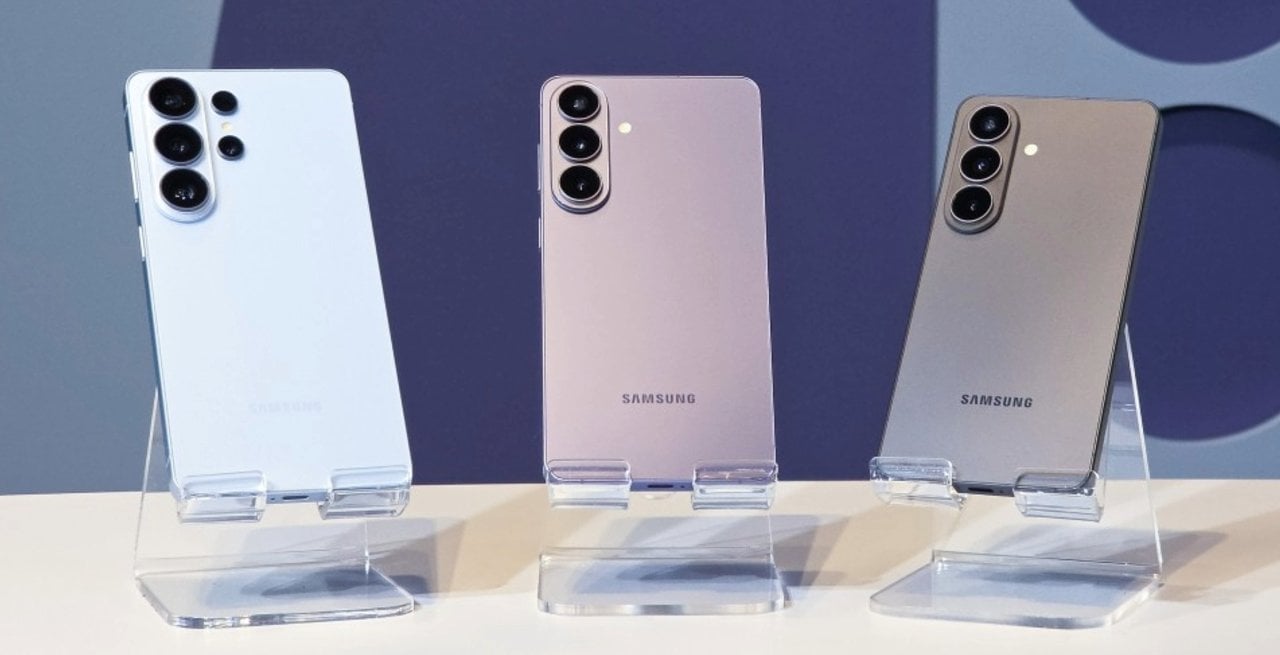
Samsung made official a structural change awaited for years by premium line consumers with the launch of the Galaxy S26 Ultra. The South Korean manufacturer’s new top-of-the-line device finally presents a significant evolution in wireless charging technology, a point that had been the target of constant criticism from experts and advanced users. Historicamente conservatively after battery incidents in past generations, the company decided to raise the level of energy delivery to compete more directly with global high performance standards.
Technological advances focus on reducing waiting time connected to magnetic bases or induction chargers, allowing for a more dynamic routine. Enquanto previous generations maintained technical stagnation, the new model Ultra uses renewed internal components to support superior power flows without compromising the integrity of the lithium-ion cells. Esta The decision reflects a change in the brand’s engineering philosophy, which now seeks to balance operational safety with the demand for speed in an increasingly demanding market.
Some of the key features of the power system include:
- Wireless charging power increased to 25W in model Ultra.
- Improved compatibility with third-party fast charging accessories.
- Intelligent thermal management system to prevent overheating during recharging.
- Technical differentiation between model Ultra and the standard versions and Plus.
Technical evolution of wireless charging on Galaxy S26 Ultra
The jump to 25W of power in induction charging represents a milestone for the Samsung, which has maintained the 15W limit for several consecutive seasons. Essa limitation was seen as a bottleneck for those investing in enthusiast category devices, as wireless charging ended up being an option only for prolonged periods, such as nighttime sleep. With the new configuration, the company is able to deliver an experience that begins to rival the cable charging of intermediate models, bringing real practicality to the corporate and domestic environment.

The implementation of this technology required a restructuring of the energy reception coils located at the rear of the device, under the reinforced glass. The Galaxy S26 Ultra can now absorb a larger load in less time, optimizing the use of chargers compatible with the Qi standard and the brand’s proprietary technologies. Furthermore, the One UI 9 management software works in conjunction with the hardware to monitor the charging curve, ensuring that the 25W peak is used at times of lowest battery charge, where absorption is naturally more efficient.
Hands-on performance and battery speed tests
In real use conditions, tests indicate that the Galaxy S26 Ultra can reach between 40% and 45% of its total capacity with just 30 minutes of rest on a 25W base. Esse number is almost double what was recorded in models like the S23 or S24 Ultra, which required much more time to reach similar levels of autonomy. Para a charge that reaches approximately 80%, the device needs about an hour, which solves the practical uselessness of the resource for quick recharges during the work day or short breaks.
This improvement places the device in a prominent position within the Android ecosystem, although there are still Asian competitors that operate with higher nominal numbers. Samsung’s strategy, however, appears to focus on the longevity of the battery’s chemical component, avoiding premature wear caused by excessive voltages. By offering a stable 25W, the manufacturer delivers a productivity gain without exposing the hardware to the risk of accelerated degradation, maintaining the resale value and durability of the product for more years.
- Recharges from 0 to 45% in 30 minutes in wireless mode.
- 80% autonomy achieved in around 60 minutes of induction.
- Thermal stability maintained even at high voltage peaks.
- Intelligent optimization via artificial intelligence for cell preservation.
Strategic differentiation between the versions of the S26 line
An important point for Brazilian and international consumers is that the new 25W charging is exclusive to the model Galaxy S26 Ultra. The smaller versions, the Galaxy S26 and the Galaxy S26 Plus, remain limited to the 15W standard used in years previous ones, which creates a clear market division. Samsung uses this differentiation to justify the price positioning of the Ultra as the brand’s true center of innovation, aimed at those who do not give up on any of the cutting-edge specifications currently available.
This segmentation also reflects the physical capacity of the devices, as the Ultra’s larger body allows for more efficient heat dissipation, necessary to support 25W wireless. Smaller models have less internal space for advanced cooling systems, which could cause thermal discomfort if the power was increased without due precautions. Assim, the user looking for maximum energy convenience ends up being directed to the more robust version, which also has a larger screen and the most advanced camera system in its category.
South Korean manufacturer’s safety and caution record
Samsung’s resistance to increasing charging speeds in recent years has deep roots in the Galaxy Note episode 7. Após the global recall caused by combustion problems in that model’s batteries, the company adopted extremely strict safety protocols that have become a reference in the industry. Essa Excessive caution, although it guaranteed public trust in the brand, ended up generating a temporary technological lag in relation to brands that adopted 50W or 100W wireless charging.
The launch of the Galaxy S26 Ultra with 25W signals that the company’s engineering has reached a new level of confidence in its multi-layer protection systems. Atualmente, the device has real-time temperature sensors and algorithms that interrupt the flow of current at the slightest sign of an anomaly. Essa technical maturity allows innovation to return to the center of the Galaxy line, offering solutions that users have been requesting on technology forums and social networks around the world.
Premium market and the cost of investing in technology
The launch price of the Galaxy S26 Ultra on the national market reflects its position as an item of luxury and extreme productivity, being found in the range of R$8,499. Para many analysts, the value is justified not only by the 6.9-inch screen and the latest generation processor, but precisely by correcting historical flaws such as wireless charging. The cost-benefit is evaluated as positive for those who use their smartphone as their main work tool and need energy solutions that keep up with the pace of intense use.
With the availability of several offers at major retailers, the device is consolidated as the main choice for those who want technological longevity. The presence of 12GB or even 16GB of RAM, combined with storage that reaches 1TB, ensures that the investment lasts for several years without signs of obsolescence. The renewed charging system is just the tip of the iceberg of a project that aims to regain absolute leadership in mobile hardware, focusing on delivering the most modern features in each internal and external component.
Impact on productivity and use of original accessories
The move to 25W encourages the use of official, high-quality charging bases, which can now deliver a real time benefit to the consumer. In office environments, where the cell phone is usually resting on the table, the difference between the old 15W and the current 25W is noticeable within a few minutes of use. The user no longer needs to worry about looking for a cable for an emergency charge before a meeting, as the magnetic support fulfills its role with much greater efficiency than the previous generation.
This move by Samsung is expected to pressure other manufacturers to also review their basic wireless power standards. Quando a market leader decides to update a technology that was stagnant, the entire accessory ecosystem tends to follow the trend, resulting in more powerful and accessible chargers for the general public. The Galaxy S26 Ultra therefore acts as a catalyst for changes that are expected to become the new standard for the high-performance smartphone industry in the coming years.
- Improvement in the routine of users who work at fixed stations.
- Encouragement of the development of new accessories by the industry.
- Reduced dependence on physical cables for battery maintenance.
- Consolidation of induction technology as the main charging method.
Software experience and power management via One UI
The hardware of the Galaxy S26 Ultra works in symbiosis with the One UI 9 interface, which brings new widgets and battery health monitoring tools. The system can learn the device owner’s sleeping and work patterns to decide the ideal charging speed at any given time. If the cell phone is placed on the base during the early hours of the morning, it may charge more slowly to preserve its useful life; If placed during business hours, the 25W mode activates instantly to provide maximum power in the shortest possible time.
This artificial intelligence applied to energy management is one of the differentiators that Samsung uses to stand out from the competition that is purely focused on numbers. Customizing the experience allows the user to have full control over how they want the device to behave, being able to disable fast charging if they prefer to prioritize the device’s temperature. Todas These options are natively integrated into the device’s assistance menu, facilitating access even for those who do not have advanced technical knowledge of hardware.