

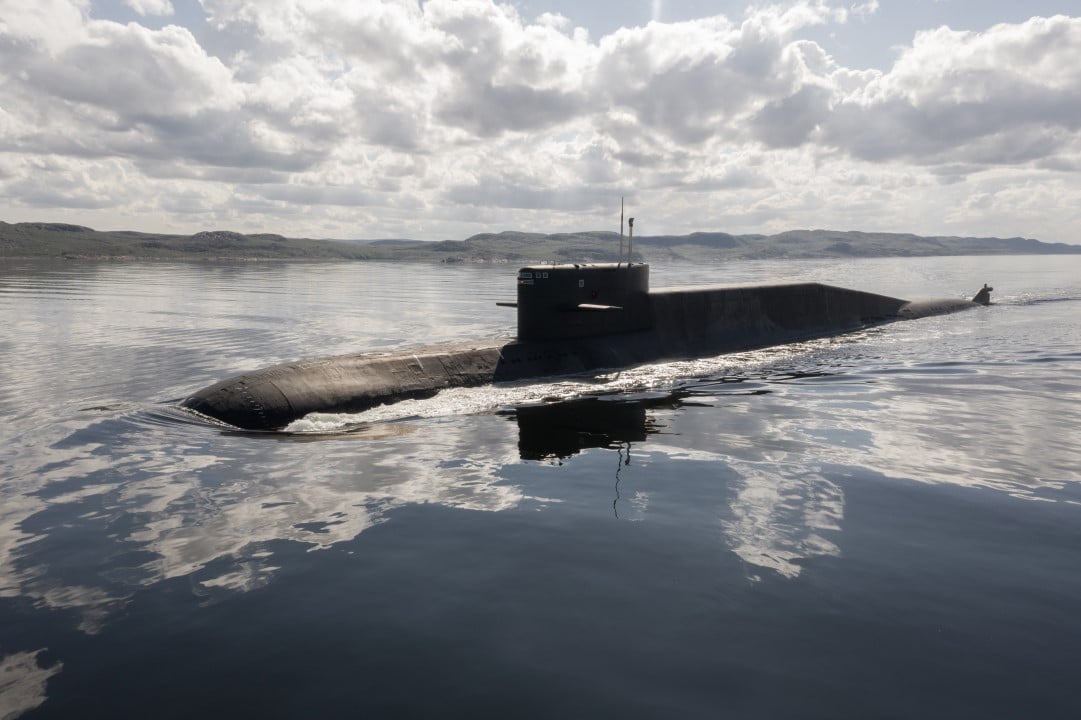
The secretary of Defesa of Reino Unido, John Healey, revealed that three Russian submarines were detected in Atlântico Norte carrying out activities over critical submarine cables and pipelines. British forces, in conjunction with allies such as Noruega, accompanied the vessels for more than a month to prevent any action against the submarine infrastructure. The operation involved a frigate from Marinha Real, helicopters and maritime patrol aircraft. Não There is evidence of damage to cables or pipelines.
Healey spoke during a press conference on Downing Street this Thursday and directed a direct message to Russian President Vladimir Putin. Ele stated that Reino Unido identified the activity and that any attempt to damage infrastructure will not be tolerated. The statement came amid international tensions, including conflicts over Oriente Médio.
Submarines involved in the Russian operation
Three submarines participated in the monitored activity. One of them was class Akula, a nuclear attack, which acted as a likely decoy to divert attention. The other two were specialized submarines from Diretório Principal of Pesquisas and Águas Profundas of Rússia, known as GUGI. Esses vessels are designed to map underwater infrastructure in times of peace and carry out sabotage actions in the event of conflict.
The vessels were identified within the exclusive economic zone of Reino Unido, which extends approximately 370 kilometers offshore. Submarine Akula returned to Russian waters after being continuously tracked. The two GUGI submarines remained in the region for longer before also withdrawing to the north.
https://twitter.com/aleksthgrt/status/2041996552508522968?ref_src=twsrc%5EtfwDetails of the British military response
The tracking operation mobilized more than 500 British military personnel over several weeks. The frigate HMS St Albans, the replenishment ship RFA Tidespring, helicopters Merlin and Boeing P-8 aircraft from Força Aérea Real were employed to monitor Russian movements by sea and air. The action was supported by the Norwegian Marinha and included the launch of sonar buoys to demonstrate constant vigilance.
The teams maintained 24-hour surveillance over the Russian vessels. The joint effort aimed to deter any malign activity without unnecessary escalation. British authorities highlighted that Reino Unido’s underwater network has high resilience, although the number of threats to it has increased in recent years.
Context of Russian activity in the region
Diretório GUGI has more than 50 vessels, including research ships and specialized submarines. An earlier example was ship Yantar, spotted in British waters last November. Authorities associate these units with hybrid warfare actions directed against Reino Unido and its allies, especially around communications cables and undersea energy infrastructure.
More than 90% of Reino Unido’s daily internet traffic depends on these submarine cables. The prolonged presence of Russian submarines occurred in Atlântico Norte international waters, close to strategic routes. The British government decided to make the information public to signal transparency and deterrence.
Message sent to Moscou
During the press conference, Healey emphasized that Reino Unido recognizes Rússia as the main threat to the security of the country and Otan. Ele stated that British forces will not divert focus from Vladimir Putin, even as they act to protect interests in the Oriente Médio. The operation was successfully completed after the withdrawal of Russian submarines from the monitored area.
The secretary of Defesa reinforced that there is no evidence of damage caused by Russian vessels to cables or pipelines. The British action served to expose the operation and demonstrate coordinated response capacity with international partners. Moscou rejected allegations of threat to British infrastructure, as reported by Russian agencies.
Resources used in surveillance
Marinha Real used frigate HMS St Albans as a centerpiece in tracking submarine Akula. RFA Tidespring provided logistical support during the extended mission. Helicópteros anti-submarine Merlin complemented aerial monitoring, while P-8 aircraft carried out long-duration patrols.
The effort involved thousands of miles sailed by British vessels. Coordination with allies enabled continuous coverage even in challenging Atlântico Norte conditions. Officials highlighted that the operation reinforces the readiness of the armed forces to protect strategic assets.
Final evaluation of the operation
British authorities consider that the Russian operation did not achieve its objectives due to the rapid and coordinated response. Healey directed the military command to track and detain the vessels from the moment of initial detection. Persistent surveillance prevented actions against critical infrastructure.
The government maintains continuous monitoring of similar activities in the region. The public declaration serves to reinforce the commitment to protecting cables and pipelines essential for communications and energy. British forces remain prepared to respond to future movements.