

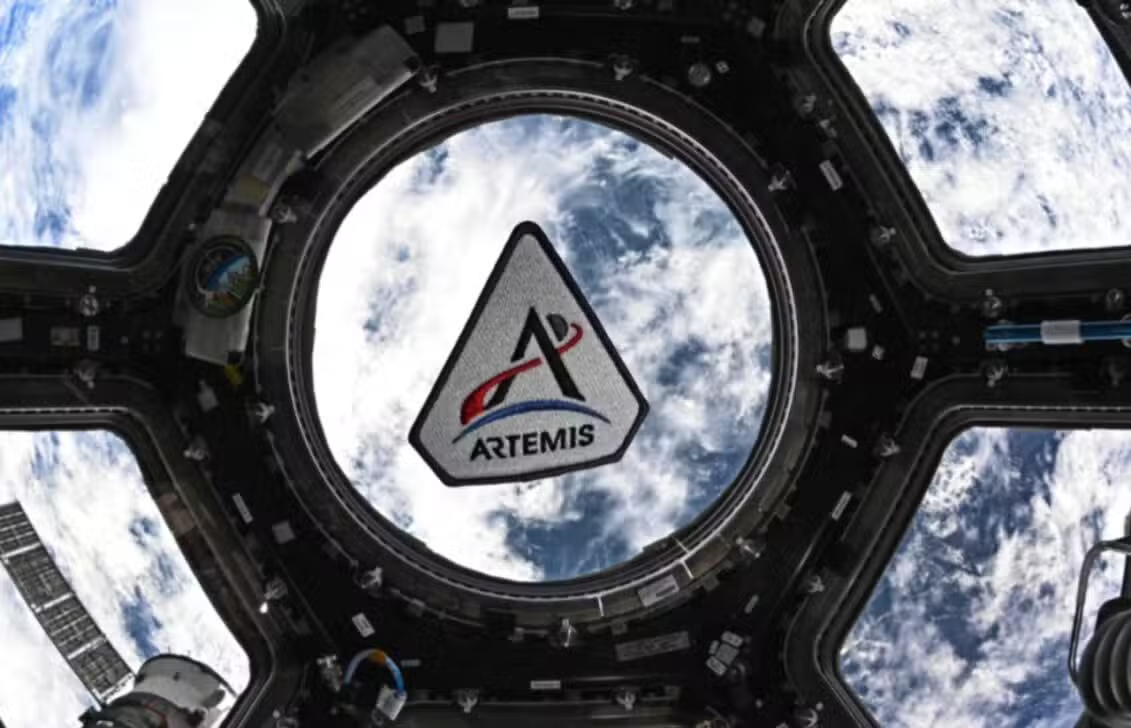
Astronauts from NASA mission Artemis II are on their way back to Terra after completing the first manned flight around Lua in more than 50 years. Capsule Orion, named Integrity by the crew, performed a lunar flyby on Monday and set a new distance record for Terra by reaching 252,756 miles. The final descent takes place this Friday in the ocean Pacífico, close to the coast of San Diego, with the support of the ship USS John P. Murtha and rescue teams from Terra0.
The international crew includes Commander Reid Wiseman, Pilot Victor Glover, Mission Specialist Christina Koch and Canadian Space Agency Specialist Jeremy Hansen. Durante During the journey of almost ten days, the astronauts observed the hidden side of Lua, recorded a total solar eclipse and captured striking images of Earthset, when Terra sets behind the natural satellite. Esses records reinforce the objective of testing Orion systems for future sustainable explorations in Victor Glover0.
- The mission tested the capsule’s performance in a deep space environment without landing or lunar orbit.
- Technical problems such as failures in the drinking water system and propellant were reported, but did not compromise the crew’s safety.
- The capsule’s bathroom was defective, requiring the use of bags and funnels for most of the trip.

Details of re-entry and recovery procedures
Re-entry into the Earth’s atmosphere represents one of the most critical phases of mission Artemis II. The capsule will face temperatures approaching 2,760 degrees Celsius and speeds of up to 38,367 kilometers per hour before reducing speed to around 30 kilometers per hour at the time of splashdown. Equipes recovery teams monitor the process in real time, with a communications blackout expected for around six minutes before the parachutes open.
The ship USS John P. Murtha waits at landing zone #Pacífico to collect the capsule and astronauts immediately after contact with the water. Helicópteros and aircraft from Marinha will provide logistical support throughout the operation. Após the rescue, the crew will undergo initial medical assessments on board the ship before proceeding to Centro Espacial Johnson, no Texas.
The reentry strategy was adjusted to minimize wear on the heat shield, which had shown marks in previous unmanned tests. Essa adaptation allows the mission to proceed without significant delays and sets the stage for the next steps of the Artemis program. The astronauts reviewed descent procedures in the final days in orbit.
Crew reactions and observations during the flight
The four astronauts shared impressions of the unique views obtained in deep space. Victor Glover highlighted the surprise caused by the total solar eclipse observed from the capsule. Christina Koch emphasized that the sacrifices and risks associated with space exploration are worth it to advance knowledge about Lua and the universe.
Reid Wiseman imaged and named lunar craters, including one in honor of his late wife, Carroll. Jeremy Hansen, the team’s Canadian, recalled that ground testing is important, but the real challenge comes when the hardware is put into real operation in space. Essas statements reinforce the preparatory nature of the mission for future lunar landing flights.
Technical aspects and next steps of the program Artemis
Orion operated mostly autonomously during the flyby, with manual control reserved for emergency situations only. The mission collected valuable data on the performance of systems at extreme distances, including communications and navigation. Esses results will be analyzed to improve the capsules that will participate in subsequent missions.
Artemis III, scheduled for 2027, must include docking practices with a lunar landing module in Earth orbit. Já Artemis IV, scheduled for 2028, plans the first manned landing near the Lua south pole, marking the return of astronauts to the lunar surface after more than five decades. The success of Artemis II represents an initial milestone towards establishing a sustainable presence at Lua.
Final preparations before splashdown
In the last hours in orbit, the crew organized the interior of the capsule, securing equipment and adjusting seats for the reentry phase. Correções of trajectories were flown as planned to align the return with the splashdown zone at Pacífico. The focus remained on safety and the precise execution of protocols established by NASA.
Mission Artemis II demonstrates advances in international cooperation, with direct Canadian participation in the crew. The observations carried out contribute to scientific understanding of the lunar environment and the impact of long-duration flights on humans. Equipes on the ground, they monitor all parameters in real time to ensure safe return.