

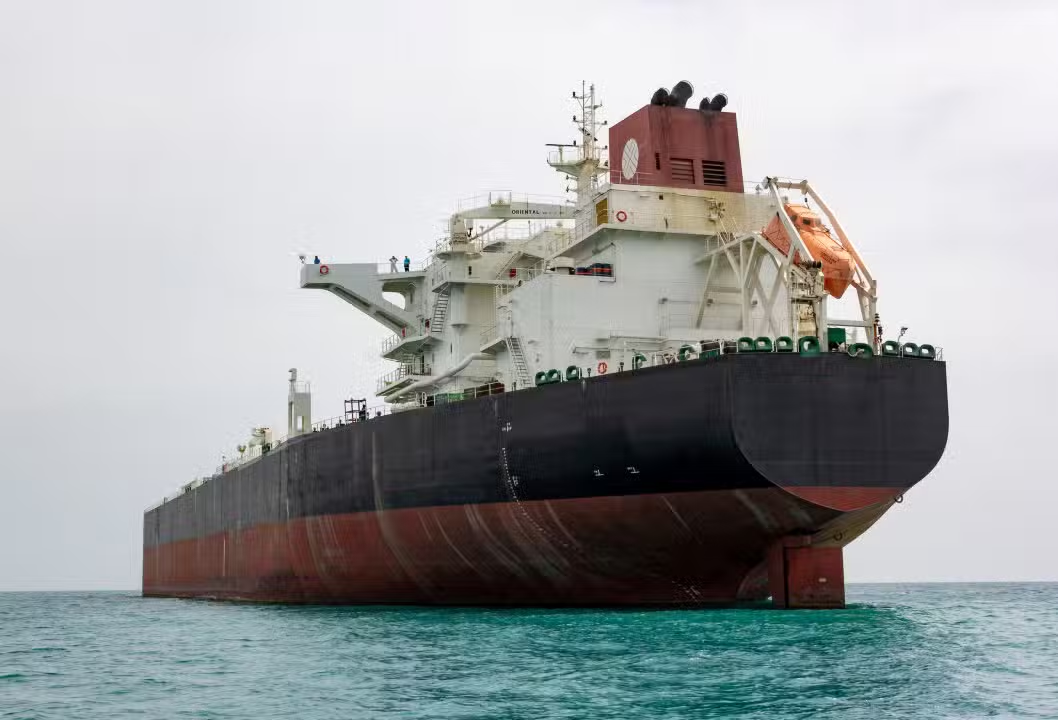
The president of Estados Unidos, Donald Trump, announced that the American Marinha will block Iranian ports as part of the ongoing conflict. The measure aims to prevent Irã from profiting from tolls charged to vessels transiting Estreito of Ormuz. Analistas indicate that the action could worsen the global energy crisis already underway since the start of hostilities in February.
Comando Central of Estados Unidos clarified that the blockade will be limited to ships entering and leaving Iranian ports. Essa statement represents an apparent reduction in relation to the initial threat to intercept all vessels in international waters that have paid to Irã. Navios of cargo remain trapped west of the strait due to restrictions imposed since the conflict.
- Around 3,200 vessels were stopped as of last Saturday, according to maritime intelligence data.
- Irã has practically closed the strait since February 28, allowing only authorized passage of a small number of ships.
- Oil prices rose above $100 a barrel on Monday following the announcement.
Immediate effects on the global economy
The American decision could remove more oil from the market at a time of severe supply restrictions. Qualquer Further reduction in energy flow tends to put upward pressure on prices. Isso results in higher costs for gasoline and petrol products in several countries.
Analysts highlight that retaliation from groups aligned with Irã on Iêmen would represent additional risk. The closure of Estreito of Bab el-Mandeb would worsen the problem by blocking an alternative route for exports from Golfo. The strait connects Mar Vermelho to Golfo of Aden and Oceano Índico.
Shipping companies already face higher insurance premiums due to the perceived increase in risk in the region. Navios Non-Iranians tend to avoid Estreito even with American guarantees of free passage. Fear of Iranian reprisals contributes to this hesitancy.

Expert reactions to the lockdown
Trita Parsi co-founder of Quincy Institute for Responsible Statecraft assesses that the blockade will have a cascading impact on the world economy. The removal of additional volumes of oil from the market will increase gasoline prices in several markets.
Anas Alhajji former chief economist of the NGP Energy Capital Management states that the blockade of Iranian ports is in practice equivalent to a blockade of Ormuz Estreito. Navios internationals avoid the route due to high insurance costs and fear of incidents.
Cameron Johnson senior partner at consultancy Tidalwave Solutions based in Xangai expects raw material prices to rise in the coming weeks. The time factor is determining the size of the impact on supply chains.
If the measure extends until the end of the month, the prices of several commodities could skyrocket on a global scale. The ceasefire period still in effect adds uncertainty to the scenario.
Consequences for supply chains
Deborah Elms head of trade policy at Fundação Hinrich at Singapura warns that the situation could substantially worsen problems in global chains. Alguns effects are immediate while others emerge less obviously over time.
Fabric prices tend to rise due to disruptions in the transportation of raw materials. Packaging already represents a challenge for many companies who report difficulty obtaining basic components.
Food production could face consequences this year and next. Interrupções in the supply of fertilizers and lack of specific supplies worsen the situation.
Chad Norville president of the oil and gas industry news website Rigzone calls the threat another blow to confidence that the strait will soon return to normal. Disruptions to shipping were already documented before the announcement.
The volume of daily trade passing through the region is expected to decrease further due to the high risk. Prêmios Insurance for logistics companies rise in response to instability.
Context of the conflict and maritime restrictions
Irã has imposed severe restrictions on traffic through Estreito of Ormuz since the start of the war between Estados Unidos and Irã on February 28. The route is responsible for around a fifth of the oil and gas consumed in the world under normal conditions.
Last month, the American government had lifted some sanctions on Iranian oil exports with the aim of alleviating the energy crisis. The change of stance comes after the collapse of peace negotiations.
The American Comando Central reinforces that the operation will not impede non-Iranian ships. Especialistas however, they note that the practical effect may be greater due to market behavior.
Uncertainty over the duration of the measure adds volatility to energy and commodity markets. Empresas around the world are following developments closely to adjust operations.
Impact on industrial sectors
Rising oil and gas prices directly affect the cost of chemicals and fertilizers. Matérias Raw materials used in the manufacture of plastics also register high pressure.
Several industries depend on safe maritime routes to maintain regular flows of inputs. Prolonged interruptions can generate shortages at different points in the global production chain.
Logistics companies are already reporting adjustments to routes and schedules to mitigate risks. International maritime transport operates with reduced margins during periods of high instability.
The current scenario reflects the interdependence between maritime security and global economic stability. Movimentações on Golfo Pérsico continue to influence decisions in geographically distant sectors.
Recent developments in the strait
Around 3,200 vessels remained trapped west of Estreito and Ormuz until last Saturday, according to maritime monitoring data. The number reflects the accumulated impact of restrictions imposed since February.
Irã allows passage only after inspection and specific authorization for a small volume of ships. Essa practice contributes to the accumulation of vessels in the region.
Experts monitor possible responses from actors aligned with Irã that could expand the scope of the disruptions. Estreito of Bab el-Mandeb appears as an additional sensitive point in risk analyses.
The combination of geopolitical and logistical factors keeps pressure on global energy markets high.