

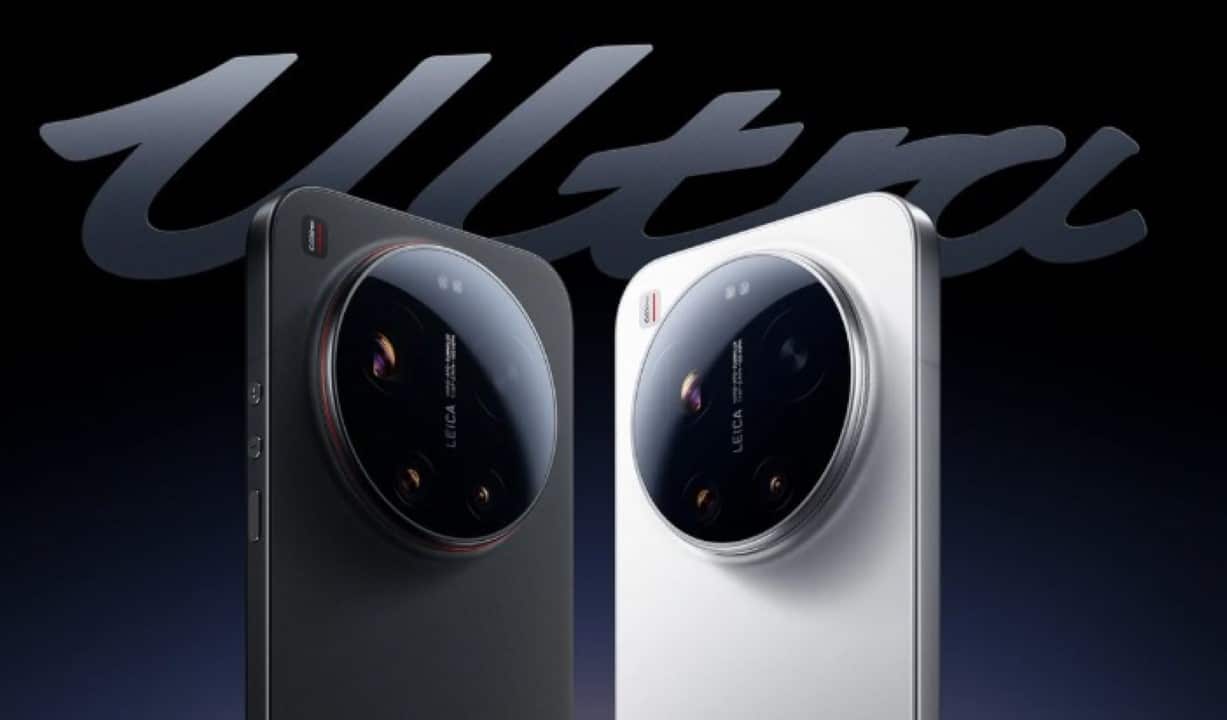
The Asian manufacturer officially announced the arrival of the 17 and 17 Ultra models to the Latin American market during an event held in the city of Guadalajara, at México. The mobile devices are part of the brand’s high-end segment and have as their main attractions the photographic set developed in conjunction with the Leica and the processor Snapdragon 8 Elite Gen 5. The presentation took place last week and marked the international expansion of the company’s new generation of cell phones.
The move reinforces the company’s strategy of competing for leadership in the professional pocket photography niche, directly rivaling other giants in the technology sector. Both devices come with IP68 certification against water and dust, in addition to a structure reinforced by glass Shield Glass, which increases resistance against everyday impacts. The manufacturer has chosen not to disclose, at this time, an official date or price estimate for the retail launch of the Brasil products. The focus of the presentation was on demonstrating the image processing capabilities and the reduced thickness of the physical components.

Physical engineering and ergonomics of new devices
The entry-level model in the new line features a more compact format, with a 6.3-inch OLED CrystalRes screen that delivers a resolution of 2656 x 1220 pixels. The panel has a variable refresh rate from 1 to 120 hertz using LTPO technology, reaching a peak brightness of 3,500 nits for viewing in high-light environments. The weight of the equipment is around 191 grams, distributed in a body 8.06 millimeters thick. The construction uses a high-strength aluminum frame pressed between layers of glass on the front and back. The engineering team highlighted the device’s comfortable grip during prolonged use.
The more robust variant, in turn, adopts a 6.9-inch display with HyperRGB OLED technology, capable of generating visual clarity equivalent to the 2K standard. The weight increases to approximately 218 grams in the standard version, with the thickness reaching 8.29 millimeters, which positions it as the thinnest device ever manufactured by the brand within the Ultra nomenclature. The industrial design team reduced the dimensions of the rear camera module to optimize the balance of the device in the user’s hands.
Advances in the optical system and German partnership
The technical collaboration with the German manufacturer Leica dictates the image capture architecture of both smartphones. The standard device houses three rear sensors of 50 megapixels each, with the main lens equipped with an f/1.67 aperture and the Light Fusion 950 sensor, which operates with a focal length equivalent to 23 millimeters. The set is completed with a 60mm telephoto camera equipped with optical image stabilization and an ultrawide lens with a 102-degree field of view. The processing software offers the traditional Leica Authentic and Vibrant color profiles, recreating the classic aesthetics of analog cameras. Durante demonstrations at the Mexican event, the photographs displayed demonstrated true-to-life color reproduction and the preservation of complex textures in different lighting conditions.
The most significant technological leap lies in the photographic set of the superior model, which incorporates a 1-inch main sensor called Light Fusion 1050L. Este component works in conjunction with LOFIC technology, designed to expand the dynamic range of captures in high-contrast scenarios. The big hardware difference is the 200 megapixel telephoto camera, which introduces a variable mechanical optical zoom system operating between 75 and 100 millimeters. The use of an APO Leica lens allows the equipment to reach an approximation equivalent to 400 millimeters without significant loss of optical quality. This version’s ultrawide lens expands the field of view to 115 degrees.
In the video department, both cell phones record images in 4K resolution at a rate of 120 frames per second. The more expensive version adds support for the Dolby Vision standard and compatibility with the Log ACES mode in specific professional recording situations. The company also makes an optional accessory available called Photography Kit, which attaches a wrist strap and a physical two-stage trigger button to the phone’s chassis.
Processing and thermal management architecture
The processing core of the entire family of devices is anchored on the Snapdragon 8 Elite Gen 5 chip, the latest mobile platform aimed at the high-performance segment. The RAM memory configuration starts at 12 gigabytes in the smallest model and starts at 16 gigabytes in the most expensive variant, ensuring fluidity when switching between heavy applications. Internal storage uses the UFS 4.1 read and write standard, with options starting at 512 gigabytes of available space. The silicon architecture promises substantial gains in energy efficiency and speed of execution of tasks based on artificial intelligence.
To sustain the processor’s peak performance without causing physical degradation, the manufacturer implemented a large heat dissipation system inside the chassis. The cooling chamber acts directly on critical components, stabilizing the temperature during prolonged high-resolution video recording sessions or playing demanding electronic games.
Energy autonomy and charging technologies
Battery engineering presents a curious inversion in relation to the physical size of devices, made possible by the use of new chemical compositions. The more compact device houses a 6,330 milliampere-hour energy tank, supporting fast charging of 100 watts via cable and 50 watts via magnetic induction. Já the larger screen equipment accommodates a 6,000 milliampere-hour cell, with a 90-watt wired recharge and the same 50 watts in wireless format. The adoption of batteries with higher silicon density was the determining factor that allowed the company to maintain the thin thickness of the chassis without sacrificing daily autonomy.
The consolidated technical data reveals the structural differences between the versions presented:
- 6,330 mAh battery with 100W recharge in the 6.3-inch model.
- 6,000 mAh battery with 90W recharge in the 6.9-inch model.
- Protection against submersion and dust guaranteed by IP68 certification.
- Glass Shield Glass version 3.0 applied exclusively to the top variant.
- Guardian protective structure integrated into the chassis of both cell phones.
Business strategy and operating system
The user interface that controls the hardware is HyperOS, the brand’s proprietary system built on the latest version of the Android source code. The software platform was designed to integrate the smartphone with a broader ecosystem of smart devices, facilitating communication between watches, headphones and connected home appliances. The market positioning establishes the smaller model as an option for consumers looking for portability combined with a long-lasting battery. The more expensive version, on the other hand, is aimed at photography enthusiasts who require large sensors and continuous zoom mechanisms. The development of this interface required a deep rewrite of the system core to reduce background resource consumption. The company claims that dynamic memory allocation allows you to keep dozens of applications open simultaneously without navigation hiccups. Transition animations have been recalibrated to take advantage of the maximum refresh rate of OLED panels. User data security has also received additional layers of encryption at the hardware level.
The choice of the Mexican territory to reveal the products highlights the importance of América Latina in the Asian company’s commercial expansion plans. The advances demonstrated in the integration between image processing software and physical lenses consolidate the maturation of the partnership established with the European optical industry.