

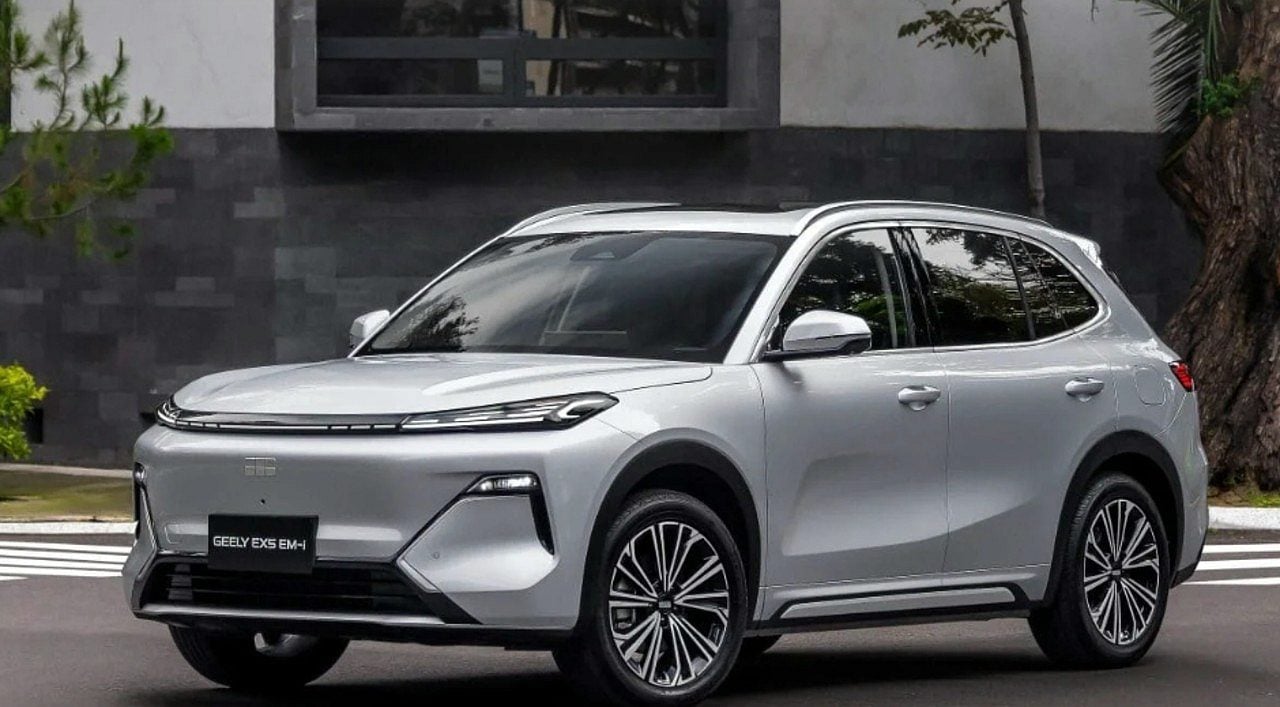
Chinese automotive manufacturer Geely has officially launched a new electrified propulsion system capable of redefining consumption patterns in the global industry. Batizada i-HEV, the technology eliminates the need for recharging sockets and operates completely autonomously while driving. The mechanical set reached the mark of 45 kilometers driven with just one liter of fuel. The result established a new efficiency benchmark in the sector. The first vehicles equipped with the new feature will arrive at China dealerships in 2026.
The development of the hybrid engine represents a direct response to the advancement of Asian competitors and the historical dominance of Japanese automakers in this specific segment. The brand’s engineering focused on creating an intelligent ecosystem that optimizes gasoline burning and kinetic energy regeneration simultaneously. Analistas from the automotive market point out that the transition to electrified models without the need for charging infrastructure attracts consumers in regions with few charging stations. The company’s commercial strategy involves the immediate application of the system on existing platforms. Isso reduces production costs. The integration of physical components with high-capacity software differentiates the project from previous generations of assisted combustion engines.

Artificial Inteligência manages power consumption in real time
The big difference of the i-HEV system lies in the implementation of a cloud processing platform called AI Cloud Power. The vehicle’s electronic brain analyzes environmental and topographic variables continuously throughout the journey. The system cross-references data on external temperature, atmospheric pressure, road slope and traffic conditions to determine the best configuration for using the engines. Reading information takes place in fractions of a second. The software decides the exact moment to turn off the combustion engine. The electric drive takes over immediately. The main objective of this digital architecture is to avoid wasting fuel in situations of heavy traffic or frequent stops. Artificial intelligence can anticipate the driver’s behavior and adjust power delivery even before a steep climb.
The protection of electronic modules received special attention from designers during the testing phase. The battery pack and controllers are IP68 certified against water and dust. The insulation guarantees the safe operation of the car on flooded roads or in torrential rain. The system’s durability remains unchanged even in severe weather conditions.
Eficiência thermal reaches unprecedented milestone in the automotive industry
The mechanical core of the set has a thermal efficiency rate of 48.41%. The index exceeds the current market average and represents the maximum use of the energy generated by burning the fuel inside the cylinders. Engineering has managed to drastically reduce heat losses and internal friction in moving parts. The electric motor coupled to the system provides 230 kW of auxiliary power instantly. The integration of the two driving forces eliminates the feeling of sluggishness common in vehicles focused solely on economy. The car accelerates from zero to 30 km/h in 1.84 seconds. The maximum speed in pure electric mode reaches 66 km/h.
The physical architecture of the engine has undergone a complete redesign to accommodate the new technology. The developers unified eleven distinct functions into a single integrated control module. The compaction of the parts reduced the total weight of the vehicle and freed up space in the engine compartment. Geely developed three transmission variations to accompany the hybrid system. Options include naturally aspirated engines and 1.5- and 2.0-liter turbocharged versions. Modularity allows the automaker to install the set in different categories of automobiles without the need to create exclusive assembly lines. The technical partnership with Volvo, a brand belonging to the same automotive group, accelerated the validation process of the mechanical components. The adoption of modular platforms reflects a strong trend among Asian manufacturers in 2026. The standardization of parts reduces the final cost for the consumer and facilitates maintenance in authorized workshops.
Official Teste of Guinness World Records validates consumption of the Emgrand sedan
The system’s efficiency was proven on public highways under the supervision of independent auditors. The automaker used the Emgrand compact sedan to carry out the evaluation route. The vehicle covered hundreds of kilometers in real traffic conditions. The meters recorded a consumption of 2.22 liters of fuel for every 100 kilometers driven. The mark is equivalent to an impressive 45 kilometers per liter. The performance exceeded the manufacturer’s own initial estimates. The Guinness World Records organization followed the entire journey and officially certified the result. International recognition places Chinese technology at the top of the global fossil fuel economy rankings.
The technology implementation strategy will cover several of the brand’s product lines in the coming months. The technical data reveals the potential for savings in different bodies manufactured by the automaker:
- The Emgrand compact sedan has an estimated consumption of 3.98 liters per 100 kilometers in mixed use.
- The mid-sized Monjaro sports utility vehicle registers 4.75 liters for the same distance.
- The Starray model will receive a specific calibration aimed at large families traveling in urban areas.
- Engine options range from 1.5 naturally aspirated to 2.0 turbo, depending on the vehicle’s load requirements.
- The Guinness World Records certification currently belongs to the entry-level version of the sedan tested on the highways.
The approval tests followed the WLTC cycle, a rigorous standard used by international regulatory agencies. The method simulates sudden accelerations, emergency braking and heavy traffic to ensure that the published numbers reflect the reality of drivers. Transparency in the release of data attempts to eliminate the European market’s historical skepticism regarding consumption reports from Asian automakers. Independent certification works as a seal of guarantee for future buyers. The rigor of the evaluations proves that fuel savings do not only occur in controlled laboratories. Rival automakers now face pressure to match those numbers in their next generations of vehicles.
Expansão global predicts arrival of technology to the Brazilian market
Large-scale production of i-HEV system components has already begun in Chinese factories. Commercial operations throughout 2026 mark the flooding of the domestic market with new electrified models. Geely structures a complex logistics operation to export the technology to other regions of the planet. The Brasil appears on the company’s radar due to the significant increase in demand for hybrid cars that do not depend on electrical charging infrastructure. The absence of a broad network of charging stations in Brazil makes self-charging vehicles the most viable option for the local energy transition. The company is studying the direct import of sedans and sports utility vehicles equipped with the new engine. The brand’s return to the country occurs through strategic partnerships and use of the dealership network of allied companies. The acceptance of the South American public dictates the pace of investments in the region.
The commercial impact of this innovation changes pricing dynamics in the global automotive sector. The ability to deliver a highly economical car without the high cost of giant batteries in pure electric models gives it a considerable competitive advantage. The Chinese manufacturer plans to scale production to further reduce the final value of cars on display. The movement forces traditional brands to review their product portfolios. The race for energy efficiency gains a new level of technical demand with this launch. Chinese dealerships begin training their sales teams for the arrival of the first batches.