

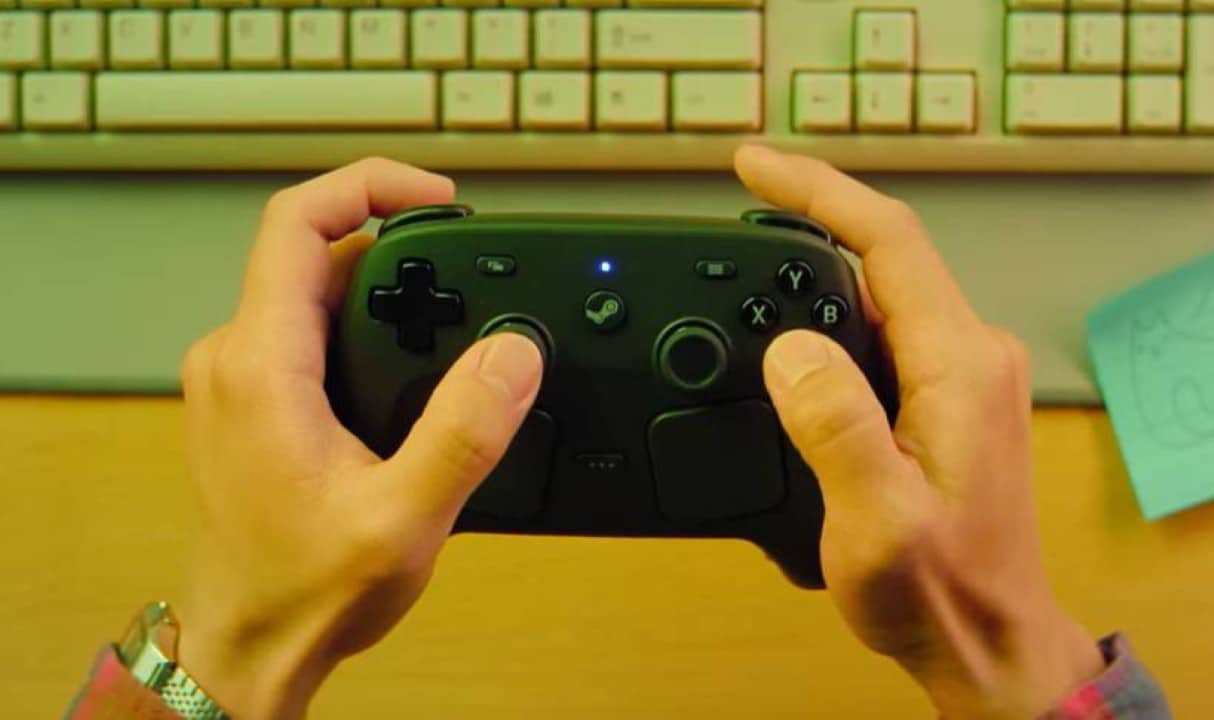
Valve confirmed the launch of Steam Controller 2 for a suggested price of 60 dollars, bringing updates that meet long-standing requests from the PC community. The accessory comes with a redesigned wireless receiver and focuses on improved ergonomics for long gaming sessions. The novelty is part of the company’s larger strategy to unify the experience between computers and living rooms.
The project builds on the learning gained from the success of Steam Deck in recent years. The manufacturer decided to revisit hardware concepts after analyzing user behavior on different platforms. Este control seeks to resolve accuracy issues found in the first generation of the device.
Mudanças design prioritizes comfort and tactile response
The new controller chassis features smoother curves than the original model launched almost a decade ago. The Valve has removed the sharp corners to avoid excessive hand fatigue during competitive or casual games. The rear buttons have been retained, but now offer a quieter and faster click.
Internamente components have been optimized to reduce input latency on Windows and SteamOS. The included wireless receiver uses a proprietary frequency that prevents interference from other home devices. Jogadores who prefer physical connections can use the USB-C port, which also serves to quickly charge the internal battery.
- Bateria with estimated autonomy of 40 hours per charge cycle
- High-precision Trackpads with HD haptic feedback
- Gatilhos analogues with magnetic sensors for greater durability
- Integrated six-axis Giroscópio for motion commands
- Internal Memória for storing button mapping profiles
Valve resurrects Steam Machines concept with modular focus
Além control, the company has detailed plans for a new line of compact and powerful Steam Machines. Diferente from the previous attempt, the new hardware relies on storage modularity to attract different audience profiles. The objective is to allow the consumer to choose the SSD capacity at the time of purchase or to upgrade in a simple way in the future.
Essa approach aims to reduce the device’s entry cost, allowing it to compete directly with traditional desktop consoles. The internal architecture facilitates access to expansion slots, something rare in small form factor PCs. Valve believes that this flexibility will be the difference in winning over those looking for the power of a PC with the practicality of closed systems.

Expansão for virtual reality with the Steam Frame project
Rumors about Valve’s definitive entry into the affordable VR market gained momentum with the mention of Steam Frame. Este headset is being developed to work seamlessly with the new Steam Machines and Steam Controller 2. The main engineering focus is to ensure a stable refresh rate without requiring cost-prohibitive hardware.
Software integration will be the cornerstone of this ecosystem, allowing the user’s library to move between devices without friction. The company seeks to democratize access to high-fidelity virtual reality, which today still requires heavy investment. The Steam Frame should use pancake lenses to reduce the overall weight of the display and improve visual comfort.
Estratégia hardware seeks to unify gamer ecosystem
Valve’s move signals an attempt to create an environment where players don’t need to worry about compatibility. Cada piece of hardware, from control to headset, was designed to communicate natively with the Big Picture interface. Isso eliminates the need for third-party drivers or complex configurations that often turn away less technical users.
Analistas from the industry point out that the $60 price for the controller is aggressive enough to upset traditional brands. By offering a complete package of features for this price, the company strengthens its brand as a reliable hardware manufacturer. The market is now awaiting official shipping dates for the first pre-sale units.