
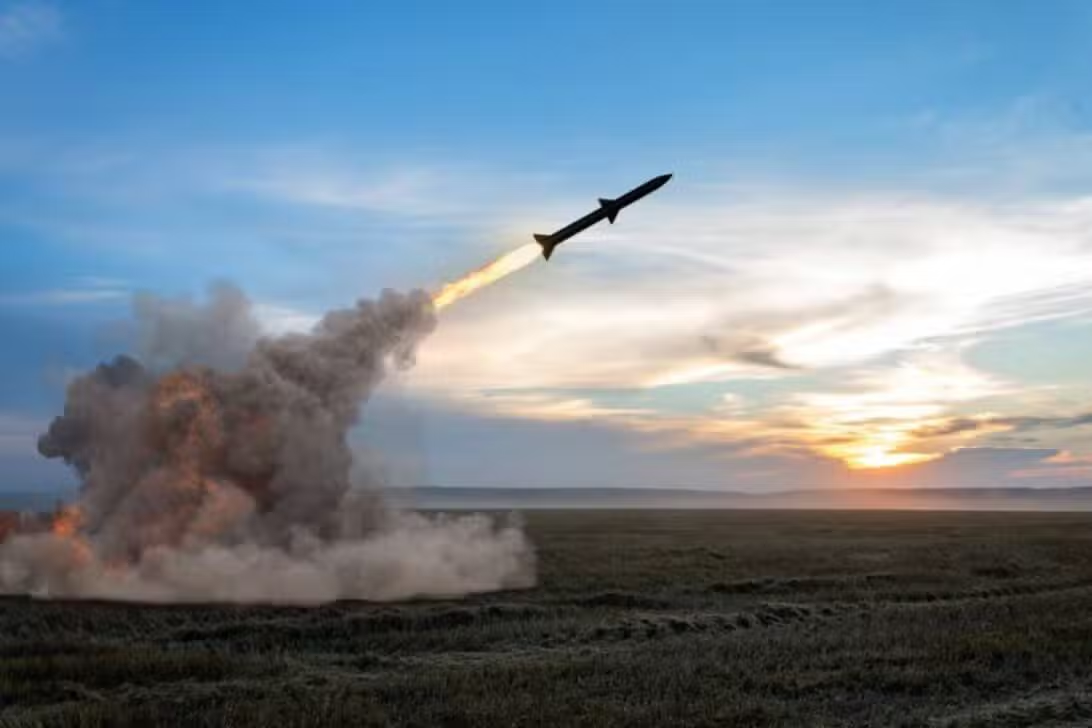
The extent of military confrontations between Estados Unidos and Irã caused a severe drop in both nations’ high-tech weapons reserves. The accelerated pace of operations at Oriente Médio consumed a significant share of guided missiles in a short space of time. Especialistas in global security monitor daily shooting volume with apprehension. The situation directly affects the strategic planning of the two powers involved.
Documentos intelligence and independent analysis shows a high alert scenario for the long term. Washington and Teerã maintain financial and military strength to continue the current offensive without immediate interruptions. Material exhaustion, however, limits the ability to respond quickly if new battlefronts emerge on the international scene. Replacing this machinery requires time, specialized labor and high industrial investment.
Impacto in the US military reserves
A recent Centro mapping of Estudos Estratégicos and Internacionais detailed the pressure on the American arms industry. The survey focused on seven categories of projectiles essential to the ongoing military campaign. The Tomahawk missiles illustrate the size of the logistical problem. The country has already used more than half of its original inventory in four of the models evaluated by the researchers.
The volume available before the start of hostilities was already generating heated debates in Pentágono. Comandantes considered the numbers insufficient for a possible direct clash against China. The continued use of aerial interception systems increases the exposure of American territory and its bases abroad. Vulnerability grows as protective shields go off against daily threats.
Levantamento points out intensive use of weapons
The research institute’s data provides a clear estimate of the Estados Unidos’s military consumption since the start of the war. Wear affects both deep strike weapons and military base protection shields. The list below details the proportion of use of the most requested equipment:
- Tomahawk: Cerca of 850 units fired, consuming 27% of the initial inventory of 3,100 long-range cruise missiles.
- JASSM: Aproximadamente 1,000 artifacts released, representing 22% of a strategic reserve of 4,400.
- PrSM: Entre 40 and 70 short-range ballistic missiles used, depleting up to 77.8% of the total inventory of 90 units.
- SM-3: From 130 to 250 anti-missile interceptors employed, reducing the contingent of 410 by up to 61%.
- SM-6: Entre 190 and 370 air defense missiles launched, committing up to 31.9% of the original reserve of 1,160.
- THAAD: 190 to 290 defense system units deployed, consuming up to 80.6% of a restricted stock of 360.
- Patriot: Entre 1,060 and 1,430 artifacts fired, representing up to 61.4% of the inventory of 2,330 protection systems.
Slow Reposição raises logistical concerns
Resupplying these front lines comes up against the complexity of modern military manufacturing. Manufacturing a single batch of precision missiles requires rare electronic components and specific metal alloys. Historicamente, the defense industry delivered new orders within an average of two years. Simultaneous global demand has drastically altered this timeline.
Supply chain delays pushed wait times to 36 months just for deliveries to begin. Completing a full order adds another year to the assembly process. The total cycle exceeds four years of waiting. Essa slowdown directly affects allies that depend on American exports, such as the Ukrainian government.
The exhaustion of cutting-edge options forces troops to operate shorter-range platforms. The tactical change requires fighters and ships to move closer to danger zones. President Donald Trump has acknowledged the shortage of sophisticated equipment in recent speeches. Ele pointed out, however, that medium-range arsenals remain practically inexhaustible for the continuation of missions.
Capacidade hidden from Iranian forces
Do Persian side, the real condition of the troops generates divergences between political speeches and intelligence reports. An investigation of the CBS network News indicated that Teerã preserves an attack strength superior to that publicly admitted by Washington. Fontes government leaked information that contradicts the narrative of total destruction of enemy machinery.
Declarações president Trump’s recent statements claimed the annihilation of the rival country’s Marinha and Força Aérea. Guerra’s secretary, Pete Hegseth, reinforced the message by saying that the Iranian military would be inoperative for many years. Israel’s government also disclosed the elimination of 70% of enemy launch pads during air raids.
Investigadores Americans point to a substantially different scenario behind the scenes. The Irã possibly keeps half of its ballistic arsenal intact and ready to fire. The camouflage of equipment in underground complexes and mountain caves prevents accurate counting by spy satellites. A military parade at Teerã displayed the Khorramshahr-4 missile. The artifact hits targets two thousand kilometers away and serves as a tool for regional intimidation.
Sinais mixed on the power of Persian retaliation
The show of force on the streets of the capital contrasts with the drop in the pace of real operations on the battlefield. The volume of Iranian drone and rocket fire has decreased considerably compared to the first weeks of the armed conflict. The reduction suggests serious logistical problems or a deliberate attempt to ration ammunition to defend one’s own territory against land invasions.
Falhas in Iranian airspace were evident in the latest tactical movements. Bombardeiros American B-52s crossed the country’s skies without suffering any type of interception. The head of Agência of Inteligência of Estados Unidos of Defesa, James Adams, delivered a detailed report to Congresso. The document paints a double panorama of the enemy threat and its structural limitations.
The lieutenant general confirmed the existence of thousands of kamikaze drones ready for immediate use. Esses cheap devices continue to threaten American bases in Oriente Médio and commercial ships. The report highlights the obsolescence of Irã’s conventional ground and air forces. The wear and tear caused by Western bombings made the local army incapable of winning a direct confrontation against superior technological powers.