

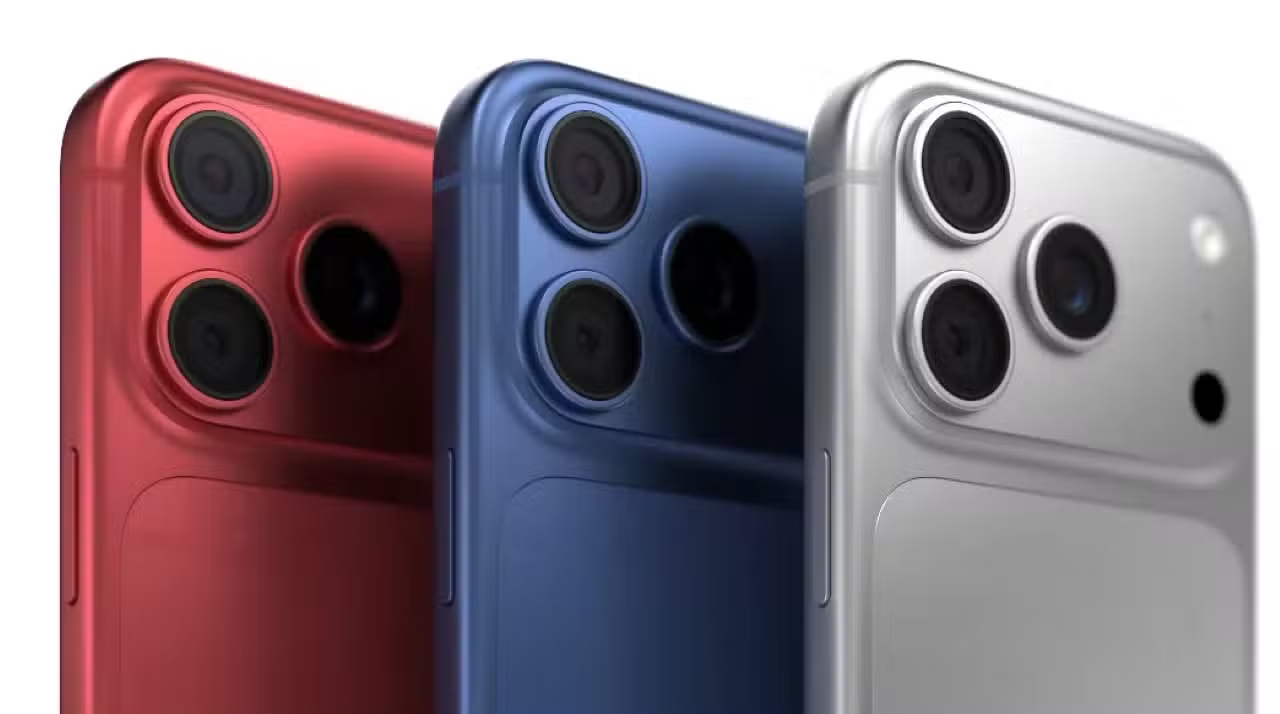
Apple prepares a profound visual overhaul for its next generation of high-end smartphones. The advanced model in the line will adopt a partially translucent chassis and an expanded battery with a capacity of 5200 mAh. The change represents the brand’s biggest aesthetic change in recent years, breaking with the standard of matte and metallic finishes. The project requires severe adaptations to Asian assembly lines.
The movement seeks to revive the global mobile phone market, which is facing a period of creative stagnation. The company is betting on technological nostalgia combined with cutting-edge internal components to attract demanding consumers. Fornecedores Parts is already reconfiguring its factories to meet new production and quality control requirements. The transition of materials raises questions about durability and thermal dissipation.
Retorno to translucent design requires new materials
The rear panel of the device will allow you to view part of the internal components through special chemically treated glass. The design choice refers to the brand’s classic computers launched in the late 1990s, which popularized colored and transparent plastic. Engenheiros replaced titanium and aluminum alloys with new compounds to guarantee the integrity of the structure. The new material needs to resist drops, pressure and scratches without compromising transparency over time.
Manufacturing this casing poses complex challenges for the entire supply chain. Partner factories develop specific methods for polishing and injecting materials in controlled environments. Assembly requires an absolute level of purity in manufacturing laboratories. Qualquer dust particle or glue mark visible under the glass would result in immediate disposal of the unit. Aesthetic rigor slows down the production conveyor.
Bateria expanded and advanced cooling system
The device’s energy capacity will jump to 5200 mAh, an unprecedented milestone for the company’s phones. The component will occupy a considerably larger area inside the chassis. Extended autonomy meets a long-standing demand from heavy users and supports local processing of advanced tools. Hardware will need to manage consumption intelligently to avoid overheating while performing heavy tasks.
The use of translucent materials drastically alters the device’s natural heat dissipation. The manufacturer implemented a redesigned vapor chamber to overcome the thermal obstacle generated by the giant battery. Folhas high-density graphene covers the main processor and volatile memory modules. The system directs the high temperature to the metal edges of the phone, preserving the life of the exposed circuits.
Mudanças in the front camera and sensor module
The arrangement of the rear photographic lenses will abandon the traditional square format used in recent generations. The new vertical alignment arranges the sensors in a single, continuous row. The change frees up crucial internal space to accommodate the new battery and makes it easier to capture space videos. The minimalist design reduces the protrusion of the photographic module, allowing the device to rest more flatly on surfaces.
The front of the smartphone also features significant structural modifications to maximize usable area. The screen occupies practically the entire surface of the panel, eliminating visual distractions. The black borders around the display have reached the minimum thickness viable for mass production in 2026. Precision engineering has made it possible to push the display connectors to the bottom of the logic board.
Frontal restructuring involves precise technical adaptations to the optical components:
- Ocultação of facial recognition sensors under the active pixels of the main screen.
- Redução has a drastic hole dedicated exclusively to the front selfie camera.
- Implementação of new software algorithms to correct light refraction in the top glass.
The display maintains variable refresh rates to save power when reading static text. Color calibration has been fine-tuned at the factory to compensate for the extra layer of material over the biometric sensors. The screen’s tactile response has been recalibrated to work perfectly even with thick protective films applied.
Impactos in production and market expectations
The assembly plants located at Ásia are currently carrying out preliminary tests with the new translucent compounds. The initial production yield is below the historical standard required by the American company. The complexity of assembly increases the time needed to complete each unit, creating logistical bottlenecks. Analistas market monitors the ability of factories to achieve the volume required for a simultaneous global launch.
The manufacturing cost of the transparent chassis far exceeds that of previous generations based on opaque metals. Shortages of specific components may limit product availability in the first few weeks of official sales. The brand’s strategy focuses on aggressively differentiating basic models from top-of-the-line versions. The commercial success of this initiative will set design trends for the entire technology industry in the coming renewal cycles.
Integração Software and Competitive Landscape
The device’s operating system will receive visual updates to match the new physical design. Elementos’s graphical interface will adopt textures that simulate the transparency of the rear chassis. The synchronization between hardware and software reinforces the product’s visual identity on the shelves. Desenvolvedores applications will have access to new guidelines to adapt their tools to the vertical format of cameras.
Competition in the premium smartphone sector reaches a critical level in 2026. Fabricantes rivals focus their efforts on popularizing foldable screens and devices with native advanced processing. The focus on translucent design represents an alternative way to attract the public that rejects mechanical hinges. The market awaits consumers’ reaction to a device that exposes its own internal engineering.
The resistance testing schedule enters its final phase in the company’s laboratories. Specialized Máquinas simulate years of daily use, applying twists and falls at different angles. Passing these rigorous exams determines the commercial viability of the large-scale project. The technology sector is closely watching each step of this advanced manufacturing process.