

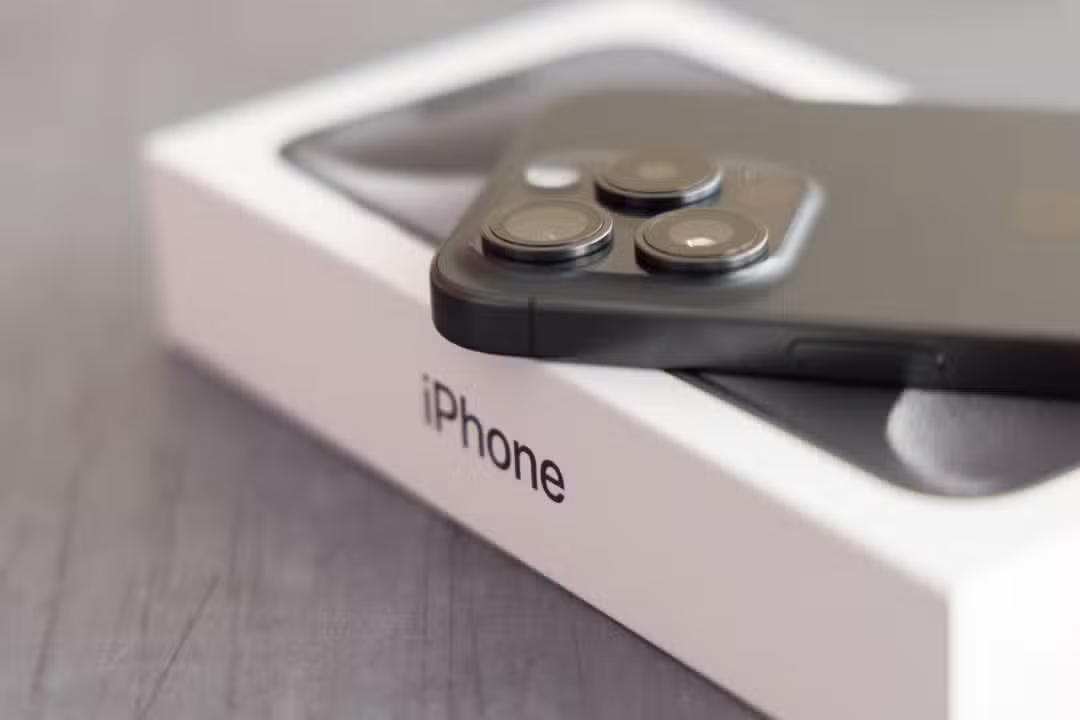
Apple CEO, Tim Cook, confirmed that the company faces a scenario of increasing pressure on its supply chain due to the sharp appreciation of memory components. Durante the financial results conference, the executive revealed that the company has already absorbed higher costs in the first quarter of 2026. The official projection indicates that the financial impact will become substantially stricter from June onwards, coinciding with the production cycle of the next generations of hardware.
The manufacturer managed to keep prices stable for the end consumer in recent months thanks to an advance stock maneuver. Apple used a strategic reserve of chips acquired when market prices were at lower levels. Contudo, Tim Cook admitted that this low-cost supply is coming to an end, forcing the tech giant to make new purchases under the current high price lists.
Artificial intelligence Indústria dictates pace of global shortages
The rise in costs is not a phenomenon isolated to Apple, but a reflection of a structural change in global semiconductor manufacturing. Top chip producers are prioritizing hardware supply for Inteligência Artificial (IA) servers and data centers, which offer higher profit margins than consumer electronics components. Essa transition of focus generated a deficit in the supply of memories for devices such as smartphones and tablets.
The pressure hits the two main memory fronts used in high-performance mobile devices. NAND chips, which guarantee the storage of files and photos, and DRAM memories, responsible for the system’s multitasking fluidity, record consistent price jumps.
Principais factors driving the component crisis:
- Migração of production capacity for ultra-high-performance chips aimed at AI.
- Exaurimento of strategic stocks acquired by Apple before sector inflation.
- Alta demands large-scale data processing servers.
- Previsão of supply deficit in the global market that could extend until 2027.
Estratégia launching for the iPhone 18 line in 2026
Diante of the high cost scenario, Apple must adopt an unprecedented segmentation for the launch calendar in the second half of the year. Market Informações point out that the company does not plan to launch the base model of the iPhone 18 at the traditional event in September 2026. The priority for production and supply of components will be focused on variants with higher added value, where profit margins allow for better absorption of price variations.
The year-end event should focus on the iPhone 18 Pro models, the long-awaited foldable iPhone Ultra and the new iPhone Air 2. Essa strategic move aims to shield the company’s financial health while the memory market does not stabilize. The iPhone 18 and 18e models, considered the entry-level options for the new generation, would only be scheduled for the first quarter of 2027.
Dilema on passing on costs to the end consumer
The big doubt among financial analysts lies in the possibility of Apple passing on the inflation of components to the sales price of the devices. Historicamente, the company prefers to maintain price stability in key markets so as not to discourage demand, even if this means a temporary compression in its profit margins. However, the severity of the projection for the second half of 2026 calls this practice into question.
Caso Memory shortages and high prices from Samsung and other suppliers persist, the iPhone 18 Pro could hit shelves with adjusted prices. The company continues to evaluate mitigation measures such as supplier diversification and software optimization to reduce reliance on excessive physical hardware. Samsung, one of Apple’s main partners, projects that the imbalance between supply and demand in the chip sector will continue to be a logistical challenge for the coming months.
The situation requires a delicate balance between maintaining competitiveness and ensuring the delivery of advanced technologies without sacrificing the economic viability of the product. The market is now awaiting Apple’s official positioning in the next quarter to understand whether internal measures will be sufficient to avoid an increase in store labels.