

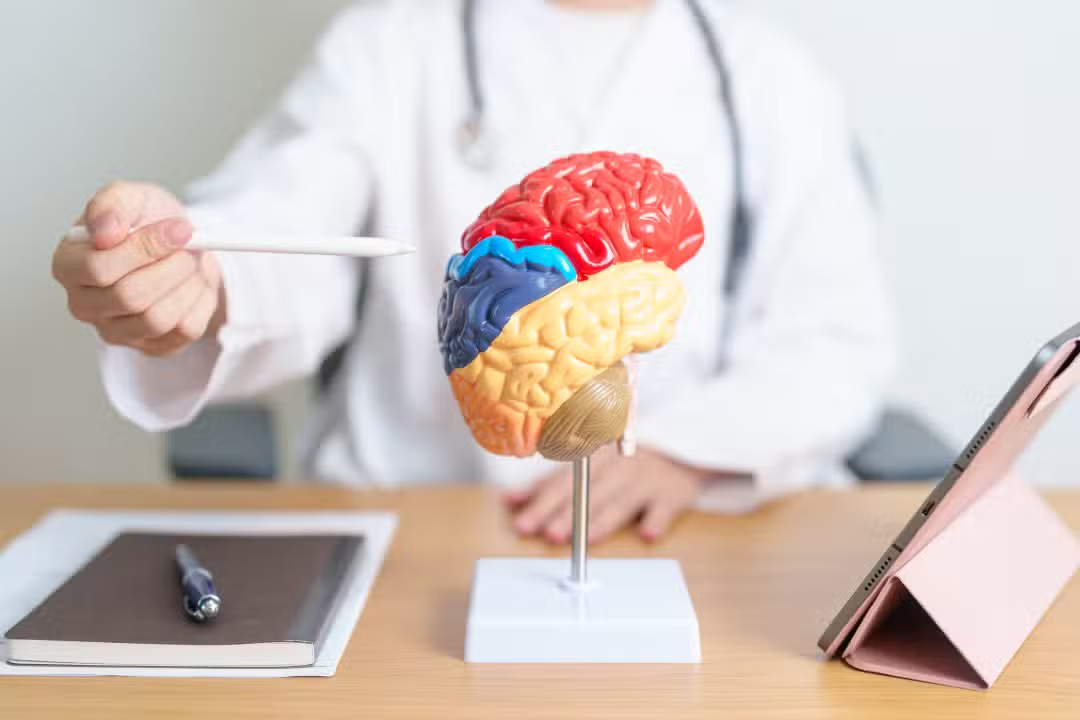
Pesquisas shows that false health information continues to influence people’s choices even after official corrections. The mechanism involves how the brain stores and accesses memories. Especialistas point out strategies to reduce the impact.
Painel Internacional’s report on Informação’s Ambiente, released in 2024, highlighted the role of platforms. The engagement-based business model accelerates the distribution of misleading content. A video about supposed cures reaches millions before any verification.
Mecanismo brain preserves false information
Cognitive psychologist Stephan Lewandowsky, of Universidade of Bristol, has been studying the phenomenon for years. The brain does not delete false information after a denial. Ela remains in memory and affects automatic decisions. The technical name is continuous influence effect.
- The brain prefers mental shortcuts to save energy
- Viés confirmation reinforces already formed beliefs
- Esforço cognitive to review an idea is high
- Fake Memória remains accessible in practical situations
- Simple Correções rarely eliminates the effect completely
Repeated Estudos confirm the pattern. Pessoas read a correction and agree to it. Ainda thus, the original content guides behaviors days or weeks later. The problem worsens in health issues, where decisions involve real risks.
Plataformas amplifies the speed of disinformation
Redes social networks prioritize content that generates quick reactions. Algoritmos drive sensational headlines with fear, hope or anger. A false claim about vaccines or treatments circulates faster than the scientific response. The 2024 report identified this cycle as the main driver of the spread.
Empresas platform owners face criticism for not acting quickly enough. Verificações arrive late. The initial damage already occurs. Pesquisas indicate that more than 70% of the Brazilian population believes in at least one fake news related to health.
A short paragraph sets the pace. The effect does not choose the audience. Mesmo whoever considers himself skeptical falls into the mechanism.
Diferença between innocent error and intention to deceive
Misinformation appears without bad faith. Alguém misinterprets a study and shares it. Disinformation involves deliberate creation for profit or influence. Nas fake health news, the two types often mix. A creator invents a miracle cure. Usuários well-intentioned people replicate the content.
The result is the same. Decisões about treatments, vaccines or prevention are compromised. Autoridades health records cases of interruption of therapies because of rumors.
Estratégias effective to reduce impact
Repetir only the denial shows limitation. Lewandowsky recommends preemptive rebuttal. Explicar the myth before it reaches the public decreases absorption. Outra technique fills the gap with alternative true facts. The brain accepts a replacement better than an empty one.
Jenny Yu, from RVO Health, suggests a rule of thumb. Desconfie of content that provokes intense emotion. Títulos with “forbidden cure” or “what they hide” triggers alerts. Verifique the source before continuing. Cheque always the publication date. Muitas fake news recirculates old news as news.
- Busque peer-reviewed websites and recognized institutions
- Prefira vehicles that cite complete original studies
- Consulte WHO, ministries of health or universities
- Evite links without clear date or identified author
- Pause five seconds before sharing any bombastic alert
Hábitos that strengthen daily protection
Construir an informative diet helps. Fontes trusts form the habit of checking. The brain resists less when the routine includes automatic checking. Lewandowsky notes that even skeptics use false memories without realizing it. The main shield is repeated behavior, not just initial intelligence.
Pesquisas continue to map the phenomenon. The goal is to develop better tools for platforms and users. Enquanto that, consciously pausing before accepting a new health issue reduces unnecessary risks.