

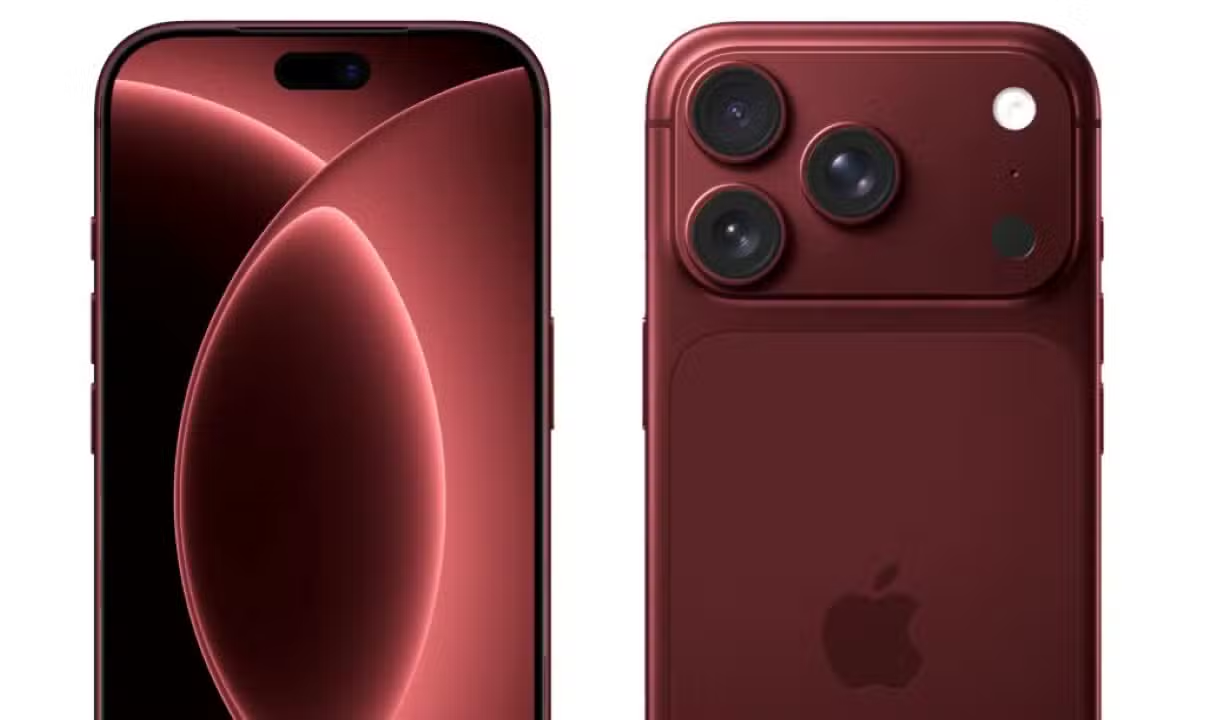
The North American manufacturer confirmed the arrival of a new generation of high-performance mobile devices. The long-awaited iPhone 18 Pro brings a profound aesthetic overhaul to the category. The device exposes its internal components through an unprecedented chassis. The change breaks with the visual standard established by the brand over the last decade. Hardware engineers had to redesign the entire motherboard. The aim was to create an internal layout that would also function as an attractive design element.
The equipment is scheduled to arrive in international stores in September. The schedule maintains the company’s tradition in the telecommunications sector calendar. The adaptation of assembly lines required massive investments in new industrial processes. The company implemented exclusive metal alloys and advanced thermal dissipation systems. The movement raises the level of competition in the luxury segment. Consumidores increasingly demand tangible innovation in their everyday devices.
Engenharia visual and high resistance materials
The fully translucent back panel represents a milestone in the company’s materials engineering. The development team opted for a reinforced glass alloy subjected to rigorous chemical treatments. The laboratory process protects the surface against natural yellowing. Continuous exposure to sunlight often degrades common transparent materials quickly. The new chemical composition guarantees superior resistance against accidental falls. The user maintains the visual integrity of the equipment even after months of intense use.
The main chassis structure uses aerospace-grade titanium. The choice of metal provides an incomparable lightness to the mobile device. Structural rigidity remains intact against severe mechanical torsions. The union between machined metal and translucent glass required the creation of a specific industrial adhesive. The compound seals the smartphone against the ingress of water and fine dust. The protection meets the most demanding certifications on the global market. Sealing occurs without compromising the visibility of internal engineering.
Desempenho power and temperature control
Everyday driving range has received a substantial technical upgrade in this generation. The power cell now reaches the 5200 mAh volumetric capacity mark. The numerical leap was made possible by a completely new internal architecture. The millimetric optimization of space allowed the inclusion of the high-density component. The overall thickness of the smartphone has remained unchanged from previous models. The industrial design team faced complex obstacles while assembling the parts.
Thermal management has become an absolute priority with the exposure of internal parts. The solution found involves the application of high-density graphene plates. A redesigned vapor chamber system works in conjunction with the conductive material. The structure quickly dissipates the heat generated by processing. Cooling occurs silently and continuously during use. The mechanism protects the rear glass panel from overheating episodes during heavy tasks.
Avanços on display and intelligent processing
The dimensions of the screens were precisely adjusted to maximize the viewing area. The standard high-performance model offers a 6.3-inch panel. The largest variant hits the market at 6.9 inches. Display engineering has refined the bezels around the OLED screen. The reduction of edges provides an immersive experience when consuming videos and games. Maximum brightness in outdoor environments has received a considerable increase. Reading in direct sunlight is much more comfortable for the eyes.
The front interface presents a technical change long awaited by consumers. The facial recognition and brightness sensors have been relocated below the active screen. The modification reduced the area occupied by the traditional upper cutout by 35%. The freed up space houses more operating system status icons. Infrared light penetrates the pixel matrix without suffering optical distortions. User identity validation occurs instantly in any lighting condition.
The core of the smartphone houses a chip manufactured using the 2 nanometer process. The component marks a historic advance in the miniaturization of commercial transistors. The processor runs artificial intelligence algorithms directly on local hardware. The dependence on cloud servers has drastically decreased with new technology. RAM memory jumped to 12 GB to support the new workload. The specification keeps language models running fluidly in the background. Switching between dozens of applications occurs without hiccups.
Inovações on photography and global connectivity
The rear photographic assembly incorporates a variable aperture mechanism in the main lens. Mechanical technology physically adjusts the light input according to the environment. The feature improves depth of field in portraits and generates authentic blur. The sharpness of night photographs increases by eliminating visual noise. The lenses received an optical coating developed in the laboratory. The material mitigates unwanted reflections from direct light sources during night recording.
The reformulation of the camera and communication system includes specific features for the new model:
- Adoção of an improved refraction prism for moving image stabilization.
- Aplicação of artificial intelligence filters at the exact moment of photographic capture.
- Correção automatic color distortions and white balance via dedicated hardware.
- Suporte expanded for satellite connection in remote areas without traditional signal.
Communications infrastructure goes beyond basic emergency messaging. Integrated radio frequency allows short voice calls via satellite. Sending compressed multimedia files works in regions without cellular coverage. The manufacturer has definitively removed the physical tray for carrier chips. The transition to virtual technology consolidates the digital format in the global market.
Estratégia production and retail impact
The Asian supply chain has started calibrating its assembly lines. The mass production of components requires very high precision machinery. Manufacturing the 2-nanometer processor requires rigorous laboratory infrastructure. The titanium chassis goes through time-consuming and complex machining processes. The strategy aims to ensure sufficient stocks for the simultaneous global launch. Diversos countries will receive initial batches on exactly the same commercial date.
Price positioning in physical and online stores will reflect high search costs. The development of transparent materials required years of industrial testing. The complex internal architecture makes the equipment’s final production line more expensive. The device occupies the ultra-premium segment of the technology market. The target audience seeks the highest level of hardware innovation available today. Operators prepare specific data packages to accompany the device’s new network capabilities.