

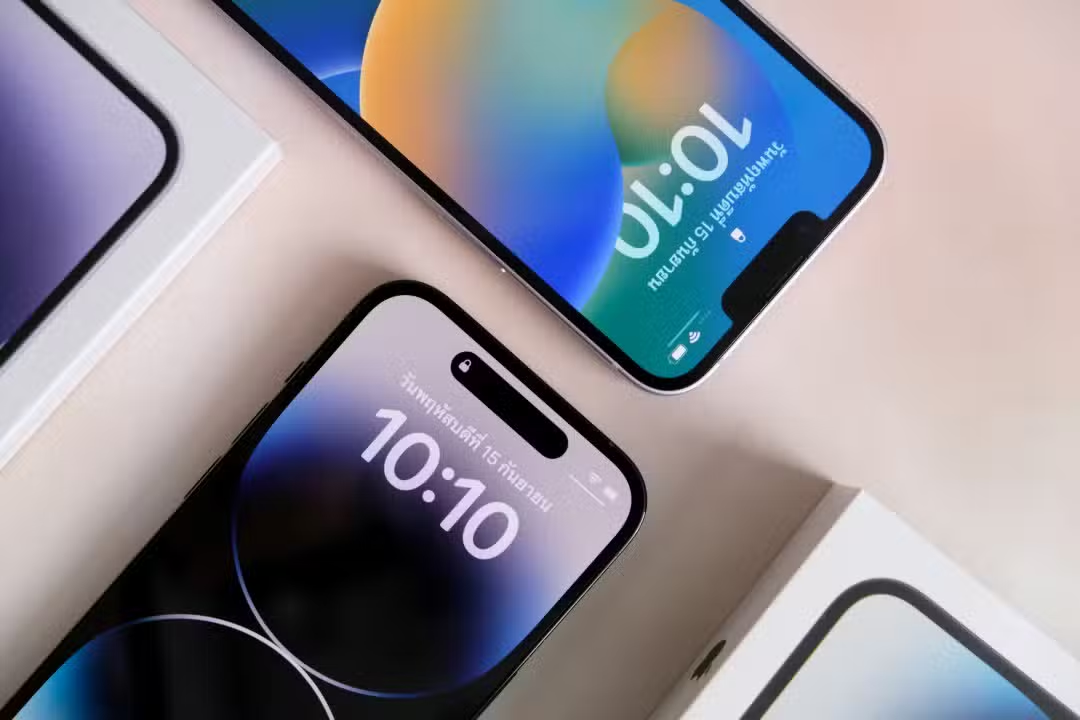
The North American manufacturer focuses its efforts on creating an innovative panel provisionally named Liquid Glass Display for its next smartphones. The engineering project aims to deliver a media consumption experience where the side frames almost completely disappear from the consumer’s eyes. Informações recent behind-the-scenes looks at the technology industry indicate that the company is seeking a significant aesthetic leap. The main goal is to redefine the visual standard for high-performance mobile devices. The concept explores complex principles of light refraction.
The initiative establishes a direct bridge between the software design recently introduced in the iOS 26 operating system and advances in physical hardware. The development does not follow the traditional path of panels with extreme curvatures on the four edges, a feature frequently observed in devices in the Android ecosystem. The strategy adopts an extremely subtle slope at the edges of the glass. Essa millimeter angle allows the light to bend in a calculated way. The practical result generates the optical illusion of equipment completely devoid of dark limits around the illuminated area.
Engenharia optics create infinite panel illusion
The operation of the new technology depends on advanced light guiding structures coupled to high-precision optical elements. The screen manages to maintain a natural display of colors and contrasts in peripheral areas, even with the drastic reduction in the physical space allocated to structural frames. The resulting panel presents a visual fluidity that resembles the behavior of liquids in continuous movement. The purity and transparency inherent to high-strength glass are preserved throughout the manufacturing process. Engenheiros seek the perfect balance between everyday durability and premium aesthetics.
Especialistas who monitor the Asian supply chain associate this ambitious development with the iPhone 20 project. The model will represent a historic milestone as it celebrates the twentieth anniversary of the brand’s cell phone line. The company already conducts rigorous laboratory testing with major suppliers, including Samsung’s display division. Current prototypes evaluate the feasibility of panels that do not require the use of a traditional polarizing filter. Removing this specific layer helps increase maximum brightness and reduces device battery power consumption.
Desafios in the integration of cameras and biometric sensors
The commercial implementation of this innovation faces considerable technical obstacles related to the device’s internal components. Incorporar the array of sensors beneath the screen’s illuminated surface represents the biggest challenge for research and development teams today. The manufacturer needs to ensure that the biometric facial recognition system and the front camera deliver performance exactly equal to or better than the current generation. Qualquer degradation in the quality of photographs or slowness in unlocking the operating system may force a postponement of the original release schedule.
Light must pass through the display’s active pixel array before reaching the camera lenses and infrared dot projectors. Este physical process naturally causes distortions when capturing the image and reduces the amount of light that reaches the photographic sensor. Algoritmos’s artificial intelligence is being extensively trained to correct these imperfections in real time during use. Software correction requires extremely powerful and efficient image processors. The perfect synchronization between the photographic hardware and the translucent screen will dictate the success of the endeavor.
Sinergia between physical components and operating system
The foundation for this physical paradigm shift began to be built in the digital environment during the 2025 WWDC developer conference. At the time, the company presented the Liquid Glass visual language as the new aesthetic standard for its software. The material unified the appearance of interfaces on platforms such as iPadOS, macOS Tahoe and other systems in the brand’s ecosystem. The future display will extend this feeling of fluidity and dynamic transparency directly to the glass that the user touches every day. The transition from the virtual environment to the physical component takes on real contours.
Criadores of applications around the world are already adopting the new design guides through programming tools such as SwiftUI and UIKit. Standard interface components have a sophisticated translucent appearance that instantly reacts to device movement, overlapping windows and changes in user focus. The technology employs real-time graphic rendering techniques to highlight interactive elements on the screen. The main content remains in focus while the background adapts to the lighting conditions of the external environment.
Impacto visual designed for upcoming releases
The convergence between the invisible edge screen and responsive software promises to change the way people consume mobile entertainment. Usuários will notice an unprecedented level of immersion when watching high-resolution films, series or during intense video game sessions. The smooth transition between the screen’s usable area and the phone’s metal frame significantly reduces peripheral visual distractions.
- Curvatura millimetric at the edges avoids chromatic distortions common in traditional curved screens.
- Refração calculated from the light reinforces the effect of visual continuity from end to end of the device.
- Native Integração with the translucent graphical interface presented in the iOS 26 system.
- Posicionamento of under-dash biometric sensors requires new image correction algorithms.
- Lançamento commercial estimated for the year 2027, with the possibility of adjustments to the calendar for 2028.
The corporation maintains absolute secrecy regarding official launch dates and production stages at factories. Financial market Analistas points to 2027 as the most likely window of opportunity for the debut of the full technology. Versões mid-range phones may receive gradual graphical interface optimizations as hardware engineering matures on the assembly lines. Rumores indicate increasingly close collaboration with the global supply chain to resolve complex large-scale manufacturing issues.
The massive investment in optical research reinforces the continuous evolution strategy adopted by the brand in the premium device segment. Fierce competition with other technology giants requires innovations that justify the added value of cutting-edge equipment. The elimination of edges represents the pinnacle of industrial design pursued by the industry since the popularization of touch screens. Mastery of light refraction opens doors for future applications in several other products in the company’s portfolio.