

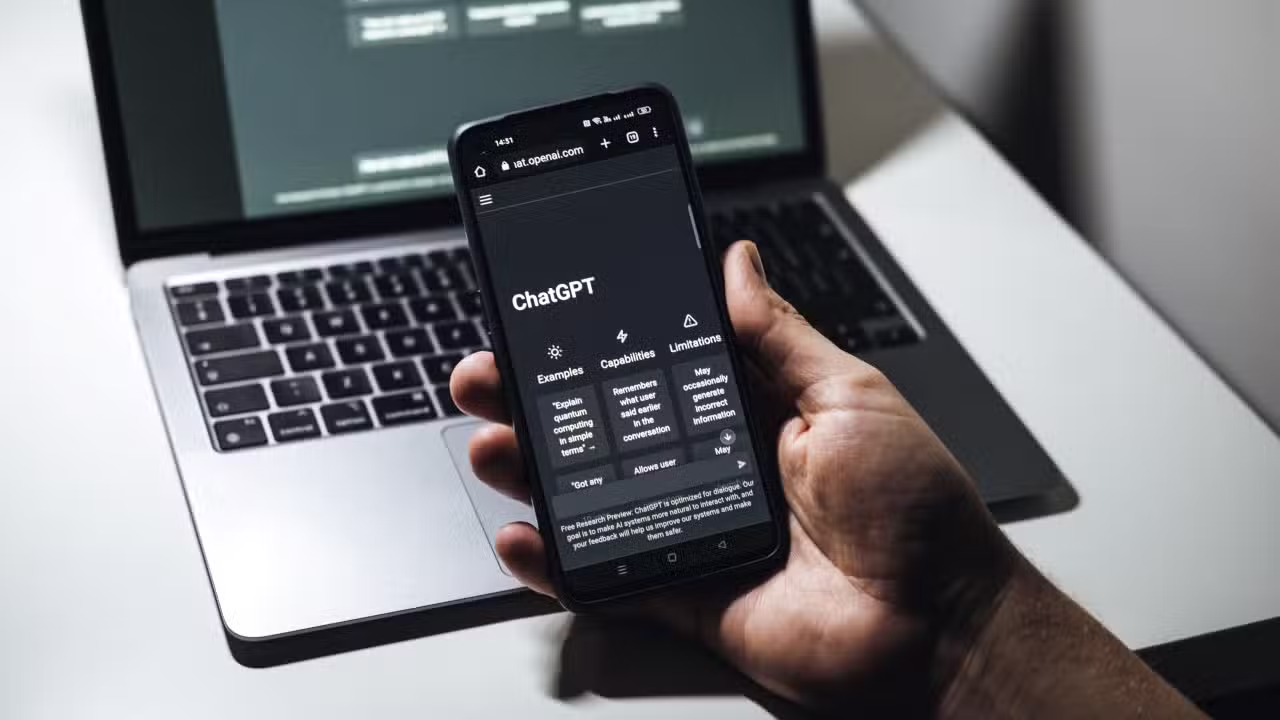
On Tuesday, OpenAI released ChatGPT Images 2.0, an update to the image generation model integrated into the chatbot. The system, called gpt-image-2, brings improvements in text rendering, support for multiple languages and the ability to create more complex compositions. Usuários of all ChatGPT plans now access the standard version.
The launch took place on April 21, 2026. The company highlighted the inclusion of a “think” mode that allows the model to search the web, check details and generate up to eight images from a single prompt. Isso facilitates the production of storyboards, infographics and materials with a structured layout. Resolution reaches 2K in some cases.
OpenAI highlights reasoning and fidelity in new features
The model now follows instructions more accurately and preserves requested elements such as icons, interfaces, and small text. OpenAI cited examples of scientific posters, recipe cards and presentation slides as areas of gain. Support for Japanese, Korean, Hindi, and Bengali texts has also improved.
Desenvolvedores gain access via API, with prices based on quality and resolution. Paid Usuários have more capacity in advanced mode. The update comes months after previous improvements to the imaging system.
- Geração of multiple interrelated images
- Modo thinking with web search
- Melhor text rendering in multiple languages
- Suporte in varying proportions, from 3:1 to 1:3
- Resolução up to 2K on selected outputs
https://twitter.com/OpenAI/status/2046670978890276918?ref_src=twsrc%5Etfw
Crítico points out flaws in functional understanding
Gary Marcus, a researcher known for questioning current AI capabilities, tested the new system with bicycle diagrams. In an automatic label, the model confused rear brake with seat tube and gear with brake. A label pointed to empty space.
In a more difficult test, Marcus asked for a taller than average tandem bike, with a luggage rack and saddlebags. The image generated presented problems such as a rear derailleur inserted into the wheel, a poorly positioned brake lever and a saddle-shaped rear handlebar. Marcus observed that the system matches visual patterns without understanding the actual function of the parts.
Especialistas compare with human limitations
Marcus recognized that the average human would also have difficulty drawing the tandem accurately. However, mechanics, experienced cyclists or designers would identify errors quickly. The example serves to discuss the extent to which the model understands the physical world.
The debate takes place as the sector celebrates leaps in professional imaging. Independent Testes confirmed gains in readable text and dense layouts, but specific cases still expose gaps in causal reasoning.
Ficha ChatGPT Technique Images 2.0
- Modelo base: gpt-image-2
- Disponibilidade: all ChatGPT users
- Modo Advanced: Paid Subscribers
- Recursos main: reasoning, multiple outputs, multilingual text
- Resolução: up to 2K
- API: released with variable pricing
OpenAI has not publicly commented on the Marcus testing at this time. The system continues to evolve, with regular updates based on user feedback.