

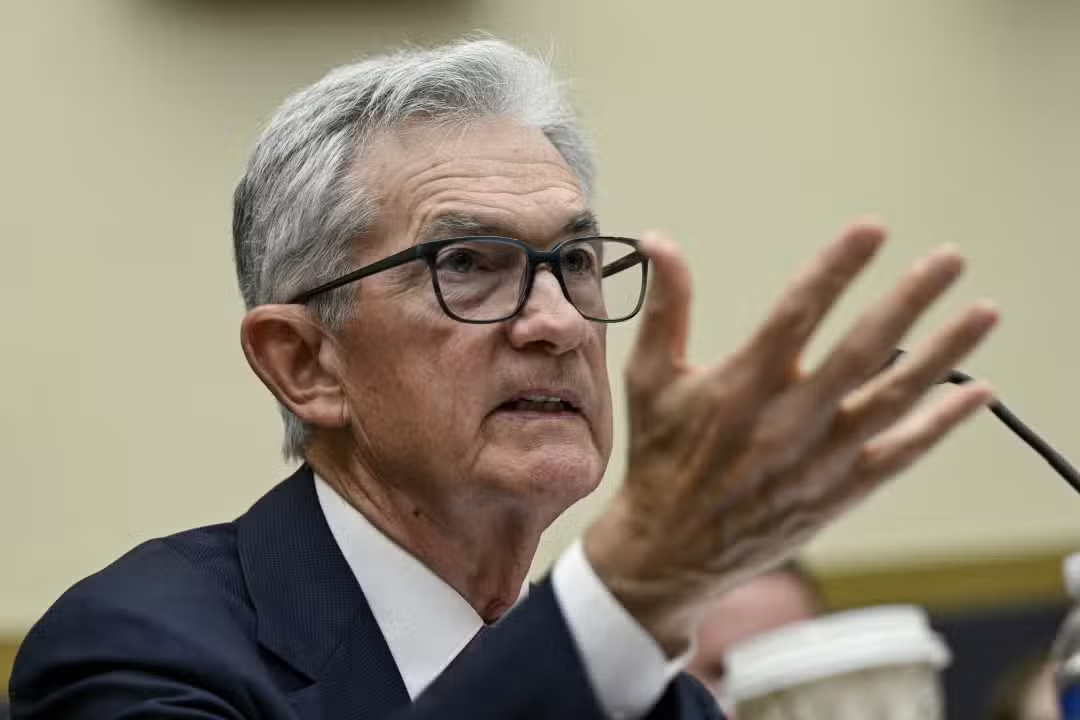
Federal Reserve decided to maintain the basic interest rate for Estados Unidos at a level of 3.50% to 3.75% per year. The committee’s resolution took place this Wednesday and confirmed the expectations of the global financial market. Este meeting marked Jerome Powell’s last conduct as president of the American monetary authority. The decision represents the third consecutive meeting without changes to the benchmark indices.
The executive’s departure will take place on May 15th, ending an eight-year cycle in command of the institution. The current context mixes direct political tensions with Donald Trump and strong global economic instability. The war between the Americans and Irã, which began at the end of February, puts severe pressure on financial indicators. Economist Kevin Warsh will take the main chair at the meetings scheduled for the month of June.
Inflationary Pressão and the weight of oil in the market
The armed conflict in Oriente Médio dictates the pace of financial decisions in Estados Unidos. The Brent oil barrel has soared since the start of the fighting and reached the US$120 mark. The value represents the highest level recorded since the year 2022. The price was operating close to US$118.70 recently. The accumulated jump exceeds 60% in a short space of time.
More expensive fuels directly affect the cost of living of the American population. General prices rose 0.9% in March alone. The index represents the biggest monthly increase since May 2024. Accumulated inflation in twelve months reached 3.3%. The number remains far from the ideal target of 2% pursued by the monetary authority. Gasoline has become more than 40% more expensive since the start of military hostilities.
The committee highlighted in an official document that inflation remains high because of the global energy shock. The directors assessed the external environment before voting. Economic uncertainty dominates projections for the coming months. The strategic blockade of Estreito by Ormuz worsens the global logistics situation. The passage accounts for 20% of global oil consumption and a significant portion of natural gas trade.
Divergências internal and the political influence of the government
The maintenance of fees did not occur unanimously among the members of the board. Jerome Powell and ten other directors voted for interest stability. The majority group preferred caution given recent economic data. Stephen Miran presented the only dissenting voice at the meeting. The economist defended an immediate cut of 0.25 percentage points.
Miran’s isolated vote carries strong political symbolism for the future of the institution. The director came to the position as a direct recommendation of the Republican president. Donald Trump actively seeks to increase its influence over monetary policy decisions. The transition of power at the central bank illustrates this government strategy.
The attempt to control the council involves several fronts of political activity in Washington:
- Stephen Miran took over Adriana Kugler’s spot in September 2025.
- Kevin Warsh received the official nomination to replace the current president.
- The government tries to fire director Lisa Cook through Suprema Corte.
- The formation of a majority on the board guarantees power over the twelve regional banks.
The internal economy of Estados Unidos continues to expand at a pace considered solid by analysts. The creation of new jobs, however, has lost momentum in recent months. The unemployment rate showed little variation in the recent period. The institution’s dual mandate requires strict price control and continued protection of the labor market.
Jerome Powell’s future on the board of directors
Leaving the presidency does not mean the definitive removal of Jerome Powell from the monetary authority. The executive confirmed that he will continue to serve as director of the institution. The regular mandate for this specific role only ends in January 2028. The decision surprised financial market experts. Ex-presidents often leave the board immediately after their leadership ends.
The current commander assured that he does not intend to interfere in the management of his successor. The experience of almost six years as a common director weighed on my personal choice. The Senado committee has already approved Kevin Warsh’s name for the main position. A vote in the plenary should take place in the next few days to make the transition of command official.
The moment requires political skill to build consensus among voting members. The new president will take office in a phase of extreme international volatility. The tariff war promoted by the American government adds complexity to the economic picture. The committee has carried out three interest rate cuts since the presidential inauguration in early 2025.
Reflexos of the exchange rate and direct impact on the Brazilian economy
American monetary policy generates immediate shock waves in emerging markets. Interest rates maintained at high levels in Estados Unidos attract global capital. American government bonds offer high profitability with maximum security. Foreign investors withdraw resources from developing countries to seek these returns. Brasil is directly impacted by this flight of dollars.
The outflow of foreign currency causes the accelerated devaluation of the real. The expensive dollar makes imported products more expensive and puts pressure on inflation within Brazilian territory. Banco Central of Brasil follows these external dynamics with extreme concern. The national monetary authority needs to adjust its own guidelines to contain capital evasion.
Política Monetária’s Comitê faces difficulties in reducing Selic in this adverse international environment. The Brazilian basic interest rate tends to remain high for an extended period. More expensive credit slows down family consumption and business investment. Exchange rate instability also harms the financial planning of the national export sector. The global situation requires extra caution from public policy makers in Brasil.