

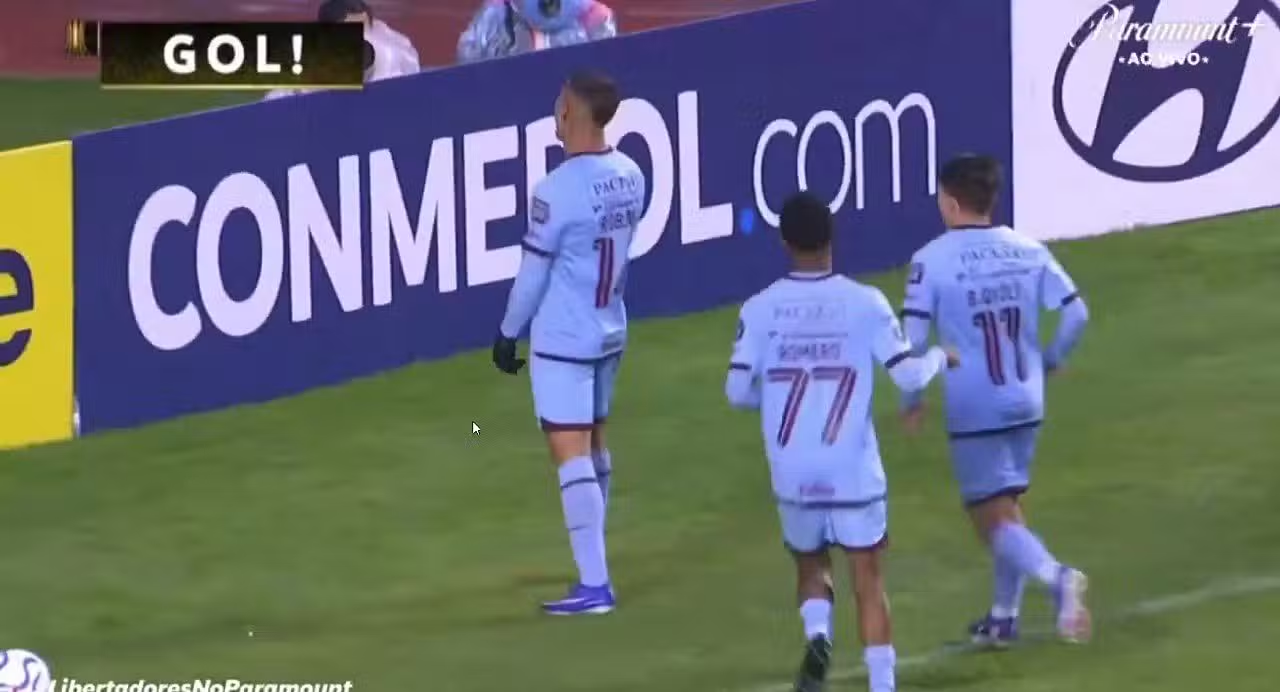
Bolívar surprised Fluminense in the first minutes of the game by opening the scoring in the group stage match of Conmebol Libertadores 2026. Robson Matheus found the net six minutes into the first half, putting the Bolivian team in a 1-0 lead. The clash, valid for the third round of Grupo C, takes place at Estadio Hernando Siles, at La Paz, under strong expectations from local fans. The altitude and offensive posture of the home team were decisive factors for the electrifying start of the dispute, generating an environment of intense pressure from the first seconds. The match continues in progress, with the Cariocas seeking to react and balance the actions in the opponent’s territory, facing a rhythm imposed by the Bolivians.
Oportunidades initials and the goal that opened the scoring
The match between Bolívar and Fluminense started with high intensity at Estadio Hernando Siles, reflecting the importance of the points in dispute for Grupo C of Libertadores 2026. The home team demonstrated from the opening whistle the impetus to take advantage of the altitude and the strength of their fans, aggressively putting pressure on the opponent’s ball. Aos two minutes in, John García had a clear chance on the left side of the area, with a shot that went close, signaling the Bolivians’ offensive intention and raising the alarm in the Tricolor defense. Fluminense’s response didn’t take long, with Jefferson Savarino risking a long-range shot in the fourth minute; however, the attempt did not find the goal, showing the difficulty in getting the shot right in an environment of high pressure and little oxygen.
The crucial moment of the game occurred in the sixth minute, when Robson Matheus took advantage of an opportunity in the middle of the area and, with a precise left-footed finish, opened the scoring for Bolívar. The local fans erupted in celebration, celebrating the goal that gave the team the initial lead and intensified the electric atmosphere in the stadium. Antes even from the goal, Dorny Romero had already forced Fluminense’s goalkeeper to make an important save with a shot from a difficult angle on the right, highlighting the constant pressure exerted in the first moments of the match. The fast pace imposed by Bolívar, combining high marking and quick transitions, made it difficult for the Rio team to organize their defense, as they sought to recover and find balance after the initial blow. The Bolivian team was determined to capitalize on every opportunity.
Apesar from the adverse score, Fluminense did not retreat completely, trying to create his own opportunities. Kevin Serna tried a shot with his right foot from outside the box in the ninth minute, looking for an immediate equalizer and his team’s reaction on Bolivian soil. However, Bolívar continued to threaten well-designed counterattacks, taking advantage of any space left by the opponent to advance. Carlos Melgar, after twelve minutes, missed a chance to extend the advantage after a quick offensive transition, finishing with his right foot from outside the area and demonstrating that the Tricolor defense needed urgent adjustments to contain the opponent’s dangerous advances. The match remained hectic, with both sides creating plays and showing that the confrontation would be contested at every moment, with changes of possession and attempts to control the midfield.
Principais first half plays on La Paz
The first half of the confrontation between Bolívar and Fluminense was marked by a series of incidents and decisive moves that shaped the initial panorama of the game, maintaining intensity and unpredictability. The intensity of the dispute led to frequent fouls and interruptions, maintaining tension on the field and among the fans present. Bolivian territorial dominance, combined with Fluminense’s need to react, generated moments of apprehension and opportunities for both sides. The teams took turns seeking control of the midfield, resulting in physical and strategic duels that defined the pace of the match so far. The minute-by-minute coverage of the Mix Vale news portal tracks all these details in real time, providing accurate information.
Acompanhe the main events and moments of the first half until 26:50, according to Mix Vale’s detailed coverage:
- 1′ Início of the first half:Referee Derlis Lopez whistles the start of the match on Estadio Hernando Siles, on La Paz.
- 2′ Oportunidade lost John García (Bolívar):The Bolivian player risks a shot with his right foot on the left side of the area, but the ball doesn’t find the target, passing close to the post.
- 4′ Oportunidade lost Jefferson Savarino (Fluminense):The tricolor striker finishes with his right foot from more than 30 meters, without success, in an attempt to surprise the opposing goalkeeper.
- 5′ Finalização defended Dorny Romero (Bolívar):Fluminense’s goalkeeper makes a crucial save on Romero’s shot, from a difficult angle on the right, saving his team.
- 6′ Gol! Bolívar 1, Fluminense 0. Robson Matheus (Bolívar):Robson Matheus opened the scoring with a neat left-footed finish from the center of the box, putting Bolívar ahead early.
- 9′ Oportunidade lost Kevin Serna (Fluminense):Fluminense tries to react with a right-footed shot from outside the area, which doesn’t find the target, showing difficulties in aiming.
- 12′ Oportunidade lost Carlos Melgar (Bolívar):Após counterattack quickly, Melgar finishes with his right foot from outside the area and wastes a chance to extend the advantage for the Bolivians.
- 17′ Falta and infractions:Rodrigo Castillo (Fluminense) commits a foul on Xavier Arreaga (Bolívar) in the defensive field, in a sequence of infractions that stop the game.
- 18′ Falta Hércules (Fluminense):Hércules commits a foul on Braian Oyola (Bolívar) in the opposing field, highlighting the increase in tension and physical dispute.
- 19′ Oportunidade lost Robson Matheus (Bolívar):The scorer tries again from outside the area with his left foot, but the shot is not converted into a second goal.
- 20′ Falta and yellow card Rodrigo Castillo (Fluminense):John García (Bolívar) suffers a foul in the opposing field, and Rodrigo Castillo receives a yellow card for a dangerous tackle, interrupting the match.
- 21′ Partida interrupted:John García (Bolívar) receives medical attention after the foul, causing a brief stoppage in the game while the medical team attends to the player.
The sequence of moves shows a more incisive Bolívar, seeking the attack and putting pressure on Fluminense’s ball. Strong pressing in midfield and aggressiveness in tackles are clear characteristics of the Bolivian strategy. On the other hand, Fluminense tries to build plays, but finds it difficult to penetrate the opponent’s defense and finish with danger. The Rio team seeks spaces to exploit the speed of their attackers, however, Bolívar’s defensive organization and strategic fouls have prevented a more continuous flow of offensive plays up to this point in the match, which remains intensely contested in the heat of Libertadores.
Tática of contention and intense duels on the field
Bolívar’s strategy, under the command of coach Vladimir Soria, has been clearly directed towards pressing the ball out and exploring speed on the flanks, combined with mid-range finishing. The team is organized in a 4-3-3, seeking to overload the opponent’s midfield and prevent Fluminense from building plays with tight marking. Jogadores like Robson Matheus, scorer of the goal, and Braian Oyola have been crucial in the offensive movement, creating opportunities and destabilizing the Tricolor defense. Enquanto That’s why the defensive line led by Xavier Arreaga remains alert to contain the rare attacks from the Rio team, ensuring solidity at the rear. Essa formation allows the Bolivian team flexibility between defense and attack, adapting to the dynamics of the game and maintaining intensity.
Fluminense, coached by Luis Zubeldia, adopted a 4-2-3-1, trying to balance marking and creation, but faced considerable challenges with Bolívar’s intensity and altitude pressure. Hércules and F. Bernal act in containment, seeking to protect the defense made up of Ignácio and J. Freytes, who have been constantly tested. However, opposing pressure and fouls in midfield have made the transition and connection with more advanced players, such as Kevin Serna and Jefferson Savarino, difficult, who look for opportunities on the sides, but find little freedom. The absence of Germán Cano, Martinelli and other injured players in the tricolor squad, according to the list of injuries and suspensions published, impacts the team’s depth and attacking options, limiting the coach’s rotation capacity and tactical alternatives at crucial moments of the game.
Individual duels became a central point of the match, with fierce competition for possession of the ball in all parts of the field. The yellow card received by Rodrigo Castillo, from Fluminense, after a dangerous tackle on John García, is an indication of the ferocity of the disputes and the high tension. Derlis Lopez’s refereeing has been attentive, with an average number of cards that reflects the intensity expected for an Libertadores clash, seeking to maintain disciplinary control of the game. The Bolívar team has managed to disorganize the Fluminense with tactical fouls and aggressive positioning, preventing the Rio team from imposing its pace of play and being able to develop the plays with the fluidity desired by the fans and the coaching staff. The Bolivian defense articulates well to prevent the opponent from progressing.
Fluminense’s defensive composition has been constantly tested, and the team needs to find quick solutions to neutralize Bolivian pressure and build more effective attacks, transforming ball possession into real scoring chances. Altitude, a known factor in La Paz, also plays a significant role, requiring greater physical effort from the visiting team’s players, who need to manage pace and energy throughout the game to avoid premature burnout. The ability to adapt and tactical intelligence will be decisive for Fluminense to be able to reverse the situation and seek a draw before the end of the first half, adjusting its strategy for the remaining minutes of the initial stage.
Desafios of Fluminense and the search for the turnaround in Grupo C
Fluminense, currently in fourth place behind Conmebol Libertadores’s Grupo C, faces a challenging scenario in this third round of the competition. The Rio team needs to score points to improve its position in the table and remain firm in the fight for a place in the round of 16. Victory at La Paz would be crucial to consolidating the tricolor’s ambitions in the search for the title, but the disadvantage on the scoreboard and the continuous pressure from the Bolivian opponent make the task even more arduous at this moment. Bolívar, which occupies third place before the match, is also directly interested in winning the three points to move up in the standings and guarantee a more comfortable position in the group, consolidating its campaign at home.
The Brazilian team has the task of overcoming not only the opponent on the field, who demonstrates great strength, but also the adverse conditions, such as the altitude of Estadio Hernando Siles, which always represents an extra factor for teams visiting La Paz. The need for a goal to tie the match drives Fluminense to adopt a more offensive stance, even at the risk of opening up spaces in defense and suffering new counterattacks. The substitutions and tactical adjustments that coach Luis Zubeldia can make throughout the match will be crucial in changing the course of the game and seeking the desired reaction, changing the outlook of the duel. The pressure on the players is visible, but the team tries to remain calm.
Para o Bolívar, maintaining the advantage and, if possible, expanding it, is the main objective, consolidating their partial victory at home. The team shows focus on consolidating its position in the group, taking advantage of its command on the field and the fervent support of its fans, who push the team with every move. The performance of players like Robson Matheus and the defensive solidity of the Bolivian team are aspects that could be decisive for the team to be able to hold on to the result until the final whistle. Experience in high-pressure games and the ability to manage pace will be tested in the remaining minutes of the first half and in the second half, in which energy management becomes fundamental for the Bolivian athletes.
Mix Vale’s minute-by-minute coverage continues to follow all the details of the clash, with quick updates on the main plays, goals and decisive events of the match. Fique up to date with all the latest football matches with live minute-by-minute coverage from the Mix Vale news portal. Assine notifications for free and receive the news instantly, directly on your device, so you don’t miss any details about your favorite team at Conmebol Libertadores 2026. The match remains in progress, and the scenario for Fluminense requires a turnaround to avoid a negative result that could compromise its chances of advancing in the continental competition, in a game that is still open and unpredictable.