

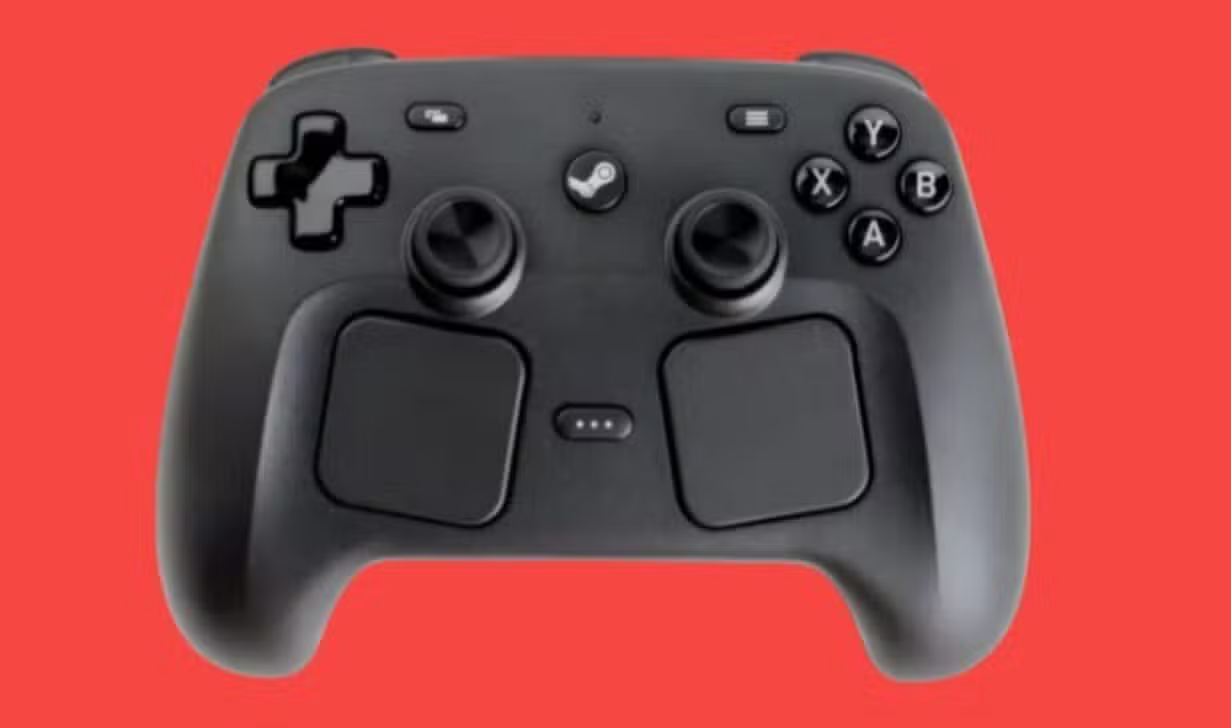
The manufacturer Valve confirmed the arrival of the long-awaited Steam Controller for May 4th. The peripheral will cost US$99 on the international market. The decision marks the end of a development cycle that spanned a decade of internal testing and design reviews. The accessory will hit shelves independently and in advance.
The original schedule predicted a launch window closer to Steam Machine. The Linux operating system-based console, however, has seen a strategic delay to the end of 2026. Hardware engineer Steve Cardinali explained that the change in plans reflects the current global RAM supply crisis. The company chose to release control immediately while it seeks solutions to the shortage of key equipment components.

Impacto of the global semiconductor crisis in production
The technology market faces severe bottlenecks in the supply chain. The availability of memory chips has remained at critical levels since 2024. Prices fluctuate at historically high levels, which directly affects the financial planning of new hardware platforms. Electronics Fabricantes deals with uncertain delivery times from Asian suppliers. The scenario requires rapid adaptations to product calendars to avoid paralyzed assembly lines.
Empresas with smaller production volumes encounter additional difficulties at the trading tables. Gigantes from the smartphone and computer industry is able to secure massive batches of components through long-term contracts. Valve, as it focuses on specific gaming hardware niches, needs to compete for the remaining RAM memory stock on the open market. Cada unit of the future console consumes resources that currently cost too much for the viability of the project. The mathematics of production made a simultaneous launch financially and logistically unfeasible at this time.
The control does not suffer from this specific technical limitation. The device functions only as an input interface and does not require RAM memory modules on its internal circuit board. The absence of this component allowed gamepad manufacturing to operate without the same interruptions faced by the console. The separation of launches ensures that the brand maintains a presence in physical and digital retail during the first half of the year.
A decade of testing and focusing on ergonomics
The peripheral’s final design carries the weight of numerous structural revisions. The engineering department dedicated more than ten years to designing the accessory. The team prioritized usability over traditional formats already established by competitors in the video game market. The result features angular lines and a distribution of buttons that deviates from the common visual pattern. The quirky aesthetic serves strictly functional and practical purposes.
Comfort during long sessions of use guided the manufacturer’s material choices. Designers have evaluated different plastic textures, spring tensions, and trigger placement over the years. The company avoided accelerating the prototyping phase just to meet short-term commercial goals. Cada new version of the hardware underwent rigorous evaluations with players of different profiles. The slow process guaranteed a level of mechanical refinement higher than that of rushed projects.
Command accuracy received special attention from the hardware development team. The computer audience demands exact answers in complex games. The accessory attempts to bridge the gap between the agility of a mouse and the practicality of a living room controller. Internal engineering reflects this ambition through highly durable components.
Especificações techniques and platform integration
The product’s commercial strategy covers a broad ecosystem of electronic devices. The operation of the control does not depend exclusively on the brand’s proprietary hardware. Extended compatibility increases the potential target audience far beyond future desktop console buyers. The accessory communicates with different software architectures natively and without complications.
- Official Release Data: May 4, 2026
- Preço Suggested International Retail: US$99
- Tempo total development: more than ten years
- Foco main structural design: extended ergonomics
- Sistemas and compatible devices: Steam Machine, Steam Deck, Windows and macOS
Steam Deck users represent an important portion of the company’s expected consumers. The brand’s portable computer shares the same design philosophy and software integration. The connection of the new control with the mobile device occurs instantly through the official digital platform. Jogadores of traditional computers with Windows and Apple machines also receive full support for using the peripheral.
The future of the ecosystem and the bet on the Linux system
The postponement of the Steam Machine does not cancel the manufacturer’s plans for the living room environment. The official expectation is that the equipment will arrive sometime in 2026, depending on the stabilization of the semiconductor market. The project represents an ongoing effort to reduce dependence on Microsoft’s operating system in the global gaming market. The dedicated machine will run an interface optimized for large-screen televisions. The competitive price remains a brand promise to attract new users.
The focus on open source attracts developers interested in alternative distribution platforms. The company invests in compatibility tools to ensure that games work perfectly on the new Linux-based console. The previous success of the brand’s laptop validated this technological approach among the most demanding consumer public. Desktop hardware will attempt to replicate this acceptance in a fixed format and with greater graphics processing power.
The arrival of the peripheral in May sets the stage for this hardware expansion. Consumers will have the opportunity to test the new physical interface months before the main console debuts. Building a technological ecosystem requires gradual steps of adoption by the public. The early release of control establishes the first piece of the company’s planned new digital entertainment infrastructure.