

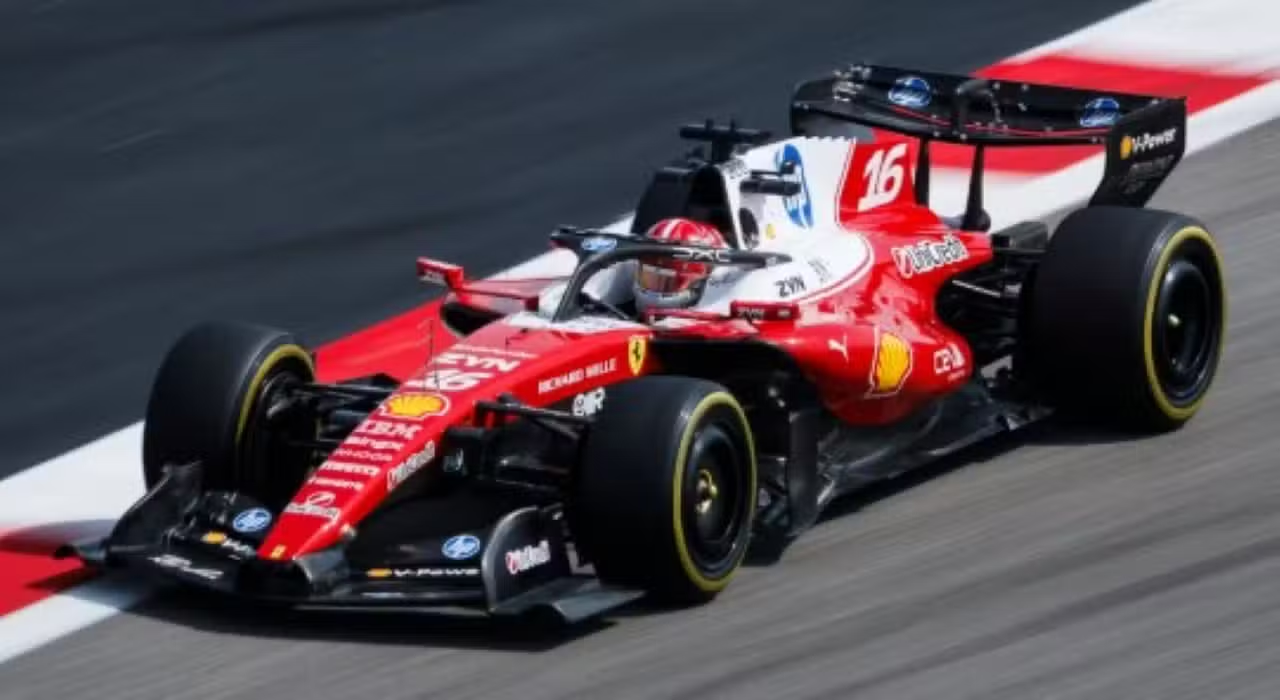
The top category of world motorsport arrives at the Estados Unidos to compete in another stage of the 2026 calendar. The route set up around the iconic stadium at the Flórida hosts the first of two consecutive races scheduled for the North American continent. Pilotos and engineers face the challenge of adjusting single-seaters to the specific demands of asphalt that tends to have low initial grip. The event marks the second appearance of the short race format this season, requiring rapid adaptation from everyone involved.
Recent changes to the technical regulations promise to level performance between the main forces on the current grid. The hegemony of dominant teams lost strength in the last rounds of the championship. The scenario points to a direct dispute for milliseconds in each sector of the street track. Analistas data from the teams works with continuous simulations in factories to find the ideal tire operating window under the strong heat characteristic of the American coastal region.
Formato sprint shakes up North American stage at Flórida
The adoption of the speed race weekend model drastically changes the preparation routine in the pits. Competitors only have one sixty-minute free practice session before the start of the restricted park fermé regime. Qualquer calculation error in the initial configuration of the suspension or the height of the car compromises performance for the rest of the days. The pressure on mechanics increases considerably during the rapid maintenance windows allowed by the rules.
The urban circuit requires a delicate compromise between final speed on the long straights and mechanical traction on the more winding sections of the second sector. Concrete protective barriers positioned close to the ideal line severely punish any excess optimism in heavy braking zones. The asphalt’s grip progresses rapidly throughout the sessions, as the rubber from the tires is deposited on the track. Strategists need to anticipate these changes in track conditions to define the exact moments to send the cars for hot laps.
Cronograma official street layout activities
The event organizers structured a dense program for the three days of official activities in the American city. The public in the stands and spectators around the world follow a quick sequence of important definitions for the championship. The schedules were adjusted to meet the global demand for television broadcasting, concentrating the actions on the night period in the European zone.
- Sexta Monday, May 1st: Sessão only free practice at 6:30 pm, followed by qualifying for the short race at 10:30 pm.
- Sábado, May 2nd: Disputa of the 19-lap sprint race at 18:00 and definition of the main grid at 22:00.
- Domingo, May 3: Official Largada for the 57-lap main event starting at 10 p.m.
Track activities follow the Brasília time zone for the Brazilian public who follows the sport. The images are distributed through the category’s official streaming platforms and the broadcasters holding the exhibition rights in each territory. Meteorological monitoring remains constant on the teams’ control panels, due to the climate instability common on the American east coast at this time of year, where rain showers can appear quickly.
British Escuderia introduces aerodynamic package to reduce weight
Williams arrives at the paddock with the urgent need to reverse the discreet results obtained in the first races of the year. The FW48 model had an excess of structural ballast that hampered the racing pace and accelerated the wear of the softer rubber compounds. Engineers based at the Grove factory have developed a suite of upgrades focused exclusively on reducing the vehicle’s overall mass. Aerodynamic efficiency gains a central role in the search for intermediate positions in the field and in the direct dispute for points.
The development department applied lighter composite materials to the single-seater’s internal structure and side fairings. The floor received modifications in the design of the air passage channels to increase the generation of aerodynamic pressure without compromising the final speed on the straights. The front and rear wings also underwent profile revisions to reduce drag. The technical challenge consists of removing material from the parts without affecting the torsional rigidity and safety of the chassis during strong impacts with the circuit’s high curbs.
Internal Disputa gains strength in the German team’s pits
The atmosphere inside the Mercedes garages reflects the high competitiveness between its two representatives on the track at this stage of the season. The young Kimi Antonelli surprised the paddock by taking the isolated lead in the drivers’ world championship points table. The rookie’s consistent performance puts an extra load of responsibility on George Russell’s shoulders. The most experienced driver started the year with the status of a natural candidate to compete for the category’s top trophy.
Russell registered a drop in performance in the most recent stages and needs an immediate response on the American asphalt to avoid losing contact with the leaders. The Briton has already faced situations of strong internal rivalry during the years in which he shared the work space with multiple world champions. Crisis management by the team management becomes essential to avoid incidents on the track that result in the loss of crucial points in the constructors’ championship. The telemetry of both cars is thoroughly analyzed by engineers to ensure equal equipment conditions.
Mudanças regulators seek greater aggression on the tracks
Federação Internacional and Automobilismo officials applied immediate adjustments to the technical rulebook for the 2026 season. The changes received unanimous approval from car manufacturers involved in the supply of hybrid power units. The main goal of the new guidelines involves reducing the need for extreme electrical energy savings during long stretches of full acceleration. The organizers want to provide a show focused on riding at the limit of the equipment, reducing the intervention of engineers via radio.
The updated text establishes a strict ceiling of 150 kW for the use of supplementary power during direct disputes for position. The safety measure prevents dangerous variations in speed between cars in the strongest braking zones, protecting competitors from rear-end collisions. Equipes in the technical restructuring phase, like Aston Martin, tries to take advantage of these regulatory loopholes to accelerate the development of their projects. The AMR26 model still has chronic traction deficiencies, and Fernando Alonso awaits the arrival of new aerodynamic parts to assess the car’s potential in the next rounds of the world championship.