

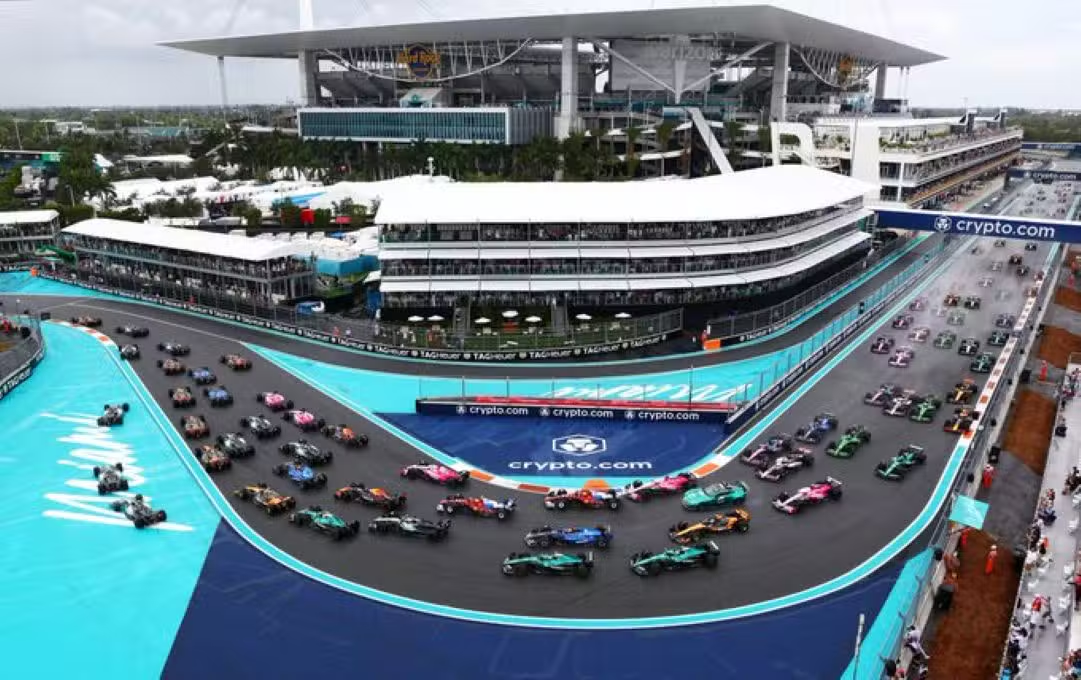
Miami, in Estados Unidos, prepares for a challenging Fórmula 1 weekend. The forecast of heavy rain and thunderstorms threatens Grande Prêmio, scheduled for Sunday. Diante In addition, Federação Internacional of Automobilismo (FIA) activated a contingency plan. The measure seeks to mitigate the risks of interruption or postponement of the race. The adverse weather conditions are worrying the organizers. Pilotos also expressed apprehension about the lack of wet track experience with the new generation cars. Safety is the top priority for the American leg.
FIA reinforces monitoring and activates emergency plan
The Federação Internacional of Automobilismo (FIA) maintains constant monitoring of weather conditions for the Grande Prêmio of Miami. Specialized Equipes use radar data and high-precision forecasts to monitor weather developments in real time, ensuring the safety of everyone involved. An FIA spokesperson on Miami confirmed close monitoring of local conditions for the competition weekend, acknowledging the volatility of weather in the region.
Esta vigilance is crucial, especially after the previous year’s experiences, which provided valuable lessons for the race organization. The contingency plan aims to address the challenges that heavy rain can bring, such as reduced visibility and water accumulation on the runway. Ele includes protocols for possible delays, suspensions or even bringing forward the start of the main race. Flexibility in the schedule becomes essential in situations of unpredictable weather, always prioritizing the integrity of the competition and the safety of the pilots.
- Entre the general measures considered by the entity in adverse weather conditions, the plan may include:
- Avaliação monitors track conditions to detect accumulation of water and debris.
- Decisão on the use of Safety Car or red flag in case of dangerous visibility or impassable track.
- Análise details the intensity and duration of precipitation to define the safe continuation or interruption of the race.
- Protocolos for evacuation and public management in the event of severe storms in the racetrack areas.
Desafios of new generation cars on wet roads
The threat of rain is particularly delicate for the Fórmula 1 drivers due to the new generation of cars. Poucos competitors have significant experience operating these vehicles under wet road conditions. Current cars, with their ground-effect aerodynamic characteristics, behave differently compared to previous generations, which raises questions about grip and control. The accumulation of water on the road can create an immense challenge for tire performance and the overall stability of the car.
Oscar Piastri, McLaren driver and winner of last year’s race in Miami, has expressed his concerns publicly. “I don’t believe many of us have ever driven our cars in the rain,” said the driver. Ele highlighted that weather plays a key role in Miami. “When it rains in Miami, it really rains,” highlighted Piastri. The lack of data and experience on a wet track with the 2024 cars (if the article is from 2026, it was referring to cars from the current season, that is, 2026, based on the date of the agenda) makes the situation even more unpredictable for all teams.
Visibility also becomes a critical factor in wet conditions. The spray of water raised by car tires, known as spray, can drastically reduce drivers’ field of vision. On a street circuit like Miami, which already has barriers close to the track, the margin for error is minimal. Adapting quickly to changing conditions will be essential, requiring great skill and nerves on the part of pilots. Teams will need to adjust vehicle configurations based on limited data and the intuition of their engineers and athletes.
Histórico of adverse weather conditions in Miami
Miami’s Grande Prêmio, although a relatively new event on the Fórmula 1 calendar, already has a history of weather challenges. The experiences of the previous year were important in shaping the current approach of the FIA and the organizers. The Flórida region is known for its intense and sudden tropical storms, especially during certain times of the year, which requires special preparations for outdoor events. The characteristics of a street circuit amplify these challenges.
Diferente than permanent racetracks, street circuits often feature less efficient drainage and asphalt surfaces that can accumulate water quickly. Isso creates puddles and rivers on the track, increasing the risk of aquaplaning and accidents. The proximity of safety barriers on these types of routes means that any loss of control can have more severe consequences. The event organizers need to be prepared to deal with the logistics of evacuating the water and ensuring that track conditions are as safe as possible for the race.
Learning from past events includes improving local weather forecasting systems. Também optimized rapid response plans for track cleaning and crowd management. The unpredictable nature of storms in Miami requires everyone involved, from organizers to teams to fans, to be aware of the possibility of last-minute changes. Attention to detail in terms of drainage infrastructure is constantly reviewed to mitigate the impacts of precipitation.
Race schedule adjustment Possibilidade
One of the main actions considered in the FIA’s contingency plan is the possibility of bringing forward the start of Grande Prêmio from Miami. The measure would be implemented to prevent the race from coinciding with the forecast period for worsening weather on Sunday. Mudar start time involves complex coordination between multiple stakeholders. Isso includes the teams, the television stations that broadcast the event globally and the thousands of fans present at the racetrack.
The decision to bring forward the race is not trivial. Ela affects spectators’ travel plans and teams’ schedules. Contudo, the safety of the pilots and the integrity of the competition are preponderant factors. The objective is to carry out the race in conditions that allow for fair and safe competition, away from the risks posed by a severe storm. Official communications from the FIA and organizers would be issued as far in advance as possible. Isso is crucial for informing everyone of any schedule changes.
Esta flexibility in scheduling demonstrates Fórmula 1’s commitment to adaptation. The category seeks to overcome the challenges imposed by external factors. The ability to quickly change plans is a differentiator in large-scale events. The logistics of an Fórmula 1 event are gigantic, involving hundreds of people and sophisticated equipment. The decision to move the race requires consensus among the main stakeholders, but the priority is always to hold the event with minimal risk.
Impacto potential in team strategies and driver performance
Climate uncertainty has a direct impact on team strategies. Elas need to prepare their cars for a variety of conditions. Decisions about aerodynamic configuration, suspension and tire choice become more complex. If rain comes, teams will need to be quick to change tires and adjust their pit stop strategy. The ability to predict the duration and intensity of rain can be decisive for the outcome of the race.
Pilotos and teams seek the best possible performance in each training session and in qualifying. Contudo, the threat of rain may lead to a more conservative approach, focusing on data collection in different scenarios, even on a dry track. The unpredictability of the wet track puts an even greater focus on the individual skill of the drivers. Aqueles with greater car sensitivity and experience in variable conditions could have a significant advantage.
Tension mounts for everyone in the paddock as the window of opportunity to train in wet conditions is limited. Real-time adaptation and the ability to make quick adjustments during the race will be crucial. Teams also need to consider the psychological impact on drivers. Correr with the uncertainty of the weather and lack of experience in new generation cars on a wet track adds an extra layer of pressure. Mental preparation will be as important as technique to face Grande Prêmio and Miami.