

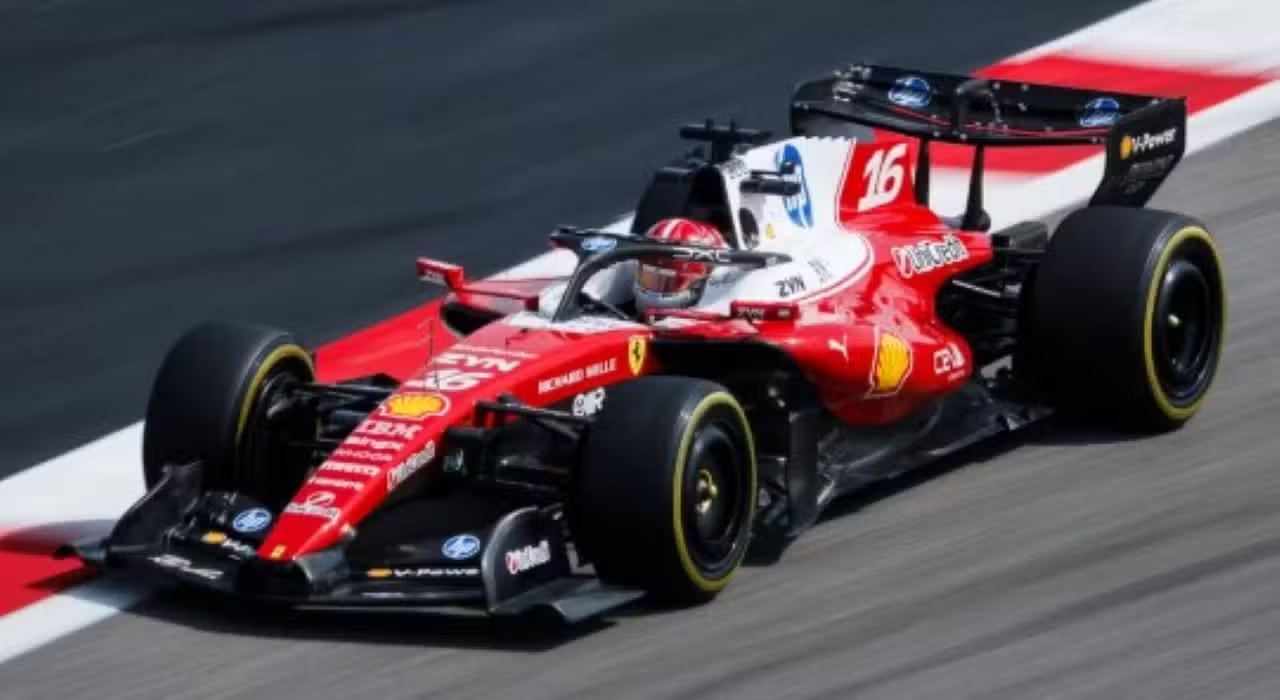
Campeonato Mundial of Fórmula 1 resumes the 2026 season calendar with great expectations in Estados Unidos. The category lands on Flórida for Grande Prêmio from Miami. The event marks the second stage of the year to use the Sprint format. The Scuderia Ferrari HP arrives at the circuit with a total focus on recovery. The team faced an atypical period after the cancellations of the Bahrein and Arábia Saudita races.
The grid teams took advantage of the forced hiatus to develop significant technical improvements. Current regulations require rapid adaptation to new components. The race organizers allowed thirty extra minutes in the only free practice session of the weekend. The measure aims to facilitate the adjustment of single-seaters before the qualifying sessions. The intense heat of the region promises to test the physical resistance of the pilots. The race strategy takes on decisive contours in this scenario.
The impact of aerodynamic changes on the performance of the Ferrari
The Italian team has been working intensively at the Maranello factory during the last few weeks. Engineers thoroughly analyzed the data collected from the first races of the year. The central objective is to prepare a package of improvements capable of increasing the competitiveness of the SF-26 model. Fred Vasseur guided the mechanics on the need to maximize track time. The team director highlighted the importance of making the most of every minute of the extended training. The team seeks to close the performance gap in relation to direct rivals such as Mercedes.
Muitas garages present new pieces for the American stage. The focus of the updates lies on aerodynamic efficiency and compliance with the updated regulations. Ferrari plans to introduce structural modifications that affect a large part of the car’s body. The package represents a key step in the season’s planned development timeline. The search for more stability in high-speed curves guided the technical decisions. Riders rely on predictable equipment to attack the curbs with confidence.
- Implementação of a new floor designed to generate more downforce.
- Revisão complete front wing design to optimize airflow.
- Ajustes structural structures in the chassis and aerodynamic refinement in the rear area.
- Otimização of weight distribution and updates to the halo safety device.
The components listed require exact correlation between wind tunnel data and behavior on the asphalt. The technical team monitors the sensors in real time during installation rounds. Qualquer divergence may compromise the correctness of the event. The pressure for positive results increases with each stage. The fans expect an evident leap in quality in the straights. The success of these pieces defines the direction of the next months of work.
Desafios Tracking Flórida and Tire Management
Autódromo Internacional by Miami presents unique characteristics in the category calendar. The circuit is exactly 5,412 kilometers long. The layout has nineteen curves of different radii. Long Retas interspersed with extremely strong braking points complicate the search for the ideal setting. The evolution of track conditions occurs rapidly over the days. The characteristic heat of the Flórida directly influences the dynamic behavior of the cars. Mechanical grip changes drastically between morning and afternoon.
Pirelli selected the softest compounds in its range for the event. The C3 tire works as the hard option. C4 represents medium rubber. C5 acts as the soft compound. The smooth surface of the asphalt means that degradation is predominantly thermal, not abrasive. Careful tire management becomes an absolutely decisive factor. The conservation of the rubber dictates the pace both in the short sessions and in the main race.
Pilotos that slip excessively on corner exits quickly overheat the tires. Loss of traction costs precious tenths on the stopwatch. Dark asphalt absorbs solar radiation and raises the temperature of the track to critical levels. The ideal operating window for compounds becomes narrow. Engineers calculate the exact moment for pit stops. Heavy traffic can ruin a tactic based on fast laps.
Novas power unit rules change race dynamics
The American stage marks the entry into force of important adjustments to the technical regulations. The changes directly affect the management of electrical energy in hybrid engines. The total amount of energy available during qualifying laps has been reduced. The system’s automatic recharging on straights increases considerably. The procedure for extracting maximum power during fast laps has been simplified. The hybrid system gains greater operational flexibility. Pilots’ adaptation to these new developments requires extra attention in simulators.
The start time also presents updated safety guidelines. The MGU-K component can now operate at lower speeds. The measure aims to reduce the risk of loss of control during initial acceleration. Ultrapassagens in blind curves becomes safer with the new limitations on power delivery. Carlo Bussi explained the implemented changes in detail. The person responsible for the performance of the power unit cited the winding section between turns seven and seventeen as the most critical of the route.
Long Retas drains battery power relentlessly. Slow Sequências require highly efficient recharging to ensure speed in the next leg. Altas temperatures and high humidity in the region drastically increase the demand on refrigeration systems. The risk of overheating of internal components worries mechanics. The reliability of the internal combustion engine works at its limit. The balance between pure performance and durability defines who finishes the race without mechanical failures.
US Market Crescimento and Weekend Schedule
The action on the track officially begins on Friday, May 1st. The single free training session has an extended duration of ninety minutes. The session starts at noon local time. Qualifying for the short race takes place shortly after, at sixteen hours and thirty minutes. On Saturday, the Sprint race takes place at noon. The traditional classification for Grande Prêmio is scheduled for 16 pm. The main race starts on Sunday at 16pm local time. The race will have fifty-seven laps and total 308.326 kilometers.
Ferrari has a recent history of competitiveness in the Miami circuit. The team has competed in four editions of the event to date. The debut took place in the 2022 season, with Charles Leclerc in second and Carlos Sainz in third. The team has three podiums at the venue, but is still looking for its first victory. In the overall picture of Fórmula 1, the team accumulates impressive numbers. The brand records two hundred and forty-eight victories, two hundred and fifty-four pole positions and eight hundred and thirty-nine podiums. Participation has occurred since 1950.
Fatos demographic information about the city reinforces the strategic importance of the event. The circuit is in an area with a strong presence of the Latino community. Setenta percent of the local population is of Hispanic origin. The metropolis attracts millions of tourists annually and generates billions in the regional economy. The number of motorsport fans at Estados Unidos has grown exponentially. In 2025, the audience reached fifty-two million people. The figure represents an increase of eleven percent compared to the previous year. The American market gains definitive weight in the calendar.