

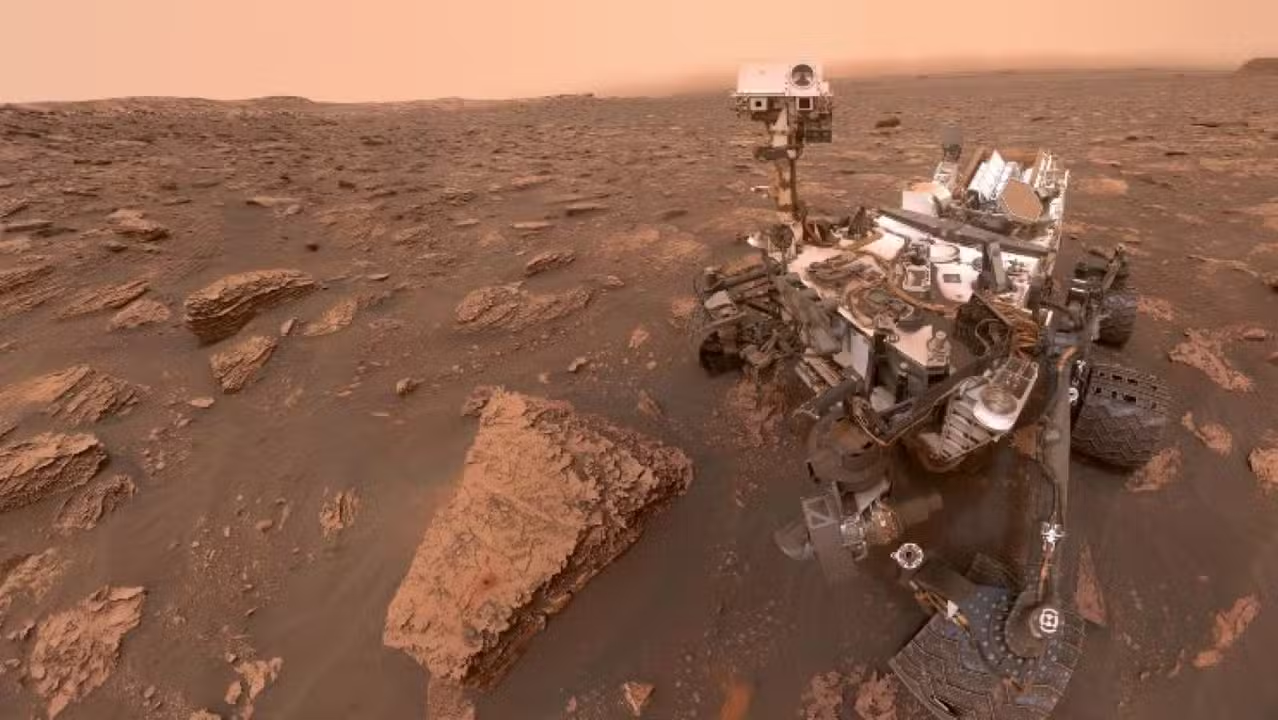
The Curiosity exploratory vehicle, operated by Nasa, identified twenty-one distinct organic molecules in a rock sample collected from the surface of Marte. The analyzed material was located in the region known as Glen Torridon, located inside Cratera Gale. Entre the chemical elements found by onboard instruments, seven compounds had never previously been recorded on the red planet. The discovery represents a milestone in space exploration and expands the understanding of Martian geological composition.
The identification occurred using a wet chemistry technique, applied in a way that had never been done before on another planet. The results of the scientific investigation were detailed in an article published in the journal Nature Communications. The sample that originated the data was extracted from a rock formation named Mary Anning, a tribute to the pioneering British paleontologist of the 19th century. The finding reinforces theories about the wet and potentially habitable past of the celestial body neighboring Terra.

Perfuração in area of ancient lake reveals preserved material
The equipment landed on Cratera Gale in 2012 and, since then, has been on a continuous climb through Monte Sharp. The main objective of this trajectory involves the detailed study of geological layers that contain evidence of the presence of water in remote eras. The Mary Anning rock is located exactly in the Glen Torridon area, a basin formed by sediments accumulated at the bottom of a lake that dried up billions of years ago.
Para obtain the study material, the robot drilled into a layer of sandstone rich in clay minerals. Após mechanical extraction, the system crushed the rock and directed the resulting powder to the vehicle’s internal analysis instrument. Esse equipment heats samples to extreme temperatures and thoroughly examines the gases released during the controlled combustion process.
The scientific team responsible for the mission highlighted that the methodology adopted allowed the breakdown of larger molecules. Essa chemical fragmentation facilitated the identification of components that would be difficult to detect by conventional scanning methods. The success of the operation demonstrates the adaptability of the instruments sent into space.
Aplicação of chemical reagent releases ancient compounds
The vehicle’s portable laboratory used a specific reagent, tetramethylammonium hydroxide, to process the rock dust. Essa solution acted to dissolve the sample and released organic molecules that remained trapped in the mineral structure for billions of years. The physical procedure took place in 2020, but the complexity of the data required years of analysis before the results were officially published.
Entre the compounds revealed by the sensors are nitrogenous heterocyclics, complex structures that form carbon and nitrogen rings. In terrestrial biology, these formations act as fundamental precursors of nucleic acids, such as RNA and DNA. A group of seven molecules, which includes benzothiophene, first appeared in records sent from the Martian surface to control centers.
Benzothiophene has carbon and sulfur in its basic composition. Esse the same element is usually found in meteorites that surpass the atmosphere and reach the ground of Terra. Testes laboratory tests carried out with fragments of the Murchison meteorite, recovered at Austrália in the late 1960s, showed chemical signatures very similar to those now detected by the robot.
Condições geological analysis of Cratera Gale favors discoveries
The solar and cosmic radiation that reaches Marte is intense enough to destroy organic compounds exposed on the surface. Apesar of this highly hostile environment, the molecules resisted for approximately three and a half billion years in the shallow underground layers. Esse factor proves that the planet has the capacity to preserve ancient material under favorable geological conditions.
The choice of the landing and exploration site was based on strict scientific potential criteria. The region presents unique characteristics that justify the continued focus of space investigations:
- The presence of mudstone formed by continuous decantation in an ancient lake environment.
- The accumulation of sandstone deposited by the mechanical action of river water currents.
- The preservation of physical evidence about flood cycles and extreme drought.
- The high probability of conservation of complex chemical compounds within rocks.
Cientistas assess that the neighboring planet met the necessary conditions to support microbial life in the distant past. The confirmation of past liquid water, added to the variety of minerals and complex organic compounds, strengthens the hypotheses of habitability. Contudo, the exact origin of these molecules remains undefined, and they could have emerged in the Martian environment itself or arrived through the impact of asteroids.
Advanced Instrumentos guide the future of space exploration
The Curiosity’s internal laboratory combines the functions of an oven, chromatograph and mass spectrometer in an extremely small physical space. The system captures and analyzes gases emitted by extreme heating or chemical reactions induced by reagents transported from the Terra. The successful execution of wet chemistry on another celestial body sets a new technological standard for future interplanetary missions.
The exploratory vehicle continues its uninterrupted journey up the steep slopes of Monte Sharp. The robotic machine collects daily data on the mineralogical composition of the soil, variations in the ancient climate and possible signs of prebiotic chemical activity that were recorded in the stones. The North American space agency’s original planning called for only two years of continuous operation, but the exceptional resistance of the equipment extended the mission for more than a decade.
Especialistas from the aerospace sector plan to cross-reference the current results with samples collected by the Perseverance vehicle, which operates simultaneously in a different geological region than Marte. The international agencies’ long-term goal involves developing and sending complex missions capable of bringing this physical material back to Terra’s laboratories. Analysis on Earth will allow the use of gigantic equipment that cannot be launched into space.
The recent discovery does not definitively attest to the existence of past life on the red planet. Ela demonstrates indisputably that complex building blocks survive in the harsh Martian environment for entire geological eons. Esse indeed broadens the perspectives for the next phases of space research and directs scientific efforts to specific areas where chemical preservation shows the most promise.